
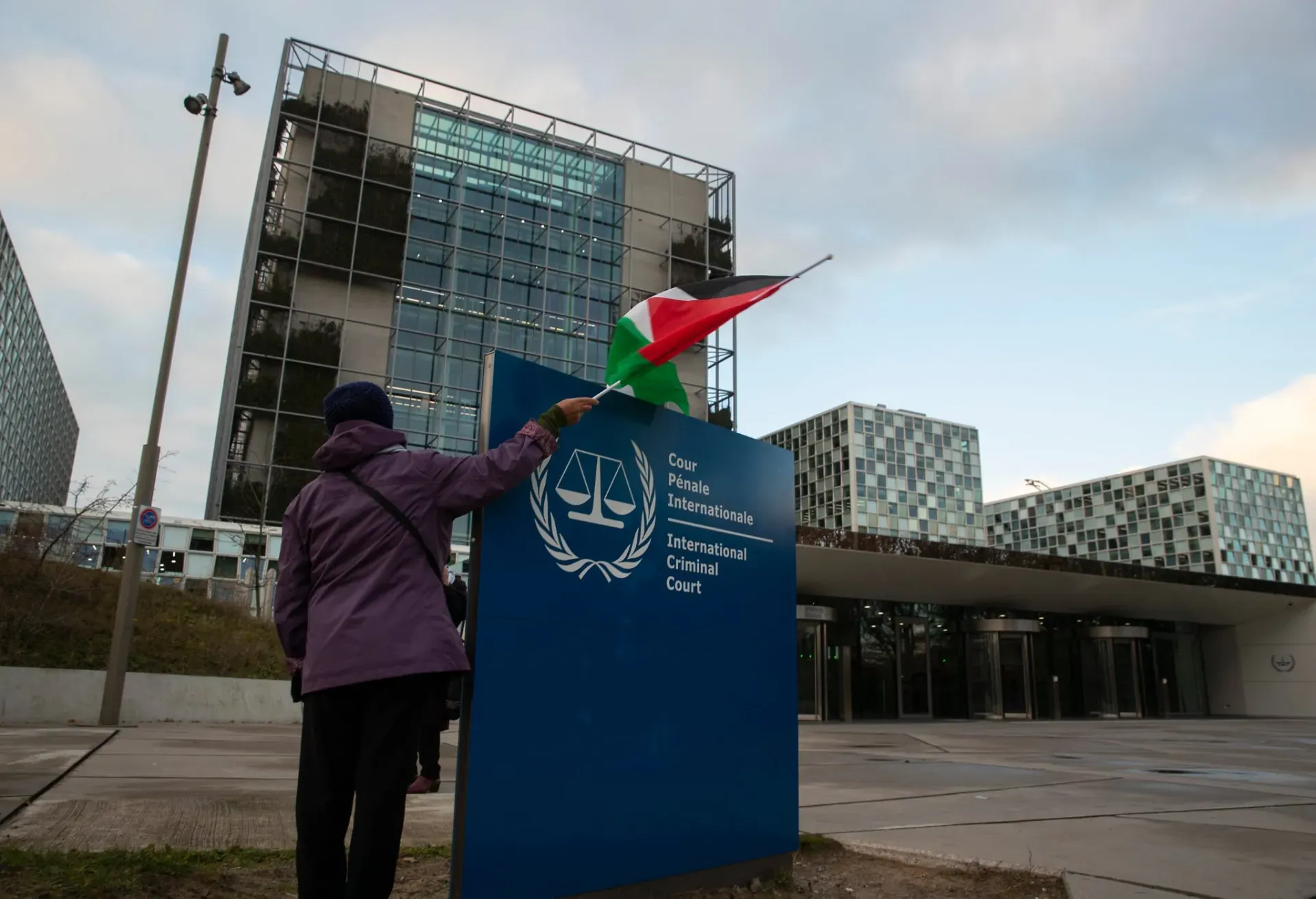
Washington (QNN) - The Trump administration is reportedly planning to impose sweeping sanctions on the International Criminal Court (ICC), potentially disrupting the tribunal's finances and day-to-day operations, in the latest escalation against the Hague-based court over its investigations into war crimes by the US and Israel.
The Wall Street Journal reported on Sunday, citing officials, that the sanctions would prohibit most transactions with the court following a grace period of six to seven months. The move could paralyze the institution by banning transactions conducted in US dollars, thereby cutting it off from large parts of the global financial system.
The move would mark a sharp escalation in Washington's campaign against the Hague-based court by targeting the institution itself rather than individual judges and prosecutors.
The Trump administration plans to announce the sanctions soon, according to the Reuters news agency, quoting two sources familiar with the matter.
The Journal, citing anonymous officials, said a decision could be finalized during this week's United Nations General Assembly gathering in New York or soon afterwards.
If imposed, the measures would generally bar US citizens and companies from providing the ICC with money, goods or services without a licence from the US Treasury.
Banks and other companies often take an especially cautious approach to US sanctions because they rely on access to the American financial system.
The ICC president and registrar have previously warned that sanctions on the organisation as a whole could interfere with its ability to buy information technology and insurance services, hire investigators and make routine payments, including salaries for American employees.
Trump's administration intensified its campaign against the Hague-based court by sanctioning in August the court's President Tomoko Akane and senior trial lawyer Abdoulaye Seye, with restrictions on them taking effect on September 17.
Washington has said it will also step up efforts to persuade other countries to quit the institution, a call that at least five countries have already heeded.
Just days after he assumed power in late January 2025, Trump signed an executive order to sanction the ICC over its investigations into top Israeli officials.
British barrister Karim Khan, who was the ICC's chief prosecutor, was the top sanctioned individual at the time. He has since been removed through a vote by member states, albeit due to sexual misconduct allegations. Khan has denied them.
Three out of eight ICC judges were also sanctioned, alongside two of Khan's deputies, the United Nations special rapporteur for the occupied Palestinian territories, and three Palestinian human rights organisations.
The judges have since sued the Trump administration.
Netanyahu applauded the US sanctions and called the ICC “a kangaroo court that cloaks its abuse of power in the language of international law”.
The Trump executive order followed a White House visit by Netanyahu, who is wanted by the ICC over war crimes and crimes against humanity committed in Gaza since October 2023.
Netanyahu and his then defense minister, Yoav Gallant, were issued arrest warrants in November 2024.
Recently, four US-based rights groups sued the Trump administration for its sanctions on the ICC.
In a statement, the American Friends Service Committee, the Center for Constitutional Rights, Human Rights Watch, and the Open Society Institute called the sanctions "blatantly illegal".
They said they are being forced "to curtail a wide range of human rights and legal work in violation of... First and Fifth Amendment rights under the US Constitution and under the Religious Freedom Restoration Act", given that anyone who appears to associate with ICC cases or officials could now face legal repercussions.
And in July, advocates for Palestinian rights in the US also filed a lawsuit in a New York City federal court, seeking an injunction to stop the Trump administration's enforcement of sanctions against groups or individuals liaising with the ICC.
Democracy for the Arab World Now and the Taxpayer Alliance Against Genocide said they felt compelled to immediately go to court after Rubio wrote in an opinion piece that the US was willing to dismantle the ICC "brick by brick".
Earlier this year, former ICC chief prosecutor Fatou Bensouda said the previous head of Israel's Mossad intelligence agency pressured her in a series of meetings to drop her investigation into war crimes in occupied Palestine.
Bensouda, who served in her role from 2012 to 2021, said unidentified men came to her home in The Hague after she opened a preliminary examination into the situation in Palestine in 2015.
They came directly to my house," Bensouda told Al Jazeera in an interview published on Sunday. "I got the message that they're sending."
She said the men handed her an envelope containing $500 and indicated it was from someone she had helped. Bensouda said she later concluded the gesture was intended to show that those behind it knew where she lived.
Human Rights Watch (HRW) issued a statement decrying the new sanctions.
The sanctions are “just the latest example of the Trump administration’s utter contempt for international law and a naked attempt to shield American and Israeli officials implicated in serious crimes from justice”, HRW’s Middle East and North Africa director Balkees Jarrah said.