
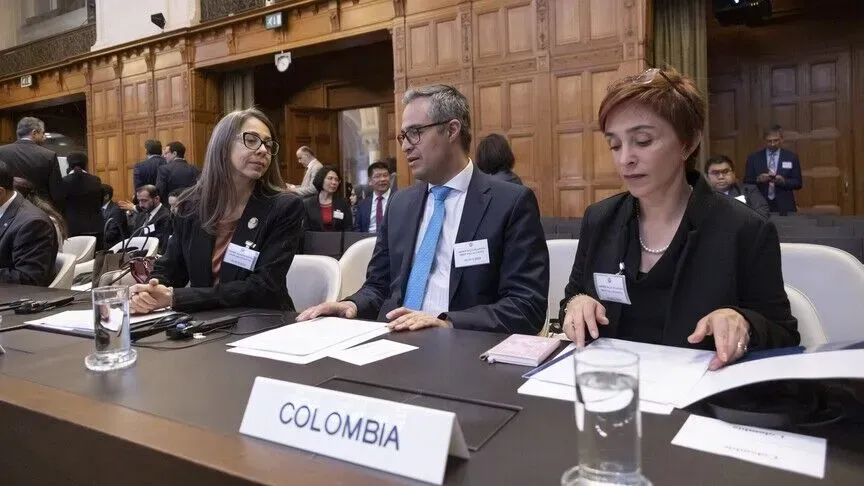
Colombia has informed the International Court of Justice that it is withdrawing the declaration of intervention it filed in April 2024 in the case brought by South Africa accusing Israel of committing genocide against Palestinians in Gaza, completing the new Colombian government's full diplomatic realignment with Israel.
The withdrawal reverses one of the most principled foreign policy stances taken by any government in the Americas on Israel's genocide. Former President Gustavo Petro had adopted a strong pro-Palestinian position throughout the genocide: he filed the ICJ intervention in April 2024 invoking Colombia's obligations under the Genocide Convention, severed diplomatic relations with Israel in May 2024, describing it publicly as a genocidal government, halted Colombian coal exports to Israel in August 2024 on the grounds the coal was being used to produce weapons for use against Palestinians, and announced plans to open a Colombian embassy in Ramallah.
Under the new administration, all of that has been reversed. Since Abelardo de la Espriella took office in August, Colombia has moved to restore full diplomatic and economic relations with Israel, announced plans to reopen its embassy in occupied Jerusalem, established a bilateral economic commission with Israel, and now notified the Hague court that it is pulling out of the genocide case. A Colombian government delegation is also expected to visit Israel in October.
The retreat from South Africa's case is particularly significant because it is happening while the case is still pending before the court. The ICJ has issued multiple provisional measures since January 2024 ordering Israel to prevent genocidal acts and ensure humanitarian aid enters Gaza. Israel has ignored them. Colombia was one of more than a dozen states that had declared their intention to intervene in support of the genocide claims. Its withdrawal reduces the legal wall around Israel at the moment the case is at its most consequential.
The shift comes as Colombia and Israel have been growing rapidly closer since de la Espriella's election, with Bogota moving from one of Israel's most vocal state critics under Petro to one of its newest regional partners within months. De la Espriella, a far-right figure, ran on a platform of reversing his predecessor's foreign policy positions and rebuilding ties with Israel among other alignments, and has moved quickly on both fronts since taking office.