
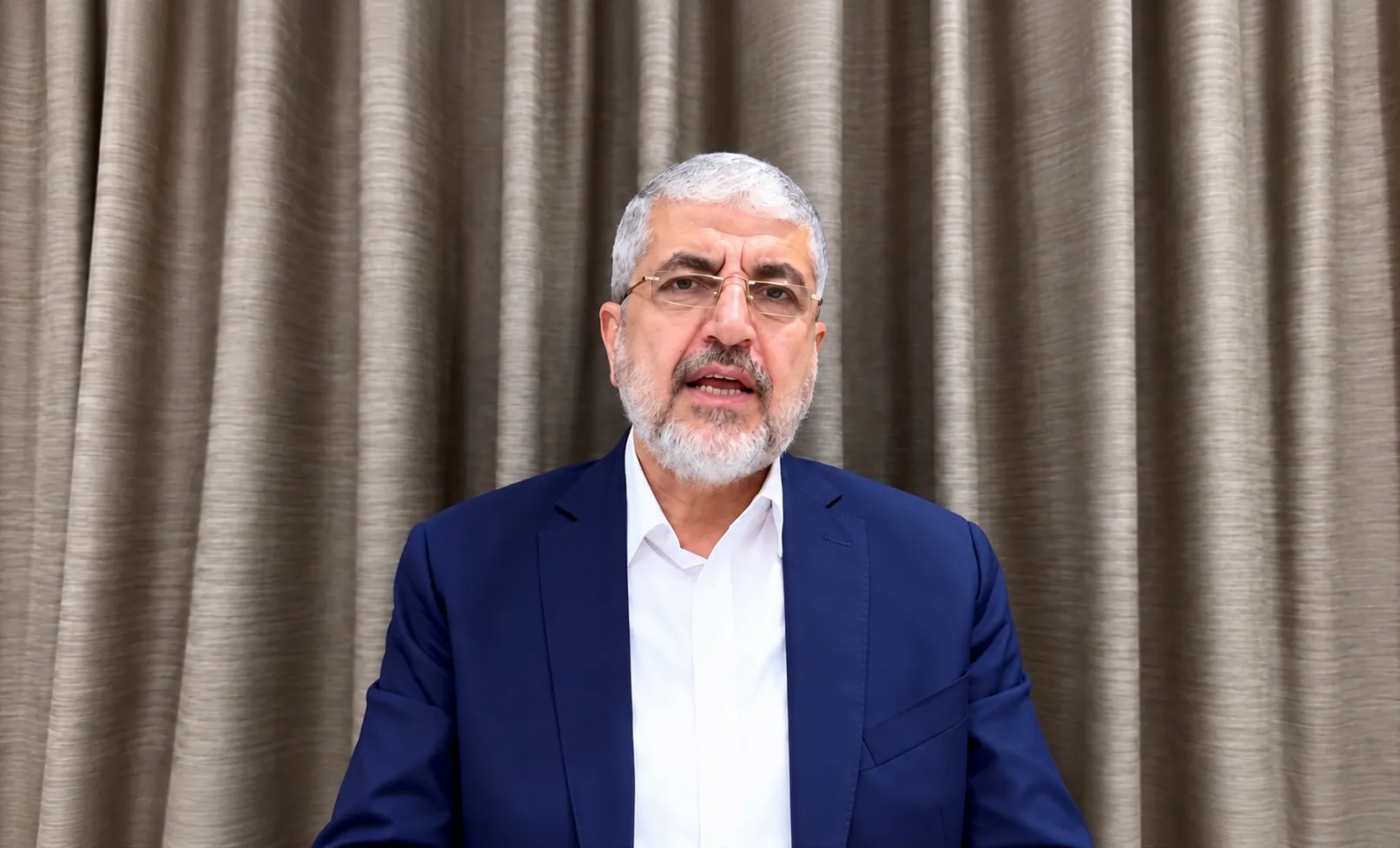
The head of the Islamic Resistance Movement Hamas abroad, Khaled Meshaal, warned that the blessed Al-Aqsa Mosque faces an unprecedented danger, holding that the Israeli occupation is seeking to settle its battle over Jerusalem and Al-Aqsa by imposing new religious, administrative and spatial realities.
Meshaal stressed that these realities require exceptional Palestinian, Arab and Islamic action, during his intervention in the urgent meeting for the support of Al-Aqsa.
The urgent meeting for the support of Al-Aqsa
This came in his intervention during the urgent meeting for the support of Al-Aqsa in the face of the aggression, organised by the International Jerusalem Foundation and the Global Coalition for the Support of Jerusalem and Palestine, today, Saturday, 26 September 2026.
During the meeting, Meshaal set out four strategies for action, comprising resistance, the Palestinian popular movement, Arab and Islamic mass mobilisation, and official action.
Meshaal said that "Al-Aqsa is at a crossroads and there is a persistent Israeli effort to settle the battle over Al-Aqsa".
He added that the developments cannot be dealt with as scattered incursions and assaults without understanding what he sees as an integrated path to control the mosque and change its identity and administration.
Occupation measures at Al-Aqsa Mosque
Meshaal reviewed a series of occupation measures that reveal the gravity of the stage, among them the complete closure of Al-Aqsa for forty days during the current year, and the extension of the periods of incursions.
He pointed to the effort to impose a spatial division added to the temporal division the occupation is trying to impose by emptying the mosque of worshippers at specific times.
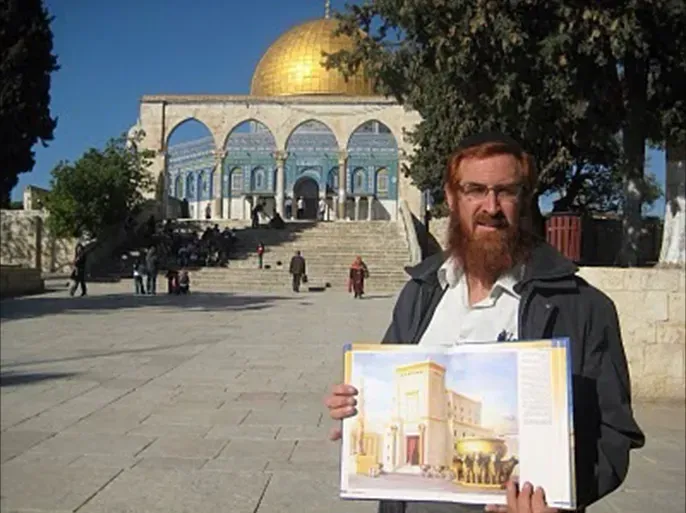
Meshaal noted the emptying of essential facilities in Al-Aqsa Mosque, among them the Dome of Imam Al-Ghazali, the Dar Al-Hadith Al-Sharif and the Bab Al-Rahma prayer area in the eastern section.
He also mentioned the Dome of Solomon in the northern courtyard and the Dome of Moses in the western courtyard, linking this to the excavations in Silwan, south of the mosque.
Meshaal held that these measures aim to reduce the area of Al-Aqsa, which stands at 144 dunums, and to impose internal divisions within it.
He warned against a repetition of what happened at the Ibrahimi Mosque in the city of Hebron.
Meshaal noted the introduction of tools used in Jewish rituals, including horns and books, and the transformation of practising them in the mosque's courtyards into an ordinary matter.
He also noted the storming of Al-Aqsa by 4,288 settlers on the anniversary of the so-called "destruction of the Temple", with the participation of Itamar Ben-Gvir and members of the Knesset.
He considered that this participation reflects official adoption of the assaults.
Meshaal stressed that the occupation is obstructing the responsibilities of the Islamic Awqaf in Jerusalem, which is affiliated with the Jordanian Ministry of Awqaf, by expelling employees and guards and hindering guarding, restoration, administration and maintenance work.
He said this aims to install an Israeli administration in place of the Islamic administration.
Meshaal criticised the growing official American adoption of the Israeli religious narrative regarding Jerusalem and Al-Aqsa, holding that this provides additional support for the occupation's efforts to impose its control over the mosque.
The four strategies for action
In setting out the required action, Meshaal placed at the forefront of the four strategies the "strategy of resistance and jihad", with the aim of rescuing Jerusalem and Al-Aqsa and liberating Palestine.
He called on the leaders of states and scholars to shoulder their responsibilities, holding that the Palestinian people cannot alone bear the burdens of the confrontation.
Meshaal pointed to the Palestinian sacrifices in Gaza, the West Bank, Jerusalem and the territories occupied in 1948.
He said that the war, destruction and abuse these areas are subjected to multiply the nation's responsibility towards Al-Aqsa.
The second strategy consisted of renewing popular resistance inside Palestine, through steadfast presence, prayer and travelling to the mosque.
He pointed to praying at the gates of the Old City and Al-Aqsa when the occupation prevents access to them.
Meshaal acknowledged the difficulty of the conditions Palestinians live under in the West Bank, Jerusalem and the territories occupied in 1948, but stressed the necessity of continuing the movement as much as possible.
He said this aims to keep the cause of Jerusalem present amid the wars the region is witnessing.
In the third strategy, Meshaal called for reviving Arab and Islamic mass movement, addressing scholars and the leaders of movements and forces of various orientations.
He stressed that Jerusalem is a shared cause for Muslims, Christians and all components of the nation.
Meshaal said: "We want a return to the squares, the return of the millions".
He called for renewing action for the sake of Jerusalem, Al-Aqsa, Gaza and the West Bank, and for supporting Jerusalemites with money, charitable work, restoration and mass presence.
Meshaal directed the fourth strategy to the leaders of Arab and Islamic states, demanding exceptional action commensurate with the gravity of the stage.
He based this on three motives: performing the duty towards Palestine, defending their own countries in the face of Israeli threats, and taking advantage of shifts in world public opinion.
Meshaal held that action in support of Jerusalem and Al-Aqsa constitutes a defence of the region's states themselves, amid what he described as the expansion of Israeli assaults and threats.
He noted that growing international anger at the occupation's policies provides a favourable environment for more serious official action, according to what was reported by Netherlands begins implementing a comprehensive ban on Israeli settlement products.
Meshaal called for keeping the suffering of Palestinians in the West Bank and the territories occupied in 1948, and the issue of prisoners in occupation prisons, at the forefront of attention.
He accused the occupation leadership of sponsoring a systematic policy of abuse against prisoners, and demanded the unification of efforts to support Palestinians and protect their holy sites.
Meshaal stressed that the focus on Al-Aqsa must be accompanied by continued support for Gaza, warning against the persistence of displacement and disarmament plans.
He also warned of the repercussions of the siege and destruction and the risk of the collapse of damaged buildings as winter approaches.