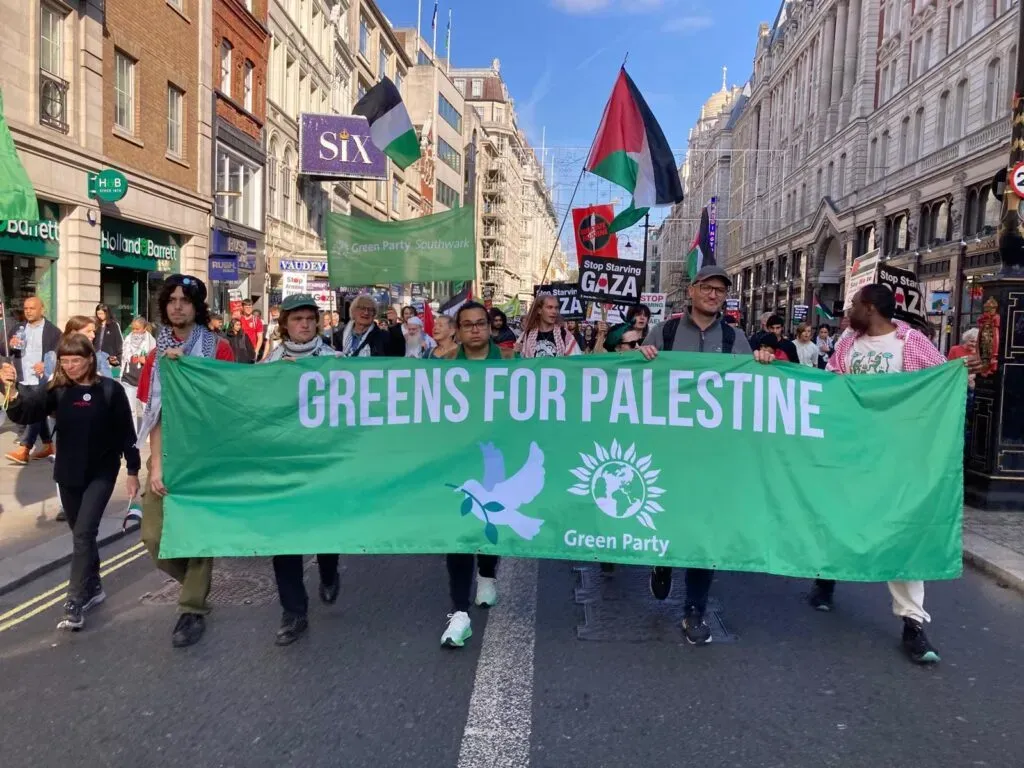
Britain's two main opposition parties held their annual conferences days apart this week, and both were dominated by Palestine, signalling how far the conversation has moved in British politics since the start of Israel's genocide in Gaza.
At the Green Party conference in Brighton, which opened on Thursday, members are set to vote on a motion to declare Zionism a form of racism, a measure that, if passed, would make the Greens the first major British party to formally adopt that position. The motion, drafted by British-Palestinian Lubna Speitan and others, defines Zionism as "a political ideology which called for the creation — and, now it exists, the continuity — of an ethnonationalist Jewish State in historic Palestine to the exclusion and/or domination of the non-Jewish population," and argues its real-world manifestation has been the "historic and ongoing dehumanisation, displacement, dispossession, disenfranchisement and destruction of Palestinians." A party organiser told Middle East Eye the motion had significant support and was highly likely to pass.
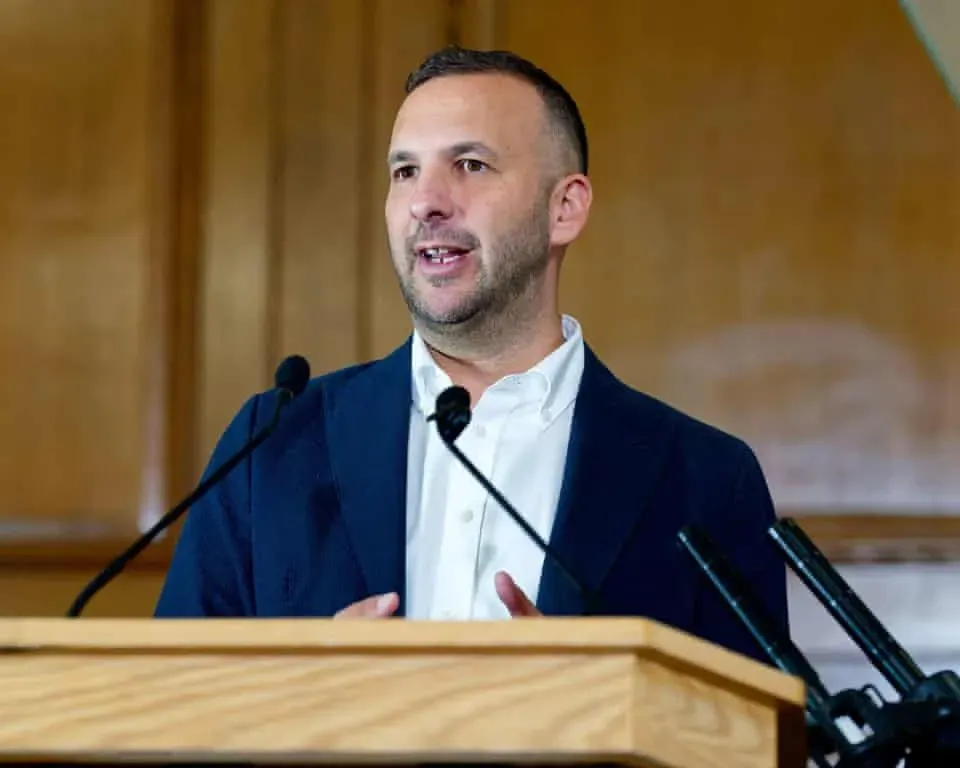
The motion has drawn both fierce support and internal opposition. Holocaust survivor Stephen Kapos endorsed it, saying as a child survivor he believed Zionism "has no legitimacy and must be rejected." Former leader Caroline Lucas said she had serious concerns, warning the motion risked being divisive and could be seen as suggesting Jewish people were unwelcome in the party. Green leader Zack Polanski, who is Jewish and describes himself as anti-Zionist, said the motion needed amendment to explicitly protect Jewish members and remove the line on a single Palestinian state, which he said would be "imperial" for a British party to dictate.
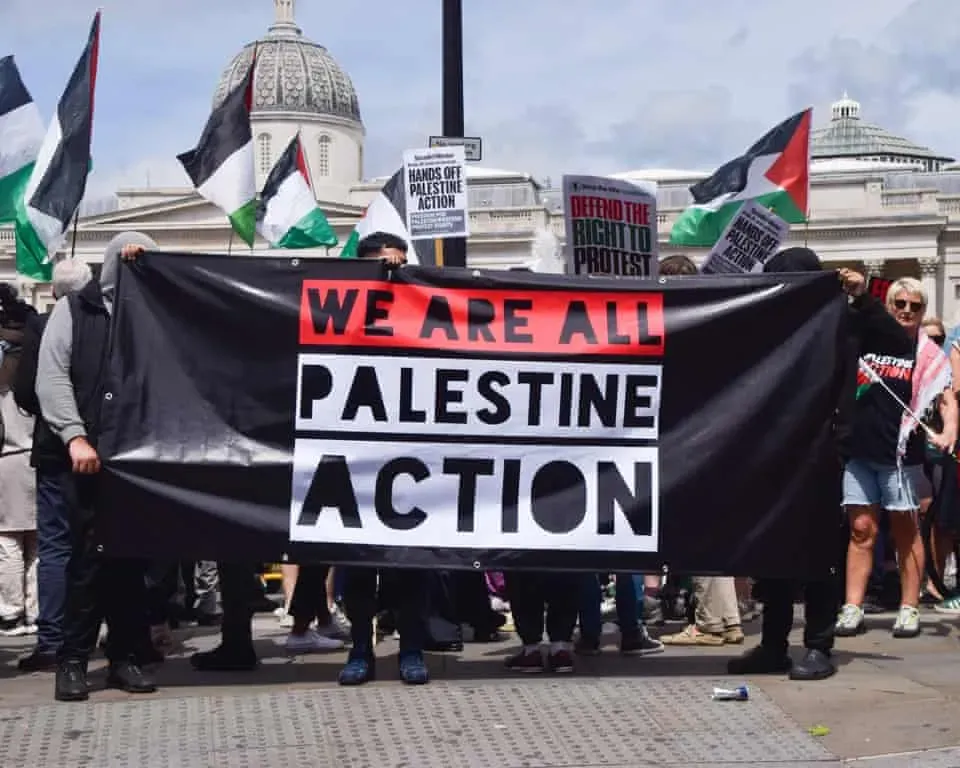
Polanski's conference speech electrified the hall when he declared: "Drop the charges, end the genocide, deproscribe Palestine Action." The line drew the loudest applause of the entire speech. Palestine Action is a direct-action group proscribed as a terrorist organisation by the British government in July 2025, making it a criminal offence to express support for it. Polanski's call to lift the ban, met with a standing ovation at a political party conference, is a direct challenge to the Burnham government's most controversial domestic security decision.
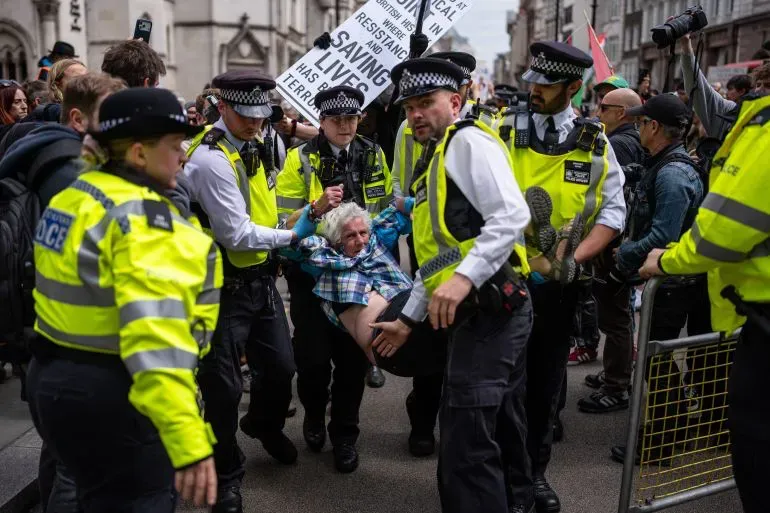
At Labour's conference in Liverpool a week earlier, the pressure from the Palestinian solidarity movement was equally intense. Labour members voted to endorse the findings of the UN Commission of Inquiry, which concluded that Israel has committed genocide in Gaza. The government has declined to adopt the position officially, with ministers arguing that genocide should be determined by courts rather than politicians. Outside the conference venue, police arrested 150 people at a sit-in organised by Defend Our Juries, carrying signs reading "I support Palestine Action" and "I oppose genocide, I support Palestine Action," bringing the total number arrested since Palestine Action's proscription to nearly 4,000.
Pro-Palestinian groups including Momentum, Labour and Palestine, and the Palestine Solidarity Campaign had gathered at the conference to push Burnham to recognise the genocide, impose a full arms embargo on Israel, and reverse Palestine Action's proscription, presenting all three as early tests of his promise to break from his predecessor's record on Gaza. Burnham has so far declined to formally recognise the genocide or lift the Palestine Action ban, even as his government has moved on settlement sanctions.