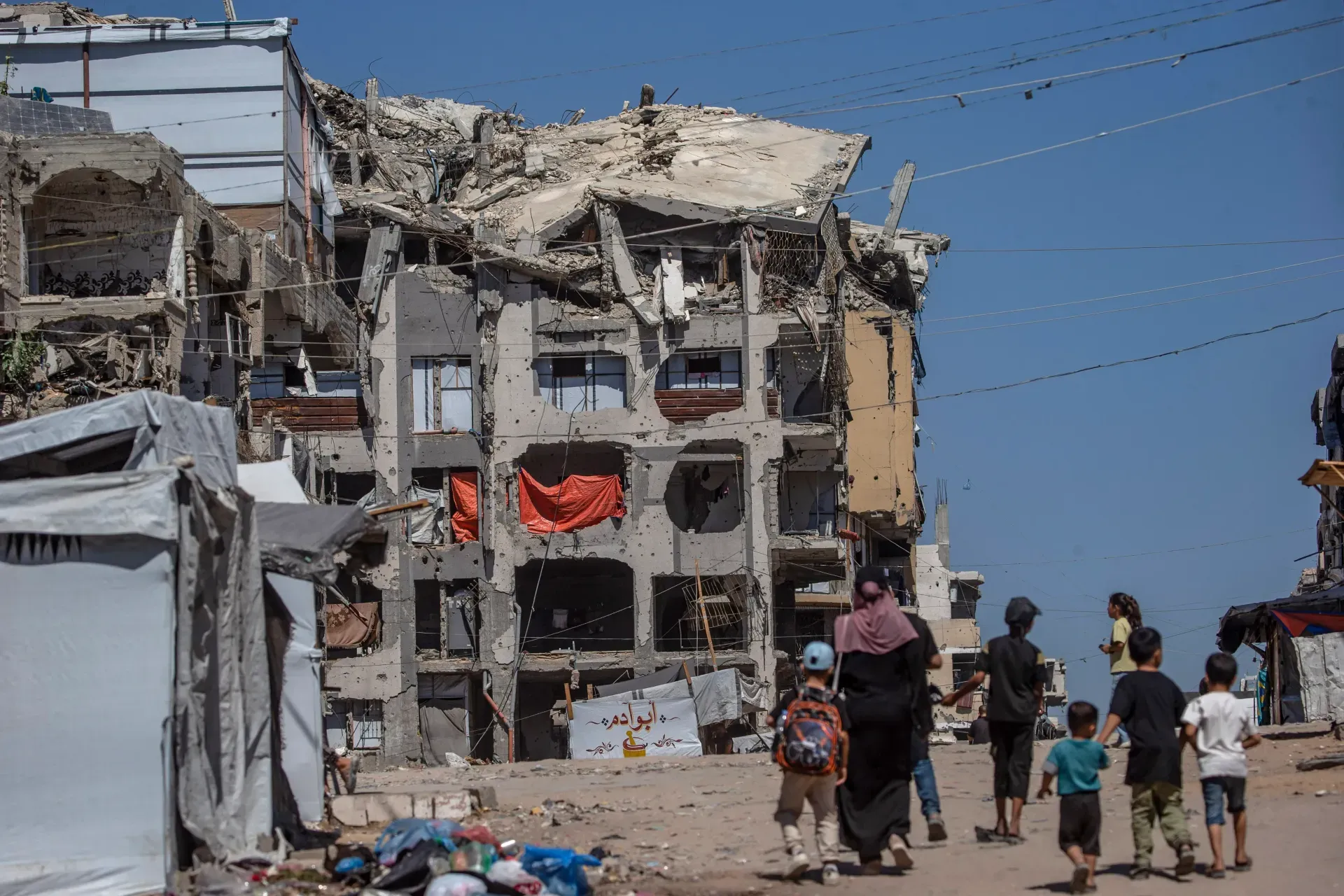

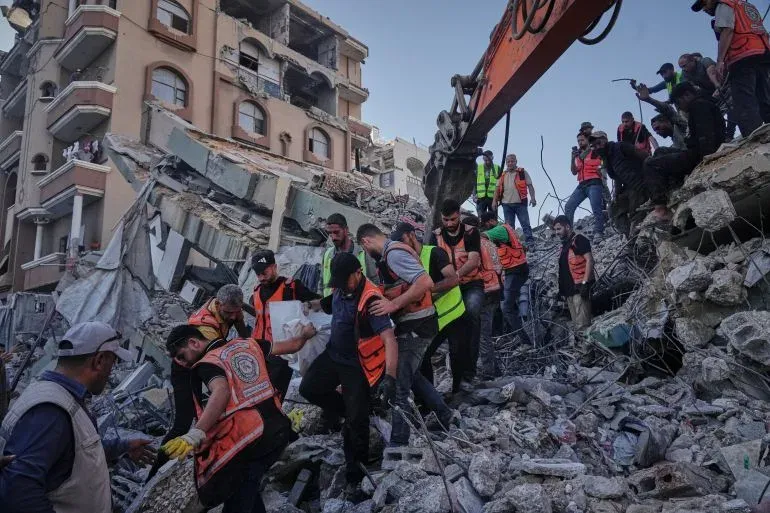
A six-story residential building collapsed in the Industrial area southwest of Gaza City at dawn on Wednesday, killing 16 Palestinians, including five children, and injuring 20 others, while dozens remain trapped under the rubble.
The Gaza Centre for Human Rights warned of a repeat of the al-Saada building tragedy in Gaza, holding "Israel" responsible in a statement for endangering civilians by preventing repairs and obstructing reconstruction and the provision of safe housing. It called for immediate steps and measures to save thousands of families living in similar conditions and under the threat of death at any moment due to the lack of alternatives.
The Centre noted that the building had previously sustained damage and cracks from Israeli occupation forces' bombardment during military aggression, while residents of the area said more than 100 Palestinians were living in it and its surroundings, most of them displaced. The building also collapsed onto tents for displaced people set up next to it.
The Gaza Centre expressed deep concern over the continued civilian deaths from the collapse of residential buildings damaged during the genocidal war on the Gaza Strip, warning that continued Israeli restrictions on building materials, rescue equipment and reconstruction turn damaged buildings into permanent sources of danger to residents' lives, confirming that at least 2,000 damaged buildings represent potential sites for similar deaths.
The Centre viewed this incident as part of the repercussions of the vast destruction left by Israeli military operations in the Gaza Strip, explaining that thousands of residential buildings that were bombed and partially destroyed or became unfit for habitation remain standing in densely populated areas, while Israeli restrictions on the entry of building materials, repair supplies and engineering equipment have prevented necessary inspection, reinforcement and repair operations.
The Centre warned that the continued ban or restriction on the entry of repair and reconstruction materials, coupled with the lack of safe housing alternatives, pushes thousands of families to live in or next to damaged buildings, doubling the risks to their lives and their children's lives and making civilians pay a renewed price for the destruction left by the war.
It also affirmed that the acute shortage of heavy machinery, spare parts, fuel and oils needed to operate civil defence equipment limits rescue teams' ability to respond quickly to collapses and reach those trapped under the rubble, increasing the likelihood of higher casualties.
The Centre affirmed that "Israel", as the occupying power, along with the "Peace Council", bears full responsibility for this tragedy and other tragedies affecting more than two million people in the Strip.
It noted that from the perspective of international humanitarian law, the destruction of civilian property is only permissible in cases justified by military necessity under the law, while the protection of civilians from risks arising from military operations and occupation remains a continuing legal obligation. It added that depriving residents of materials and equipment needed to repair their homes or remove life-threatening risks raises serious questions about compliance with obligations under international humanitarian law and human rights law.
The Gaza Centre for Human Rights stressed that leaving damaged buildings without inspection, reinforcement or safe removal, while preventing residents from accessing adequate housing alternatives, represents an extension of the war's effects on the right to life, physical safety and adequate housing, and requires urgent treatment, especially in areas experiencing high population density and widespread displacement.
Amid these ongoing conditions, the Centre warned of the possibility of similar collapses recurring in different areas of the Gaza Strip, especially with the approach of winter and its accompanying rain and winds that could further weaken damaged buildings.
The Gaza Centre for Human Rights called for lifting restrictions on the entry of building, repair and reinforcement materials into the Gaza Strip, allowing the urgent entry of necessary engineering equipment, and providing heavy machinery, rescue equipment, spare parts, fuel and oils needed to enable civil defence to carry out its tasks of rescuing the trapped and removing rubble.
It also called for an urgent and comprehensive engineering survey of all damaged buildings, their classification according to degree of danger, the immediate evacuation of buildings at risk of collapse, and the provision of temporary and safe housing for residents and displaced people living in damaged or collapse-threatened buildings until they are repaired or rebuilt.
It stressed the necessity of ensuring access for competent international bodies to affected areas to conduct an independent risk assessment and support repair work and the removal of dangerous buildings.
It emphasised that reconstruction and the provision of adequate housing are a fundamental condition for protecting the right to life, safety and personal security of civilians.