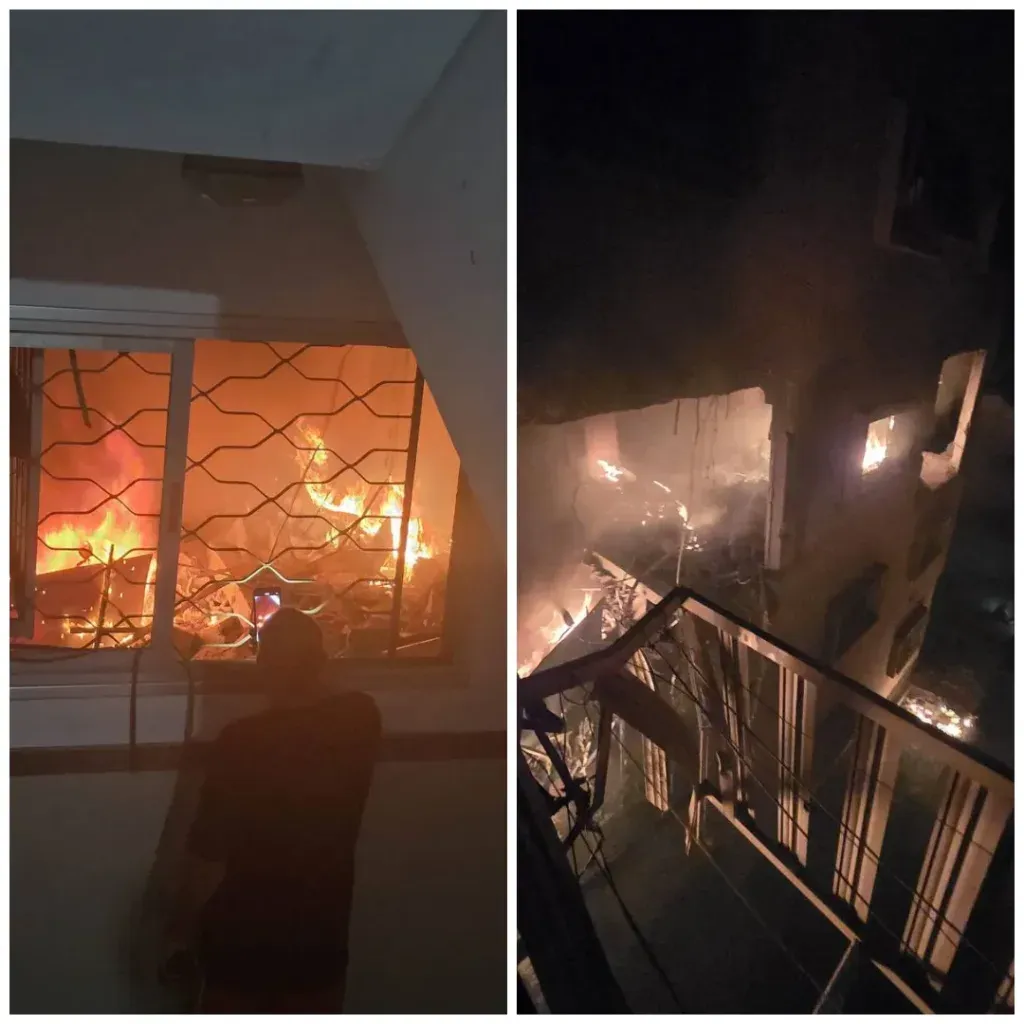

A young man from Gaza, identified only as (N), did not know that his use of narcotics, which induced a state of hallucination, would expose a secret he had kept for more than a year: collaboration with Israel's General Security Service, the Shin Bet, which had recruited him for security missions aimed at pursuing activists from the armed wings of Palestinian factions.
That dark night, (N) consumed narcotics. Shortly before, he had received a call from his handler, an Israeli intelligence officer, asking him to send photographs of a location connected to the shelter of an activist in one of the prominent and active Palestinian factions via the Messenger application on Facebook. But the collaborator, having consumed the substances, was not in his right mind, and instead of sending the images to his handler, he posted them on his personal Facebook wall.
These details were not a work of fiction, but events that could be described as "sensational," leading to the collaborator's arrest after one of his relatives saw what he had posted on Facebook. The relative hurried to call the person whose location had been photographed and informed him of what had happened. At the same time, people tried to alert the collaborator himself to the images he had posted, believing they had been shared by mistake, and he later deleted them. But he did not know that the information had already reached the person concerned.
A security source familiar with the details told Asharq Al-Awsat that an ambush was prepared to arrest him. He attempted to flee to the Yellow Line in the southern Gaza Strip after learning from the Israeli intelligence officer about the preparations to arrest him. It later emerged that he had planted a small listening device in the location where that activist from one of the factions had been staying, a fact he admitted to himself during interrogations.
The source explained that the speed of the operation led to his arrest before he could flee, indicating that his arrest, interrogation, and swift collapse revealed his involvement in the assassination of 12 activists from Palestinian factions over the course of a year since his recruitment.
The source noted that many collaborators fall into the mire of working for Israeli intelligence because of financial need, but the majority do so because of drug use, or because they are turned in by other collaborators or intelligence officers who exploit their financial, living, or social circumstances and forbidden relationships to recruit them.
The source affirmed that despite the difficult security conditions and Israel's ongoing pursuit of activists from Palestinian factions, police officers, and security personnel, the pursuit of collaborators continues, as well as of informants or those working with armed gangs.
Hamas executed weeks ago a collaborator who admitted he was responsible for the assassination of Izz al-Din al-Haddad, the overall commander of the Qassam Brigades, the movement's armed wing, who was killed in mid-May after a strike on a vehicle he was driving in Gaza City.
That collaborator had been arrested just one day after al-Haddad's assassination, after he was seen wandering inside the Shifa Medical Complex trying to obtain information about the names of the dead and wounded, and after he had been seen more than once at the site of al-Haddad's assassination as well as in specific locations.
Throughout the war and after the ceasefire, numerous executions were carried out against Gazans proven to have collaborated and caused the deaths of leaders and activists from Palestinian factions after being discovered under various circumstances.
Another security source told Asharq Al-Awsat that the majority of collaborators come from outside the Palestinian factions, while some have a relationship with the target, whether through kinship, being neighbors, from a particular social environment, or even having no connection to him at all, as was the case between al-Haddad and the collaborator who caused his assassination.