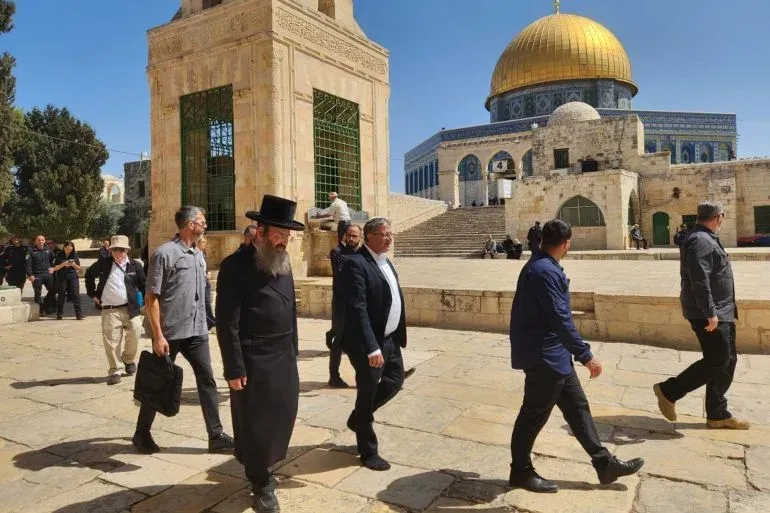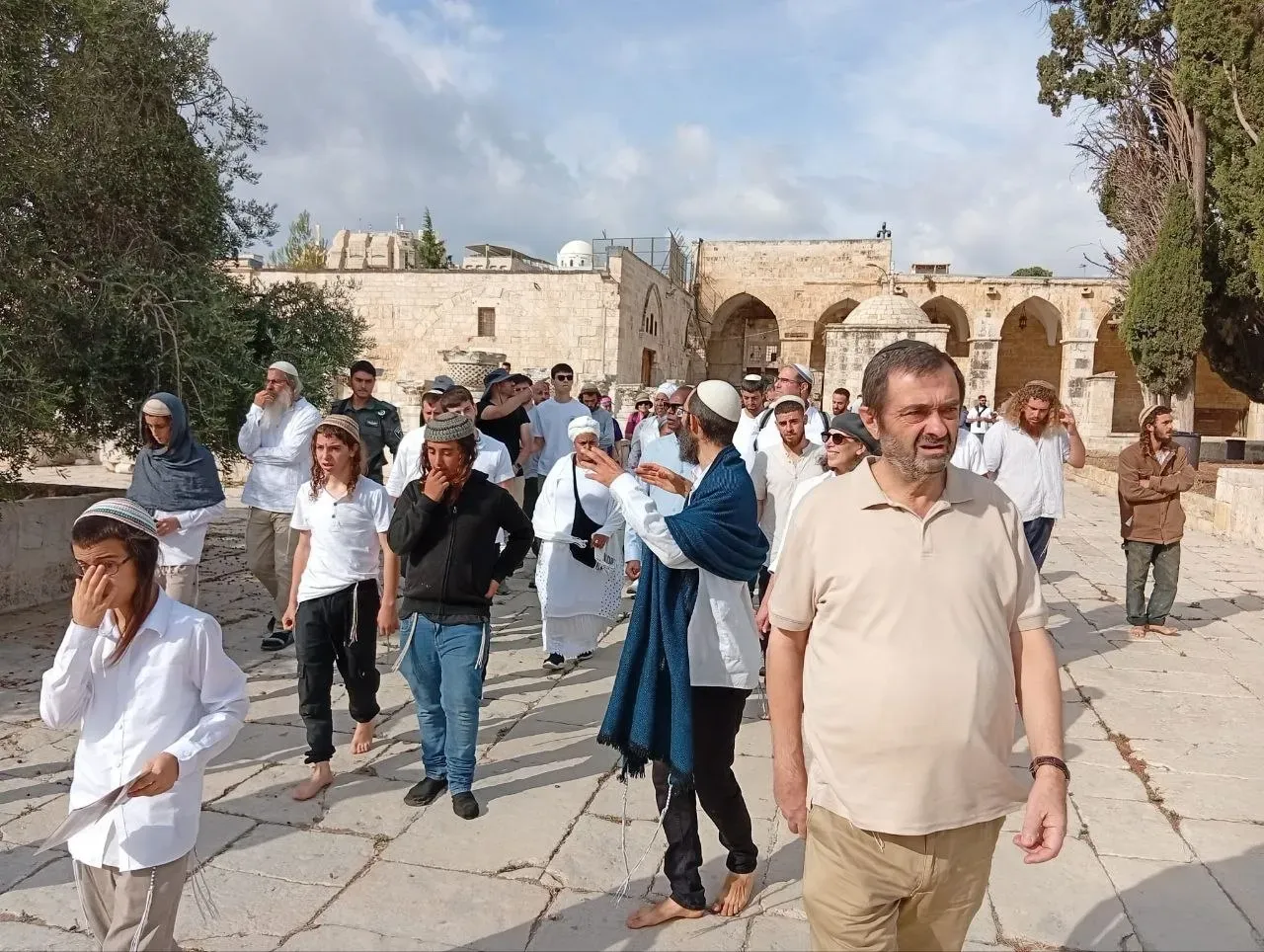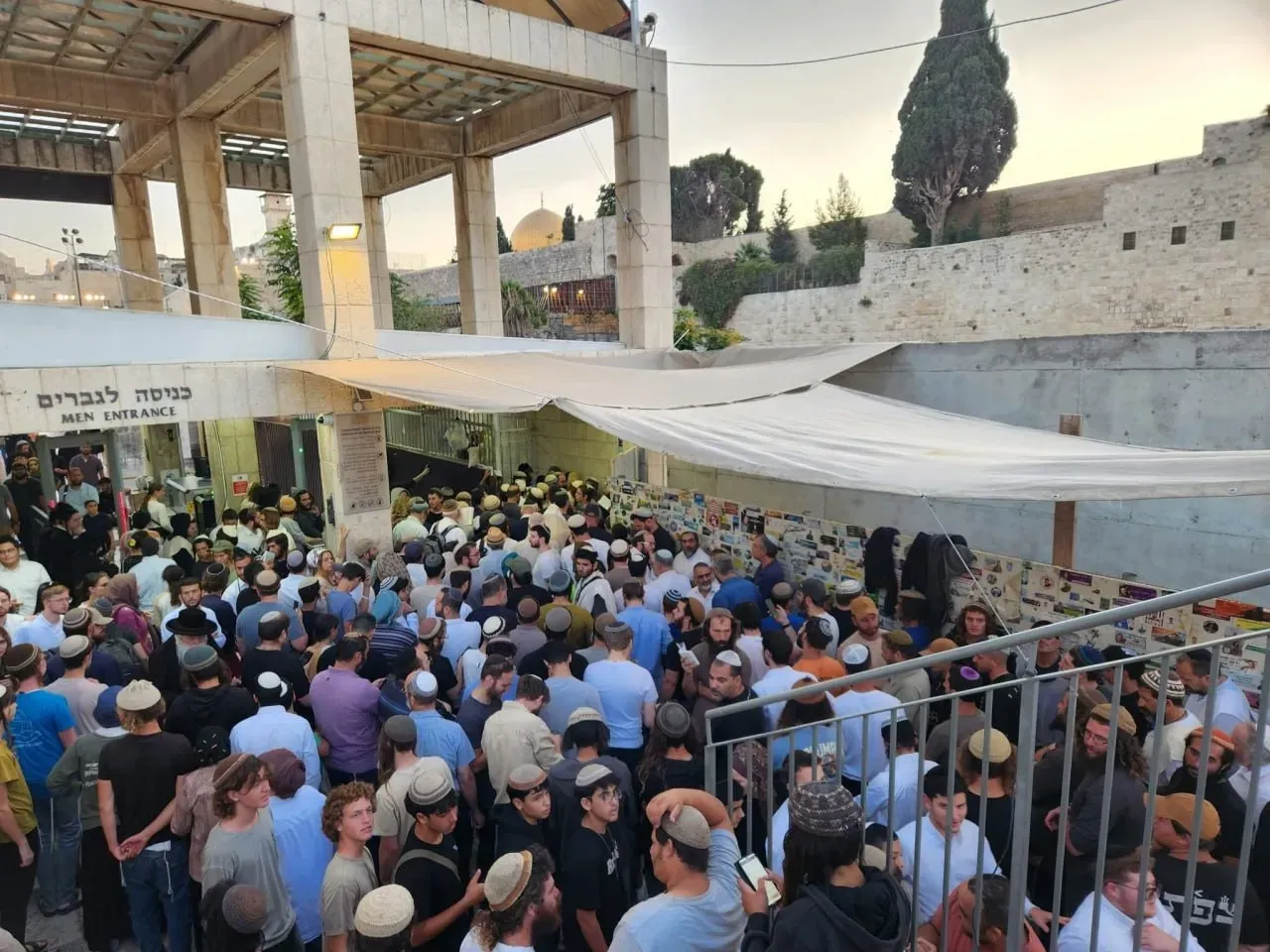

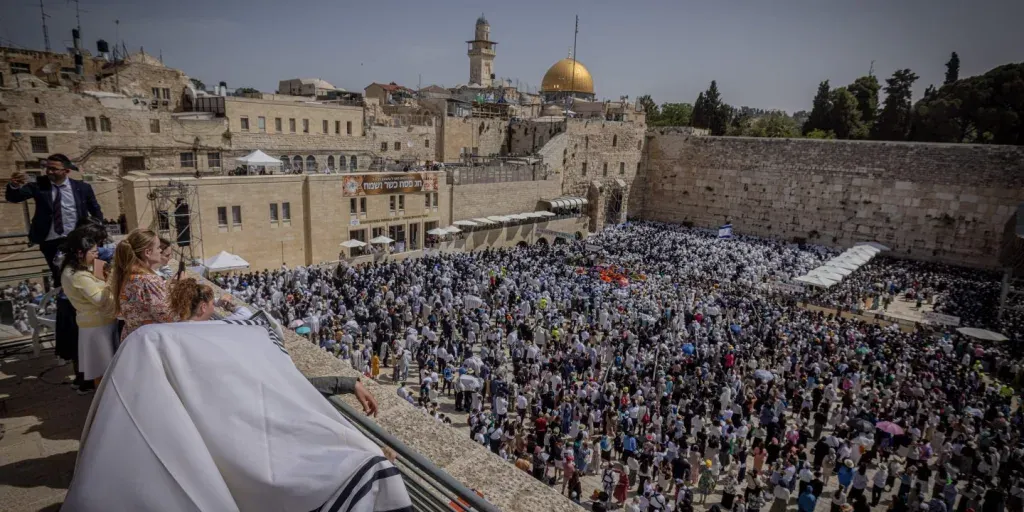
Al-Aqsa Mosque witnessed a broad escalation in settler incursions during the days of the Jewish holiday known as Sukkot, with the number of those who stormed the site reaching 9,123 settlers, amid strict measures imposed by occupation forces on the entry of Palestinian worshippers into the mosque.
The incursions were accompanied by a heavy security deployment of occupation forces, which provided protection for the settlers as they entered the mosque courtyards, alongside restrictions on worshippers and tighter scrutiny at Al-Aqsa's gates.
The incursions saw the participation of ministers in the occupation government and Knesset members, along with rabbis who led groups of settlers inside the mosque courtyards.
The incursions included Talmudic practices and rituals, including public dancing and singing in the courtyards, and the raising of the occupation flag in front of the Dome of the Rock.
The settlers also performed the Kaddish prayer and chanted the Priestly Blessing and the Shema collectively, in addition to bringing the Jewish prayer book, the Siddur, and reading it inside the mosque courtyards.
The rituals also included the introduction of what are called plant offerings, along with the performance of the Talmudic Four Species ritual in different areas of the Al-Aqsa courtyards.
On the other hand, occupation forces tightened their measures on the entry of Palestinian and Jerusalemite worshippers, and imposed restrictions and scrutiny at the mosque's gates, which limited the access of large numbers of citizens to Al-Aqsa.
The escalation also coincided with restrictions on media coverage and filming around the mosque, as the incursions and rituals continued inside.
This comes within a broader escalation in the West Bank, where data documented 2,051 attacks carried out by occupation forces and settlers during September, amid continued attacks and restrictions affecting citizens and holy sites.