
The language of numbers in the Gaza Strip goes beyond the traditional description of wars, as field data indicate that the Israeli occupation dropped more than 200,000 tons of explosives since October 2025.
This massive scale of destructive power comes at a time when occupation leaders wonder before international forums about the impact of a single rocket, while entire cities in the Strip have turned into piles of entangled rubble.
Official sources in the Government Media Office stated that military operations led to comprehensive destruction affecting about 90 percent of urban and agricultural areas in Gaza, while the occupation army imposed its field control through ground invasion and a scorched-earth policy over an area exceeding 80 percent of the Strip's total area, leading to forced displacement of the population and changing the features of the land.
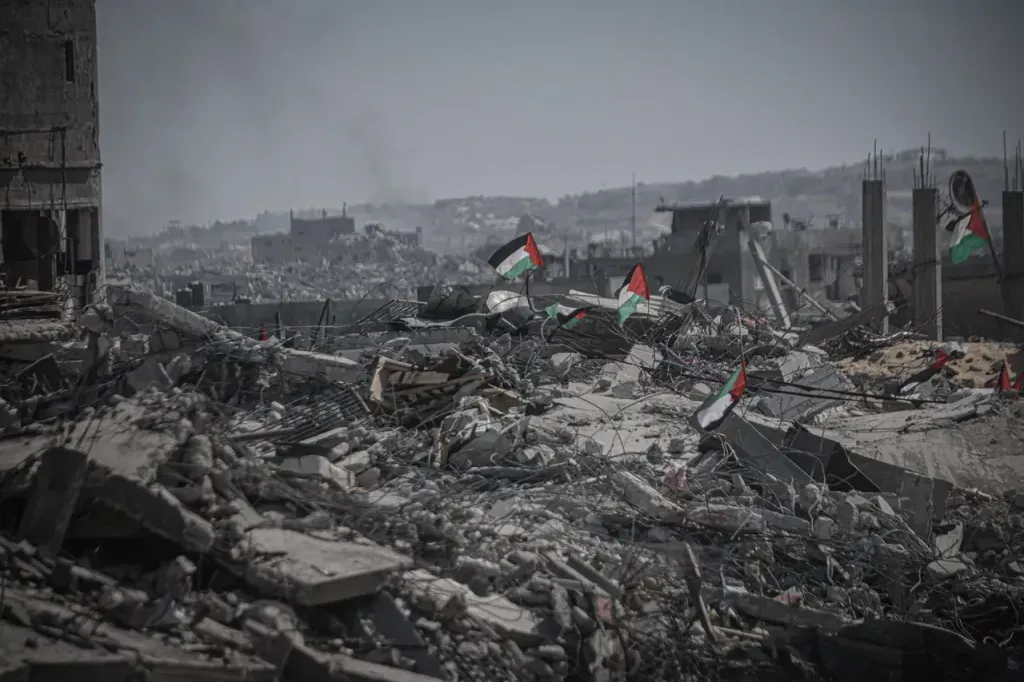
Satellite images and recent maps reveal a radical transformation in the Strip's topography, as residential neighborhoods once described as prosperous, such as Shuja'iyya, Zeitoun and Tal al-Hawa, have disappeared. These areas, once bustling with life and urban buildings, now appear on maps as gray patches of debris, with paths and routes erased and the boundaries of neighborhoods overlapping.
The destruction was not limited to stone, but extended to systematically target the environmental and agricultural structure, as statistics indicate the eradication of 95 percent of agricultural crops, while military bulldozers razed 98 percent of tree-planted areas, turning the orchards of Khza'a and Abasan and the fields of Juhor al-Dik and Al-Mughraqa into barren lands burned by shells and explosives.
In the education sector, the Ministry of Education and Higher Education recorded an unprecedented catastrophe after the complete destruction of 179 government schools, in addition to 63 university buildings. The targeting did not stop there, as shells hit more than 100 schools affiliated with UNRWA, leading to the complete removal of 30 schools from the educational registry after their students and teachers were martyred.
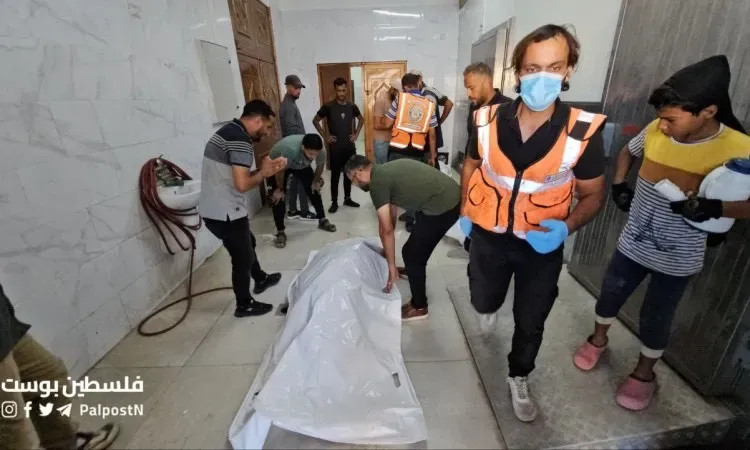
Health facilities were also in the line of fire, as major hospitals such as Al-Shifa, Al-Nasser, the Indonesian Hospital and Kamal Adwan sustained widespread destruction that put them out of service or sharply reduced their capacity. This systematic targeting of medical and educational facilities reflects a clear desire to make the Gaza Strip an unlivable place for long years to come.
Technical estimates indicate that the Gaza Strip now labors under 61 million tons of rubble that will require years of work to remove. The greatest danger lies in this debris containing about 4 million tons of hazardous waste, in addition to 50,000 tons of carcinogenic asbestos that poses a long-term health threat to the population.
Alongside the visible rubble, sources warn of about 100,000 tons of unexploded ordnance and objects lying beneath the ruins of destroyed homes. These military remnants represent time bombs threatening the lives of civilians and rescue crews, and hinder any initial attempts to repair the dilapidated infrastructure in various governorates.
What the Gaza Strip is witnessing is a process of forced geographical re-engineering, as the major streets of Khan Younis and Rafah have turned into routes with unclear features due to continuous bombardment.
This destructive policy has not left a single public or private facility untouched, making reconstruction a challenge beyond local and international capacities amid the continuation of the siege and aggression.