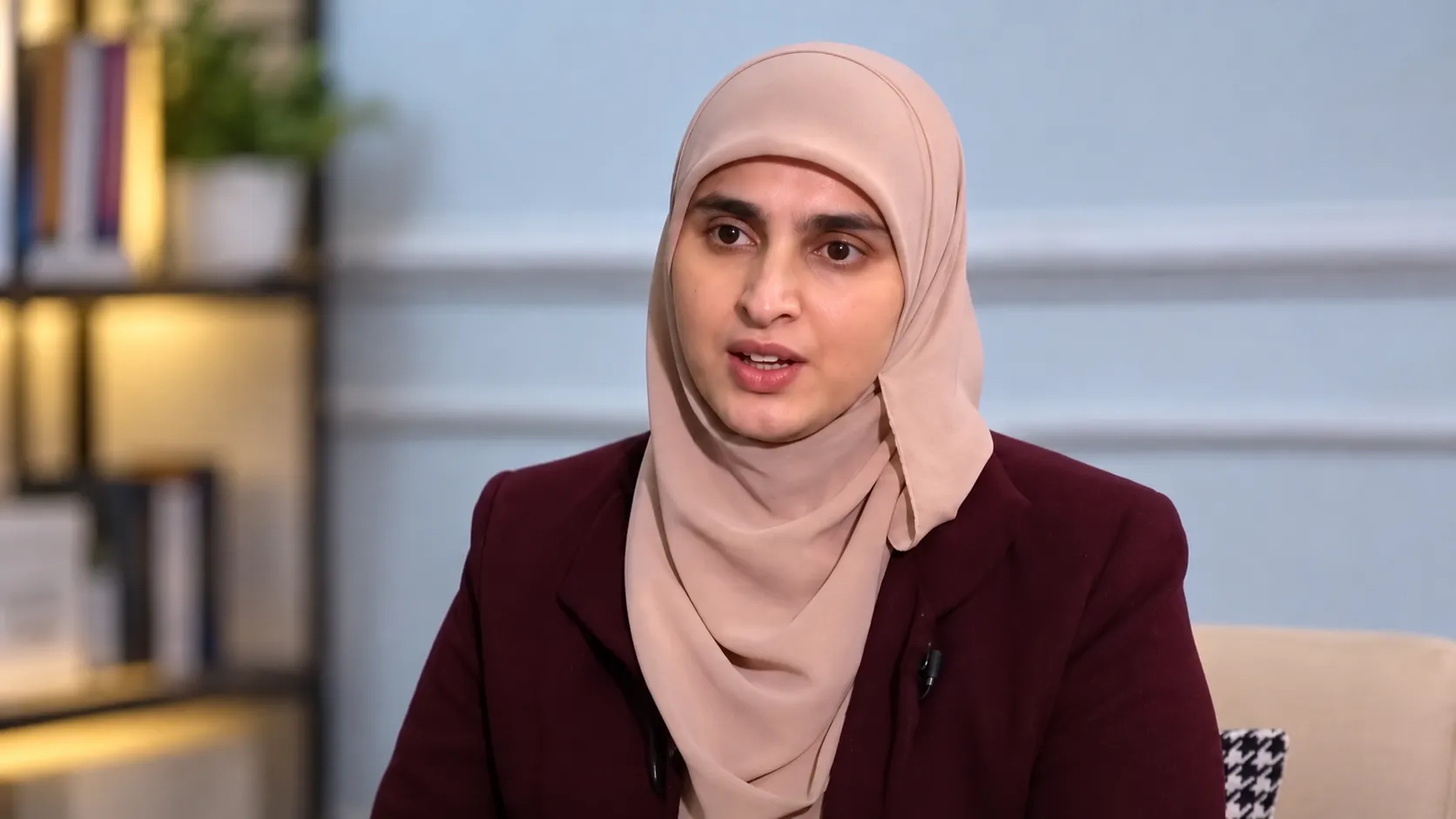
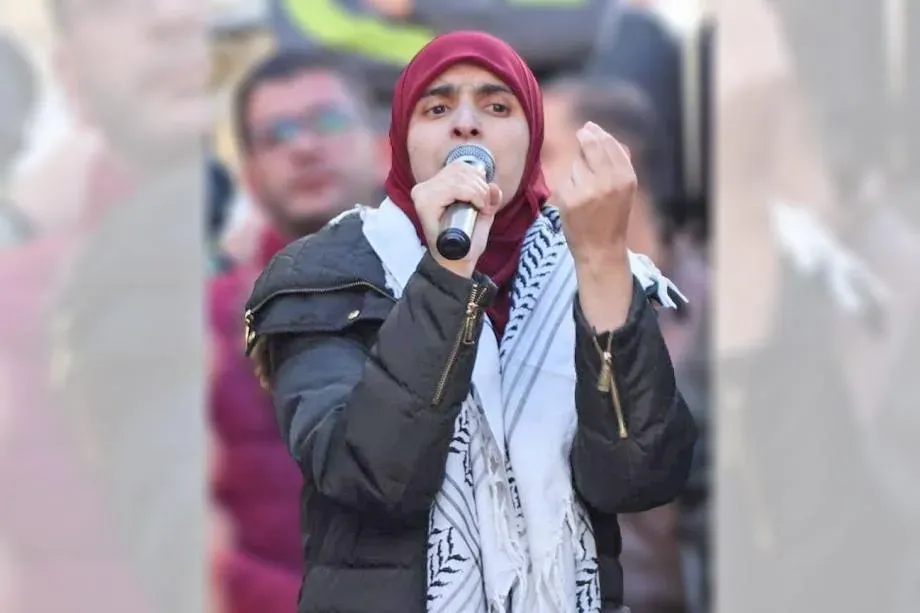
In the early dawn hours, when homes are steeped in the quiet of sleep, Israeli occupation forces stormed the home of Palestinian activist and writer Samer Hamad in the Al-Masayef neighborhood of Ramallah, searched it, then arrested her and took her to an unknown location at dawn on Monday, 5 October 2026.
The arrest of Samer Hamad may appear, on its face, to be a new incident added to the dozens or hundreds of arrests taking place in the West Bank, but the detainee's background and the nature of her public presence make it necessary to pause before this incident and raise a broader question: why do occupation forces target activists and influential figures in Palestinian society?
Samer Hamad hails from the village of Ein Yabrud in the Ramallah and Al-Bireh governorate. She holds a bachelor's degree in Islamic studies from Al-Quds University, worked as a teacher at Al-Najah School in Ramallah, and continued her postgraduate studies in Islamic sciences.
Her presence was not limited to the educational field; she was known as an activist and writer with a presence in political and social causes, and her name stood out in particular during her candidacy on the "Al-Quds Is Our Promise" list for the Palestinian legislative elections that were scheduled to be held in 2021 before being postponed.
Hamad also spoke on many occasions about the issue of prisoners, criticized administrative detention, and called on human rights and international institutions to intervene to protect detainees, especially prisoners on hunger strike. Her discourse extended to defending public freedoms and rejecting political prosecutions of activists, including criticism of political arrests carried out by Palestinian security agencies.
In previous statements, Hamad addressed the issues of Jerusalem, Al-Aqsa Mosque, settlement activity, incursions and arrests, and spoke about prisoners and the need to stand by them. Archives of her statements show that she has been present in Palestinian political and social discourse for years.
Here lies the significance of the arrest; Samer Hamad is not merely a name added to a list of detainees, but a figure accustomed to using words, positions and public presence to express various Palestinian causes.
Arrest has long been one of the fundamental tools used by the occupation in dealing with Palestinian society. But targeting activists, writers, journalists and community figures opens another door of questions, related to attempts to limit society's ability to express itself and convey its narrative internally and externally.
The Palestinian activist does not necessarily carry a weapon, the writer does not need a rifle to be influential, and the journalist does not need a battlefield for his presence to be bothersome to those who want to monopolize the image.
The word is also an arena of confrontation. Therefore, removing a person capable of speaking, writing, documenting and influencing public opinion means, in one of its aspects, removing part of the Palestinian presence in the scene.
Indicators related to targeting media workers provide an example of this; the Palestinian Journalists' Syndicate said in its report for the first half of 2026 that 467 violations occurred against journalists and media workers, including arrest, prevention of coverage, physical targeting and detention, noting that more than 41% of the violations consisted of preventing coverage and detaining crews.
Data from the Palestinian News and Information Agency also documents cases of arrest, detention and pursuit of journalists during 2026.
Arrest may succeed in removing a person from the scene for a period, and may prevent the writer from writing, the activist from activism, and the journalist from reaching the field, but the Palestinian experience over past decades shows that removing individuals does not necessarily lead to the disappearance of the cause they spoke about.
Indeed, prison itself sometimes turns into a new chapter in the detainee's story. For decades, prisons were not merely places of detention, but became part of Palestinian memory; the names of detainees, their stories, writings, letters and testimonies remained present after their release, or even after the passing of some of them.
Therefore, the arrest of Samer Hamad raises a question that goes beyond the fate of a Palestinian woman arrested at dawn from her home: can the Palestinian narrative be erased by removing those who carry it? The occupation may remove the voice, but it cannot necessarily control all the voices that will come after it.
The arrest of Hamad cannot be viewed in isolation from the broader scene in the West Bank, where incursion, arrest and raid campaigns continue, affecting different categories of Palestinians, including activists, journalists, students and women.
In this context, defending the Palestinian's right to expression, writing, community work, documentation and political participation becomes an essential part of defending the public sphere itself.
Protecting the Palestinian voice does not mean agreeing with everything its owner says, nor does it mean canceling political and intellectual difference; rather, it means that difference should not turn into a reason to confiscate a person or remove his voice.
Hence, the case of Samer Hamad should not remain merely breaking news about the arrest of a Palestinian activist. It is an occasion to raise a broader issue: what happens when figures capable of expressing their society become a continuous target of arrest and pursuit?
The Palestinian narrative is not one person, nor one party, nor one faction. It is the sum of people's voices; the prisoner, the journalist, the writer, the teacher, the activist, the mother, the student, and every Palestinian trying to say to the world: we are here, and we have something to say.
The hand of the occupation may be able to storm a house at dawn, take a person to an unknown place, and prevent a voice from reaching its audience. But the question that remains open is: how many voices will be born from that voice?