
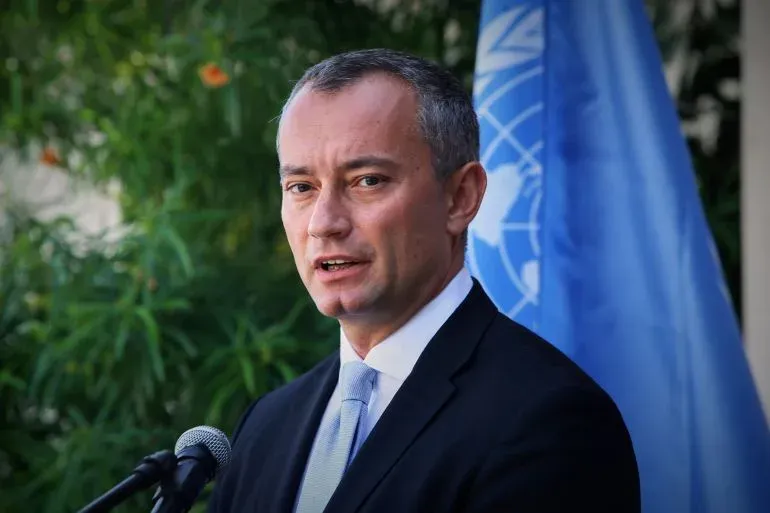
Nikolay Mladenov, Senior Representative for Gaza at the Peace Council and Director-General of the Anwar Gargash Diplomatic Academy, warned of the Gaza Strip sliding once again into a spiral of ongoing violence. In an analytical article, he stressed that the region stands before fateful choices that will shape the political and security future of the Strip for years to come.
Mladenov emphasised that what is required now is a radical transition from a policy of crisis management and repeated rounds of traditional fighting to structural arrangements that change the conditions that led to the wars. He noted that the events of 7 October brought about a profound shift in Israeli awareness, necessitating unconventional solutions to ensure stability.
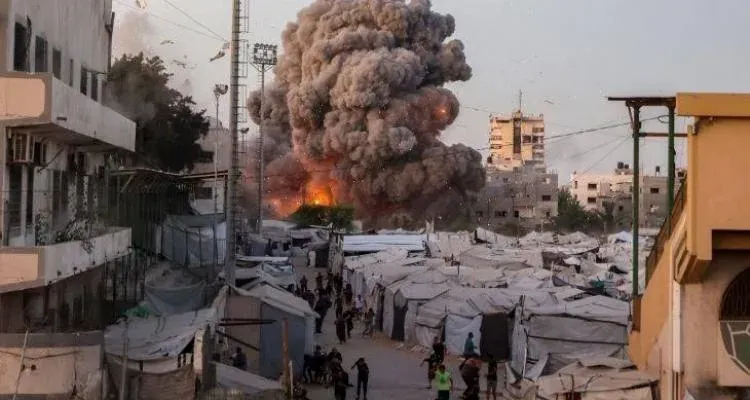
The international official reviewed the enormous human and material losses inflicted on the Gaza Strip, pointing to the martyrdom of tens of thousands of Palestinians and the displacement of millions. He explained that the hunger and fear experienced by Palestinian children require international action to end this worsening humanitarian suffering urgently.
Mladenov presented three possible paths for the Strip's future. The first is a return to the 'status quo' that preceded the explosion, in which factions rebuild their military capabilities and Israel prepares for a new round of fighting. He considered that this path does not address the fundamental causes of the conflict but only postpones the next explosion.
The second path involves Gaza remaining in a state of permanent turmoil and political uncertainty, with total reliance on humanitarian aid and stalled reconstruction efforts. Mladenov warned that the political vacuum in Gaza will inevitably lead to a rise in extremism as a result of despair and the loss of horizons among young people.
The third path stands out as Mladenov's preferred option, based on disarmament and dismantling the military structure of factions in an internationally verifiable manner. This is accompanied by the establishment of an accountable Palestinian civilian governance, in parallel with a gradual and comprehensive Israeli withdrawal from all areas of the Strip.
Mladenov affirmed that Gaza's future must be led by legitimate civilian institutions, not armed factions, stressing the need to integrate security arrangements within clear legal frameworks. He considered this transformation the only guarantee to convince international donors and investors to begin a real and sustainable reconstruction process.
In a message directed at the Israeli side, Mladenov explained that fears of repeating past failures are legitimate, but the solution does not lie in buffer zones. He noted that sustainable security requires strong governance that clearly defines which entity holds legitimate authority over force inside the besieged Strip.
He also posed frank questions to the Palestinian and Arab sides about whether the dominance of armed factions has actually contributed to bringing Palestinians closer to the dream of statehood. He called for restoring the decision of war and peace to national official institutions instead of armed groups acting unilaterally.
Mladenov considered that the strength of societies lies in the efficiency of their institutions and their ability to provide basic services such as education, health and economic welfare. He affirmed that confronting extremist thought is not achieved by military means alone, but by creating real economic and political alternatives that give hope to younger generations.
The article stressed that the success of any political transformation in Gaza requires credible international security guarantees and generous financial support for reconstruction. It called on the international community to enable transitional Palestinian institutions to perform their tasks away from factional rivalries or obstructive external interference.
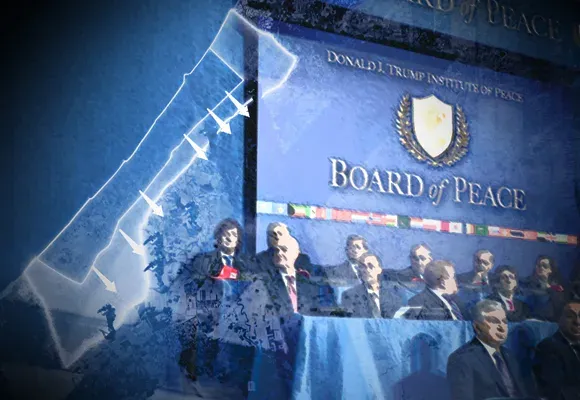
Mladenov referred to the US President's plan to end the war, which received the support of the UN Security Council, considering its implementation a major challenge requiring firm political will. He explained that paper agreements will not be sufficient unless accompanied by long-term commitments from all regional and international parties.
Press sources reported that obstacles remain to the implementation of the disarmament and Israeli withdrawal clauses, with a state of mistrust prevailing between the parties. The reports confirmed that the gap remains wide regarding the definition of security arrangements applicable on the ground in the post-war phase.
Mladenov concluded his vision with a call to choose a path that breaks the cycle of repeated wars paid for by Palestinians and Israelis over generations. He affirmed that the real challenge lies in building an environment that makes peace a possible and attractive option, rather than clinging to conditions that produce nothing but destruction.