
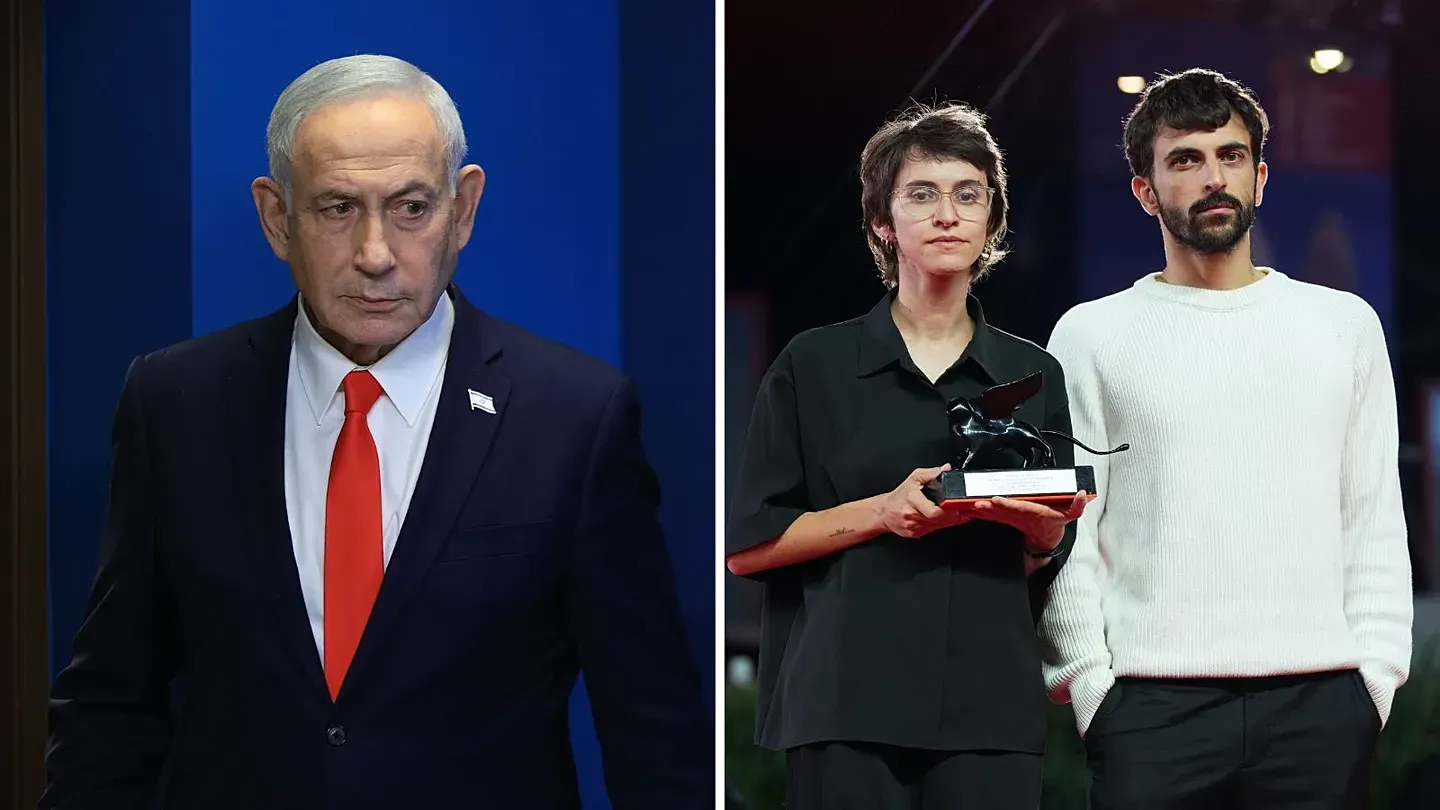
War criminal Benjamin Netanyahu demanded the opening of an investigation and the prosecution of those who took part in the documentary "NAZA," in which Israeli soldiers and intelligence personnel testify about the mass killing of civilians in the Gaza Strip.
In a letter sent to Army Chief of Staff Eyal Zamir, Shin Bet head David Zini, and Attorney General Gali Baharav-Miara, Netanyahu called for the participants to be tried for "serious information security offenses, criminal libel, and harm to Israel's political and security interests." He wrote that the film "unfolds a false, misleading, and biased plot that spreads slander against the State of Israel and the army around the world and severely harms Israel's standing," and that there is concern that those involved "committed serious criminal offenses by exposing top secret information and created a breach in the information security of a most sensitive intelligence unit." He did not name the unit.
The film, directed by Israelis Yuval Abraham and Rachel Szor, the co-directors of the Oscar-winning "No Other Land," is built on testimonies from 24 Israeli soldiers and intelligence personnel, filmed with their faces and voices altered, which seek to expose the mechanisms that allowed the mass killing of civilians in Gaza. The film examines the Israeli army's use of artificial intelligence in selecting targets, and its title comes from the Hebrew military acronym for "collateral damage." In one account, one interviewee says an attack was approved against a single Hamas member even though up to 500 civilians could have been killed. "NAZA" won the Special Jury Prize at the Venice Film Festival in September, after a standing ovation of about 25 minutes.
Netanyahu's demand follows a series of threats against the filmmakers and those who spoke. Culture Minister Miki Zohar asked the Interior Ministry to examine whether the directors' citizenship could be revoked, accusing them of treason, while National Security Minister Itamar Ben Gvir called them a disgrace and told them to leave the country. Netanyahu himself said he would promote "NAZA laws" against defaming soldiers and Israel, and that "we will revoke citizenship from anyone who defames soldiers in the world," according to Israeli reports. Zamir instructed the army's chief military prosecutor to examine possible legal action against the film and those involved, and ordered an inquiry into the alleged unauthorized disclosure of classified material used in its production.
Zamir said after the Venice win that the film "is not a critique of the army and not an attempt to ascertain the truth," describing it as based on "blood libels, deliberate distortion of reality, and false and grave accusations." He acknowledged that he had not yet watched it, and the army spokesperson called on the filmmakers to allow army representatives to view the film in full. The army has rejected the film's allegations and disputed its account of how strikes are authorized, saying that human personnel make targeting decisions, while the filmmakers have said the anonymous testimonies were vetted.
The Committee to Protect Journalists described Netanyahu's earlier response to the film as a "dangerous escalation in official efforts to intimidate and punish journalists." Abraham and Szor have not returned to Israel since the Venice screening, and Abraham has deleted his social media accounts.