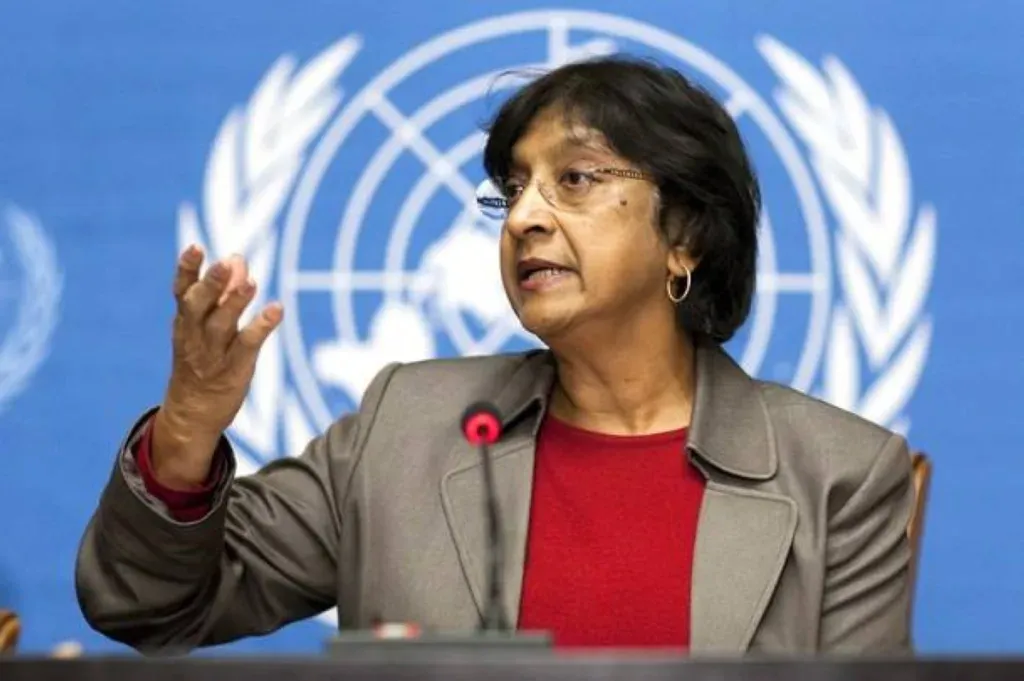

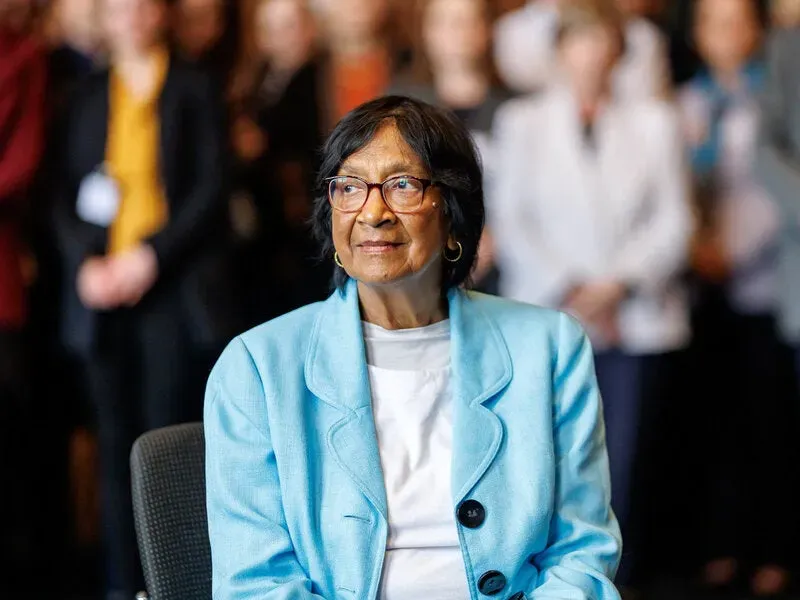
US President Donald Trump attacked on Saturday the decision to award the Nobel Peace Prize to Navi Pillay, a South African jurist who probed Israeli war crimes in Gaza, saying she 'hates Israel' and that he should have been given the prestigious award instead.
Speaking at a campaign rally in Syracuse, New York, Trump called the decision to award Pillay the prize 'disgraceful and embarrassing.'
Trump claimed in a Truth Social post he had helped end eight conflicts and prevent wars between countries in Asia, for which he 'should have won eight Nobel Peace Prizes.'
He said she was an 'unknown figure' whom he had never heard of. 'This is an indelible stain on Norway,' he said.
Reacting to her Nobel win, Pillay said she would 'dedicate this award to all of the survivors of international crimes.' She made her statement in the historic courtroom in Germany's Nuremberg where the trials prosecuting Nazi leaders after World War II were held.
'The last thing I did is the delivery of the report on Gaza, naming what's happening there as genocide,' Pillay said on Friday. 'One of the main reactions to that report is paying tribute to me for my courage. And you can imagine how surprised I was. Why would you need courage to speak the truth?'
The South African judge Navanethem 'Navi' Pillay has been awarded the 2026 Nobel Peace Prize, becoming the fifth South African to win it.
Making the announcement on Friday, the Norwegian Nobel Committee praised Pillay for her decades-long efforts to prosecute genocide and war crimes, which have been marked by 'judicial rigour, personal integrity and considerable courage.'
The 85-year-old is a judge at the International Court of Justice (ICJ) and has specialised in international law for decades.
Navanethem Pillay, known as Navi Pillay, was born in the racially segregated city of Durban in South Africa's Natal province in 1940 to parents of Tamil descent.
In a 2016 interview with the Diplomatic Courier, Pillay said her early human rights work was 'shaped by what (she) had experienced under apartheid.' 'I used many of the challenges to my advantage, I had to learn international humanitarian law so as to defend cases of racial discrimination,' she said.
After earning a law degree from the University of Natal, she became the first woman in Natal province to start her own law firm. Early in her career, she helped defend numerous anti-apartheid activists in the country.
She later became the first woman of colour to sit on the High Court of South Africa. She went on to preside over the International Criminal Tribunal for Rwanda (ICTR), which prosecuted those charged with humanitarian crimes during the 1994 Rwandan genocide.
Pillay was the United Nations High Commissioner for Human Rights (OHCHR) from 2008 to 2014. More recently, she chaired the UN Independent International Commission of Inquiry on the Occupied Palestinian Territory which determined last year that Israel is responsible for carrying out genocide in Gaza.
In a statement on the report, Pillay urged UN member states to do everything they can to establish a ceasefire in Gaza and to 'ensure justice and accountability for all victims.'
Currently, Pillay is a judge on the International Court of Justice, acting in a case in which Myanmar is accused of genocide against its mostly Muslim Rohingya minority.
The committee said honouring Pillay is especially important at a time when international law 'is under tremendous pressure and its institutions are under attack.' That message was echoed by rights advocates and international officials.
The UN's rights chief, Volker Turk, said her award was 'a recognition, a reaffirmation that human rights, the rule of law and justice and accountability are fundamental to everything, to peace, to security and prosperity.'
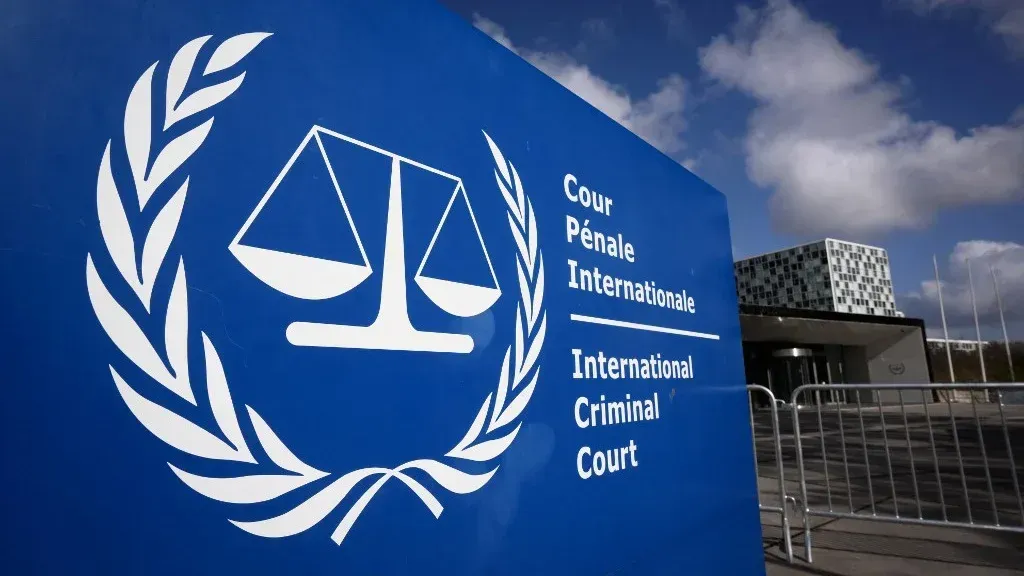
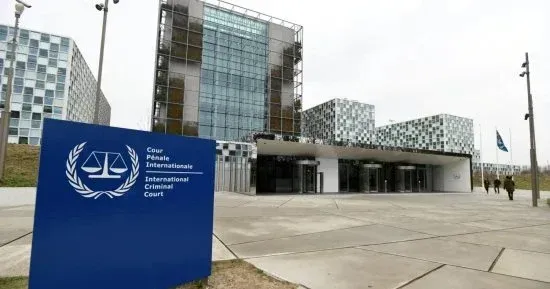
International Criminal Court (ICC) President Tomoko Akane said the award carried special significance 'at a time of profound challenges to the international legal order and the rule of law.'
Ashok Swain, a professor of peace and conflict research at Uppsala University, told Al Jazeera that the selection of Pillay was a 'pleasant surprise' and the 'best possible choice.' He said the Nobel committee likely took into consideration Pillay's lifelong record fighting genocide and apartheid. He added that the award to the South African jurist could also be read as a message to United States President Donald Trump, who has long argued that he is deserving of the peace prize and whose administration has clashed with South Africa over debunked claims that white Afrikaners are facing 'genocide.'
Furthermore, last year, the Trump administration issued sanctions against members of the ICC in what many critics saw as an attack on the system of international law.
The ICC had previously issued arrest warrants for Israeli Prime Minister Benjamin Netanyahu and former Defence Minister Yoav Gallant for alleged war crimes and crimes against humanity.
The ICC responded by describing the US sanctions as a 'flagrant attack against the independence of an impartial judicial institution' and the victims of war crimes around the world. It said it would continue its work 'without regard to any restriction, pressure or threat.'
Hours after former ICC judge Navi Pillay was announced as the winner of the Nobel Peace Prize, the Trump administration announced it has imposed sanctions on the ICC.
Secretary of State Marco Rubio announced the measures in a statement, saying that President Donald Trump 'will never allow the International Criminal Court to prosecute Americans.' Rubio said Washington will ban transactions with what he called a 'rogue court' in order to cut off its resources, and framed the choice facing it in stark terms: 'Either the ICC will end its threats, or we will end the ICC.'
The Trump administration has long been hostile to the court and has previously imposed sanctions on half of the court's 18 judges and much of its leadership, including its president and chief prosecutor.
The Nobel Prize awarding committee noted the sanctions on ICC judges and the attacks on the court as it recognised the importance of Pillay's work. 'History has shown that a world operating without the rule of law is unjust, unwise and inhumane. The judges - those who guard the thin red line between order and chaos - are therefore highly deserving of our praise,' said the committee. 'But today, as these same judges are sanctioned, and their institutions are attacked, we need people of courage, vision and determination - qualities that Navi Pillay demonstrates in her work on the bench.'
Trump has long coveted the prize and repeatedly said he deserves it despite starting the ongoing US-Israel assault on Iran.
Last year's winner, Venezuelan opposition leader Maria Corina Machado, handed her medal to Trump after the US abducted Venezuelan former President Nicholas Maduro in January.
Pillay joked that she might share her prize with the US leader. 'If you clap a little bit more, I may share this prize with Trump,' she said in a video posted on social media by the secretary-general of Amnesty International that showed Pillay being applauded after the announcement of the award.
In Pillay's comments on Friday, she denounced attacks on international legal institutions. 'We are living through an era when international law and human rights are under significant political attack,' she said. 'This worsening reality is particularly visible with the attacks on the International Criminal Court.'