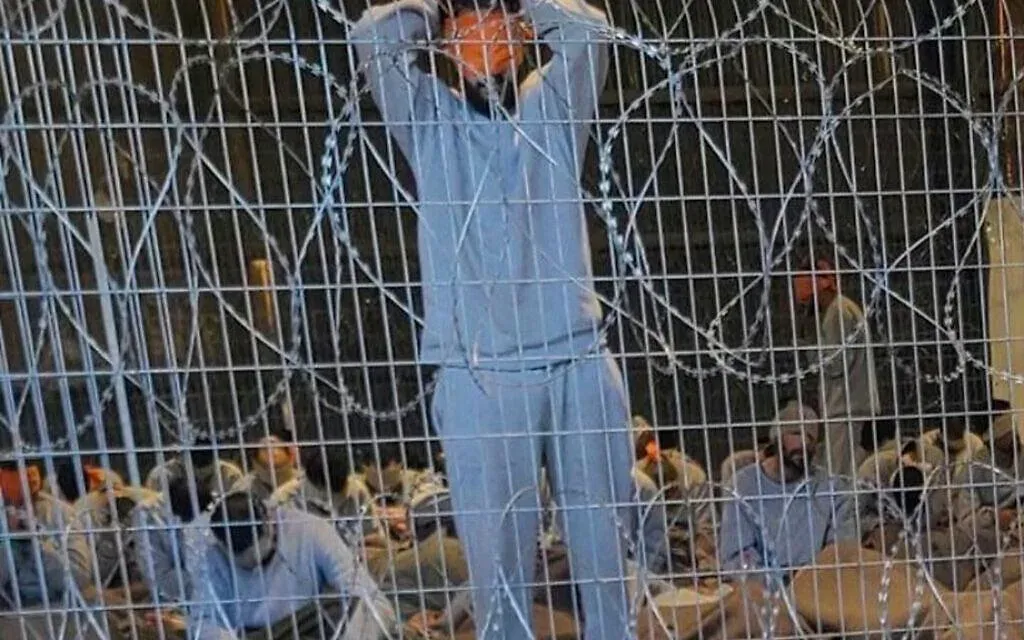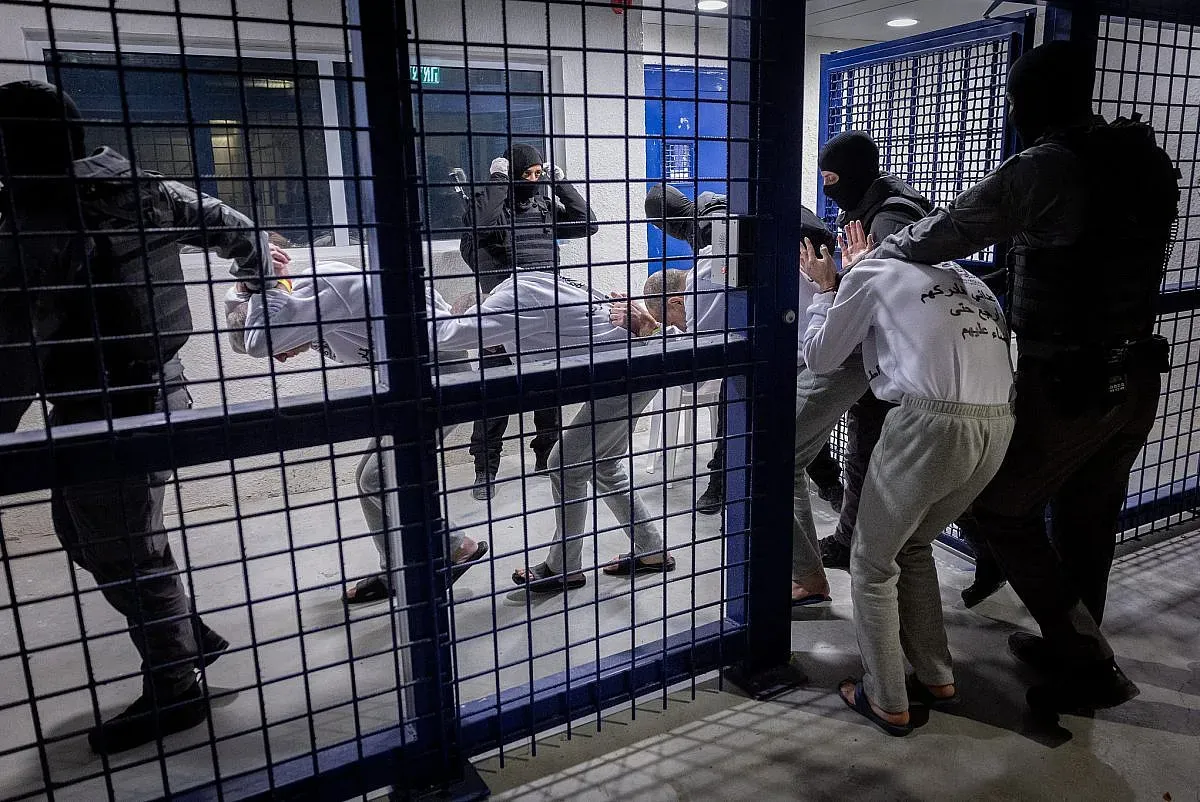

The Hebrew newspaper Haaretz has revealed that the firing of rubber bullets at Palestinian prisoners inside Israeli prisons caused severe injuries, leading to the removal of one prisoner's testicle and another undergoing surgery after suffering a leg fracture.
In a report published Wednesday evening, the newspaper said that the firing of rubber bullets at security prisoners (Palestinian prisoners) inside facilities of the Israeli Prison Service resulted in severe injuries.
Haaretz explained, citing documents and testimonies it obtained, that the injuries included a case requiring the removal of a testicle of one Palestinian prisoner, and another in which a prisoner underwent surgery due to a leg fracture.
The published portion of the report did not identify the two prisoners or the prisons where the incidents occurred, nor did it clarify the circumstances of the rubber bullets fired at them.
The newspaper noted that since the outbreak of the war in Gaza (October 2023), the organization Physicians for Human Rights and the Public Committee Against Torture in Israel have documented 21 incidents in which rubber bullets were fired at prisoners in the prisons Ofer, Ganot, Ketziot (in the Negev desert/south), Gilboa, and Nitzan. It indicated that most of these incidents occurred in late 2025 and the first half of 2026.
The newspaper said the most serious injuries were those sustained by a prisoner who was hit by a rubber bullet in Ketziot prison last June, causing damage to his testicle and his transfer to Soroka Israeli Hospital in the city of Beersheba (south).
Medical records indicated that the testicle suffered complete rupture as a result of the injury, necessitating its surgical removal. The newspaper quoted the prisoner (whose identity was not disclosed) as saying that prison guards had beaten him on his testicles a week before that incident, and that the description of the events preceding his injury was contained in a statement he gave to a lawyer who visited him in prison.
The Palestinian prisoner added, according to the newspaper, that when he was transferred to Ketziot prison for the first time, the guards subjected him to a thorough search. He said: "They took off all my clothes and forced me to squat, and while I was in a squatting position, one of the guards kicked me directly in the testicles, and continued beating me while ordering me to put on my clothes."
The prisoner continued in his statement that after he was taken to his cell, he took off his pants and discovered severe swelling and felt sharp pain. He asked to see a doctor, but was not allowed to undergo an examination in the clinic until two days later. He said he was then diagnosed with acute inflammation and blood in the urine, and was prescribed an antibiotic.
According to the statement, a force from the "Metzada" unit, the operational intervention unit of the Israeli Prison Service, fired rubber bullets a week later, which the prisoner described as "rubber balls resembling marbles," toward the cell where he was being held. He said two prisoners were hit by the bullets, and then he was shot twice; the first bullet hit him through the window of the cell door in the testicle that had been beaten a week earlier, while the second hit him behind his right knee.
He added that the guards dragged him about 50 meters to the wing door while he was dragging his leg and bleeding. He was quoted as saying: "When I reached the yard, there was nothing to lean on, so I fell to the ground because of the injury. The bleeding was very severe, and according to the description of the prisoners, I looked like a slaughtered animal."
According to Haaretz, the prisoner added that the guards tied his feet and hands and blindfolded him, then one of them called for help to stop the bleeding. The prisoner was transferred to the clinic, but lost consciousness before arriving. He noted that he was insulted and called a "dog" while in the clinic, lost consciousness again later, and was eventually transferred to Soroka Hospital, where he underwent surgery to remove the injured testicle.
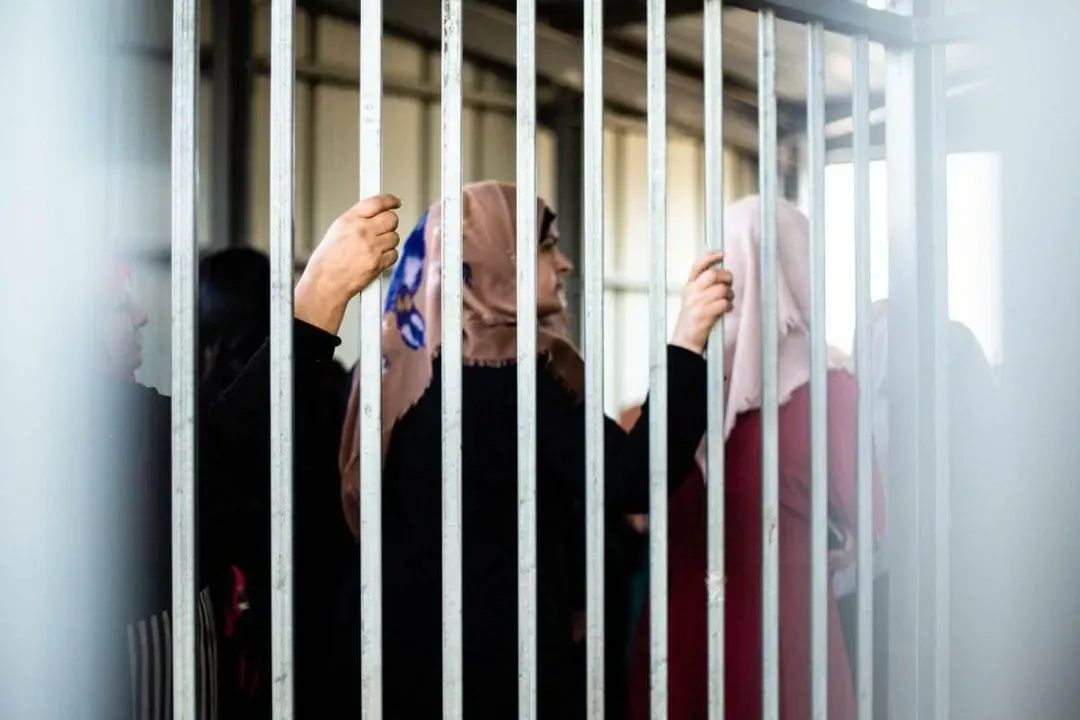
There are approximately 9,350 Palestinian prisoners in Israeli prisons, including 350 children and 90 female prisoners, while Palestinian and Israeli human rights organizations say that prisoners are subjected to torture, starvation, and medical neglect, which has led to the deaths of dozens of them.