
The Arab League, Egypt, Kuwait, Qatar, Yemen, and Türkiye condemned Colombia's opening of an embassy in occupied Jerusalem, describing the move as a violation of international law and of United Nations resolutions that bar any change to the legal and historical status of the city.
The Arab League said the decision ignores the legal and political status of East Jerusalem as part of the Palestinian territory occupied since 1967 and the capital of the State of Palestine, and it warned of repercussions, noting that Colombia went ahead despite repeated warnings and communications. It urged Bogotá to reconsider and reverse the decision, and said that Jerusalem's status cannot be changed through unilateral measures or diplomatic decisions that violate international law. It cited Security Council Resolutions 478 of 1980 and 2334 of 2016, along with General Assembly resolutions and the UN Charter.
The Egyptian Foreign Ministry said that unilateral measures intended to alter the legal and historical status of occupied Jerusalem are invalid and carry no legal effect, and it reaffirmed support for an independent Palestinian state on the June 4, 1967 lines with East Jerusalem as its capital. The Kuwaiti Foreign Ministry called the move a clear violation of international law and of the relevant international resolutions and urged the international community and the Security Council to act. Qatar's Foreign Ministry said it rejects any measure that alters the legal and historical status of Jerusalem, and urged the international community to confront attempts to impose a new reality in the city. Yemen's Foreign Ministry said that measures modifying Jerusalem's status lack legitimacy.
Türkiye also called on Colombia to reverse its decision immediately, stating that East Jerusalem is an integral part of the occupied Palestinian territory and that the move violates Security Council Resolutions 476 and 478 and the advisory opinion of the International Court of Justice. Palestinian Vice President Hussein al-Sheikh condemned the opening as a disregard for international law. Resolution 478, adopted after Israel's annexation of East Jerusalem, rejected the measures altering the city's character and called on states to withdraw their diplomatic missions from it.
The Palestinian Ministry of Foreign Affairs and Expatriates condemned the opening "in the strongest terms" as a flagrant violation of international law and United Nations resolutions, including the International Court of Justice's advisory opinion of 2024 and the Vienna Convention on Diplomatic Relations, and as an assault on the Palestinian people and their legitimate national rights. The ministry said the decision is null and void, has no legal validity, and does not alter the status of the city under Security Council Resolutions 476 and 478. It recalled that the court ruled in 2025 that states must not recognize any change to the character, demographic composition, institutional structure, or status of the occupied Palestinian territory, including Jerusalem, and must abstain from any recognition of Israel's illegal presence there in establishing and maintaining diplomatic missions. It demanded that Colombia reverse the decision and urged the international community, including regional and international organizations, to take concrete diplomatic, political, economic, and legal measures against any state that opens or relocates its embassy to occupied Jerusalem, in line with Arab and Islamic consensus decisions. The ministry added that the State of Palestine will take all legal and diplomatic measures to protect the special status of the city, and that a just and lasting peace can come only by ending Israel's illegal occupation and realizing an independent State of Palestine with East Jerusalem as its capital.
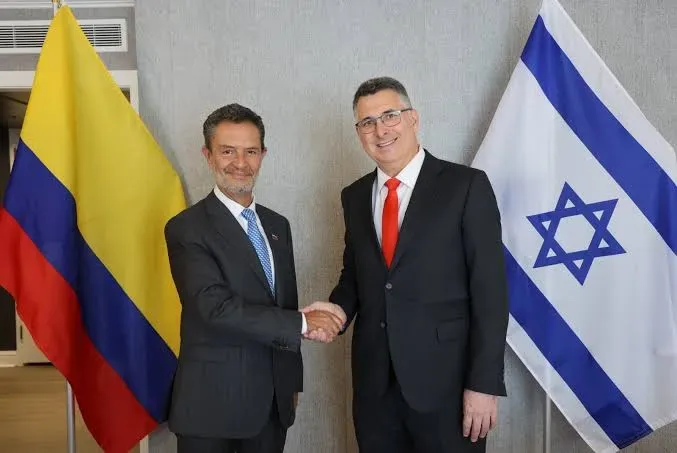
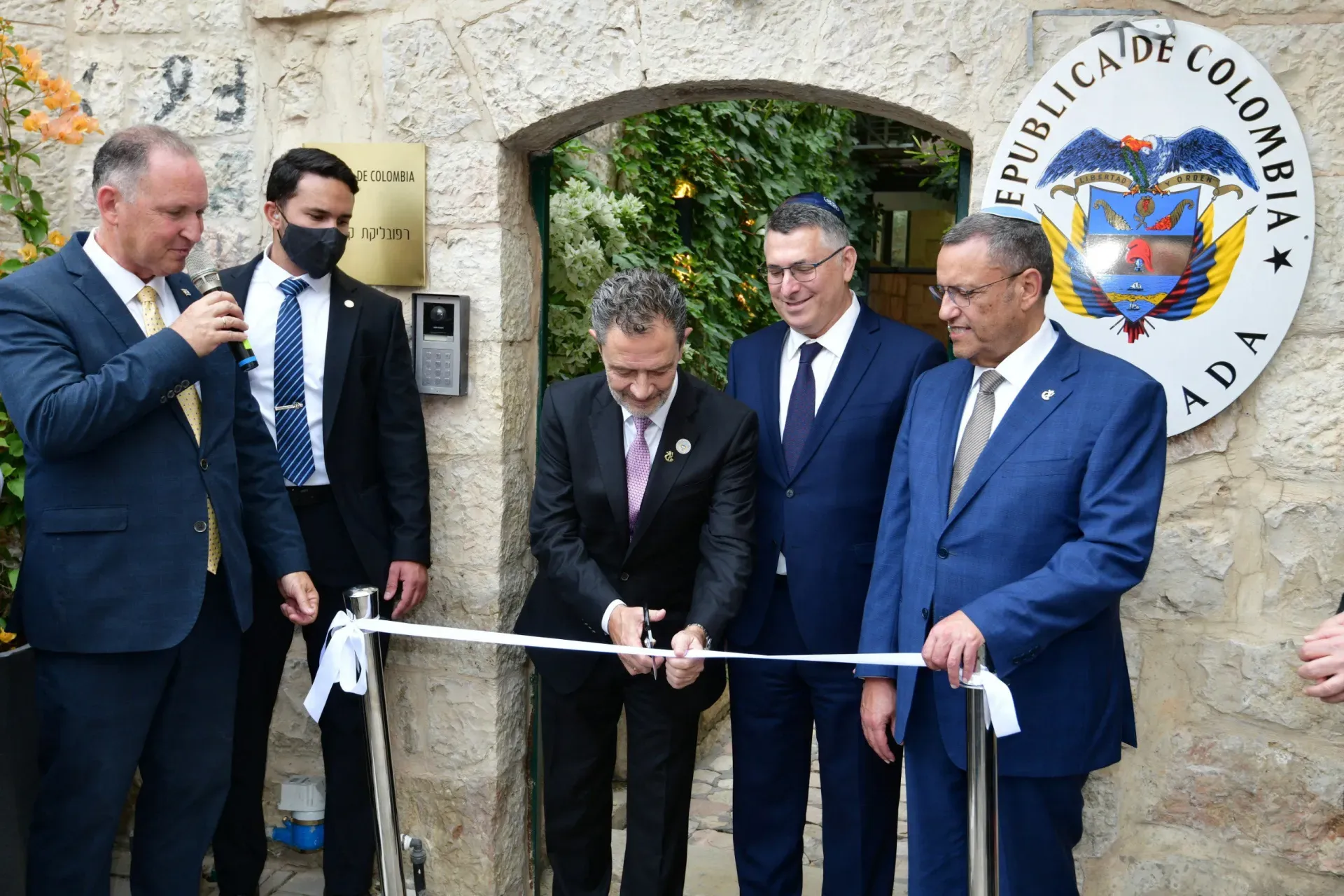
Colombia became the tenth country to open an embassy in Jerusalem, after the United States, Guatemala, Honduras, Paraguay, and Somaliland, among others. The embassy was opened on Wednesday under President Abelardo de la Espriella, a right-winger who took office in August, with Foreign Minister Omar Bula Escobar in attendance. Israeli Foreign Minister Gideon Sa'ar described the move as recognition of "a historical truth" and said he aimed to bring relations to "an all-time high."
The opening came a day after Colombia reinstated its free trade agreement with Israel, which former President Gustavo Petro had terminated. Petro broke diplomatic relations with Israel in May 2024 over the genocide in Gaza, closed the embassy in Tel Aviv, recalled the ambassador, and halted coal exports to Israel. His successor, who took office in August, has since restored diplomatic relations and the trade agreement and opened the embassy in Jerusalem.