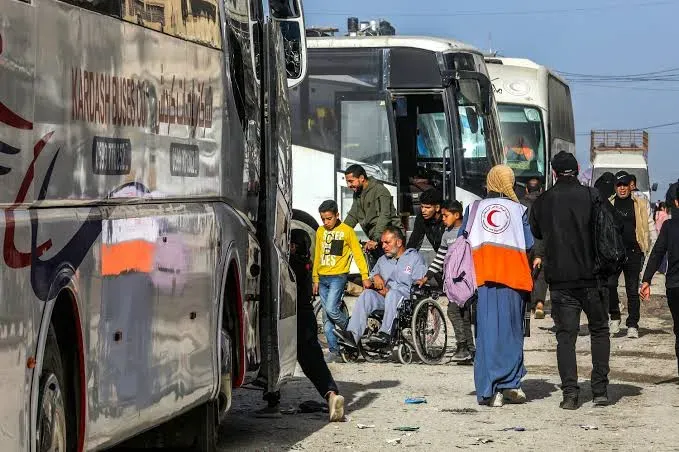

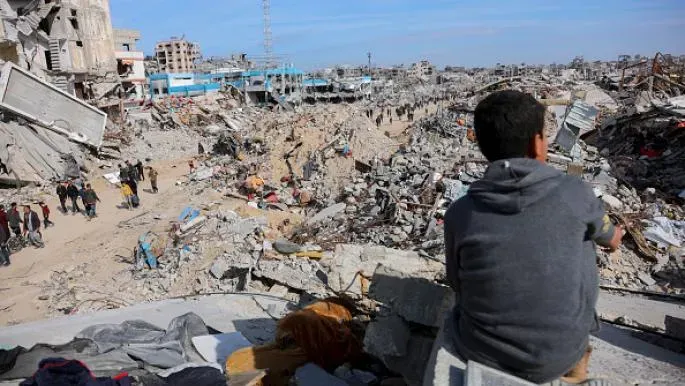
The occupation continues its full control over the crossings leading into the Gaza Strip, with recent days witnessing further escalatory measures at the crossings, represented by repeated and ongoing closure of the Rafah crossing, as well as severe restrictions on the Kerem Abu Salem crossing.
After closing the Kerem Abu Salem crossing for many days during last September and the current October under the pretext of the so-called "Jewish holidays," the occupation repeated the closure of the crossing and halted coordination for the entry of goods for traders.
The occupation abruptly cancelled the coordination for goods scheduled to enter the Gaza Strip coming from the markets of the interior and the West Bank last Wednesday, without setting a date for allowing their entry, and the Kerem Abu Salem crossing remained open only for aid and goods coming from Egypt.
Informed sources explained that the movement of goods through the aforementioned crossing has been disrupted for several days, with the entry of many categories of goods previously permitted halted, foremost among them clothing and others.
Traders and citizens expressed fear that the mentioned measures will continue during the coming week, without knowing their reasons, stressing that if they continue they will affect the markets, especially vegetables, whose prices have already begun to rise.
As a result, confusion occurred in the markets and rumors spread, causing prices to rise amid increasing demand for purchasing some categories of goods, especially cleaning materials, for fear of their disappearance from the markets.
The occupation did not stop at tampering with the movement of goods at the Rafah crossing, as the matter extended to Rafah, which witnesses medical evacuations three days a week. The Ministry of Health in Gaza confirmed that the continuous and unjustified closure of the Rafah crossing deprives dozens of critical cases from leaving during the three days allocated weekly for coordination of the wounded and patients, disrupting the approved medical evacuation schedules.
The ministry indicated that the occupation's measures cause suffering for patients and the wounded who waited long weeks to obtain the necessary security and medical approvals and coordinations.
According to the ministry, this repeated disruption threatens the lives of patients with incurable and life-saving diseases (such as cancer, kidney failure and severe injuries), as each day of delay negatively affects their response to treatment and their chances of recovery.
The ministry said: "This closure drains the capacities of local hospitals that are already dilapidated, and places medical teams before superhuman challenges to accommodate cases that need specialized centers outside the Strip."
The commercial goods crisis continues, with the occupation continuing to prevent their entry into the Gaza Strip, which has caused prices to rise, created confusion in the markets, and a state of fear among citizens for fear of goods disappearing from the markets.
The so-called Israeli "Coordinator" claimed that the crisis is caused by traders stopping the entry of goods, after "Hamas" imposed new taxes and arrested a trader who refuses to deal in "cash."
The Government Media Office in the Gaza Strip confirmed that what the "Coordinator" reported is nothing but a blatant disinformation campaign aimed at justifying the policies of siege and continuous starvation against the Strip.
The Government Media Office explained that the occupation is trying to fabricate false narratives about the mechanisms of organizing commercial movement and the entry of goods, promoting false claims about imposing financial amounts by force on traders and distorting cash circulation procedures, to evade humanitarian obligations and justify imposing new restrictions.
The Government Media Office revealed that urgent official messages and correspondences were sent to the mediators in Egypt, Qatar and Turkey, in addition to the acting Special Coordinator for the Peace Process "Ramez Al-Akbarov," the Director of the Peace Council "Nikolay Mladenov," and the Commissioner-General of the National Committee for the Administration of Gaza Ali Shaath; to inform them of the irrefutable facts.
The Government Media Office categorically denied imposing any government taxes or fees on commercial trucks throughout the past three years in consideration of the exceptional circumstances.
It explained that the amount of 10,000 shekels raised by the occupation relates to a "voluntary community initiative" in which businessmen participate for a national fund whose resources are directed entirely to support the most vulnerable groups, and shelter, sanitation and relief projects.
It clarified that the measures related to cash transactions at a rate of 30% came in full agreement with the Chamber of Commerce to address the severe shortage of liquidity and worn-out banknotes, and not as a unilateral decision or to control funds as the occupation claims.
The Government Media Office stressed its commitment to applying the law and combating goods monopoly and price manipulation, noting that any measures taken against some traders are based exclusively on legal suspicions and violations related to illicit gain, and are subject to judicial procedures.
The Government Media Office in Gaza stressed that the top priority is the regular flow of goods according to the Sharm El-Sheikh track understandings, which obligate the occupation government to bring in 600 trucks daily, rejecting any attempts to link this obligation to flimsy claims or to hold government entities responsible for the disruption.
The crisis of the Kerem Abu Salem crossing closure and the halt of commercial truck entry reveals the extent of the imbalance in the Gaza market and the influence that some traders have come to enjoy in controlling the flow of goods and their prices, amid Israeli restrictions and weak oversight and accountability.
According to the economic expert Ahmed Abu Qamar, the problem is not only related to the stopping of trucks but to the system that preceded it, where high coordinations and "levies" are imposed on the entry of goods reaching tens of thousands of shekels per truck, and these costs are directly reflected in the prices of goods, paid by the citizen whose purchasing power has declined to harsh levels.
Abu Qamar confirmed that months ago he launched a proposal calling for civil disobedience represented by stopping the movement of commercial trucks entering the Gaza Strip entirely and limiting to aid trucks, in protest against the high coordinations and "levies" imposed on them that directly affect the prices of goods and the economic situation in Gaza. The proposal received mixed reactions, as opponents warned that stopping trucks could lead to goods shortages and exacerbate the risk of famine.
Abu Qamar said: "However, this option emerges as a possible pressure tool to confront the exhaustion of citizens and stop the exploitation of their need within a move aimed at changing the mechanisms of goods entry and reducing their costs."
Abu Qamar added that the paradox today is that the trucks have already stopped, not due to civil disobedience or popular protest against prices, but in the context of a dispute related to fees and taxes, which re-raises the question about who owns the decision of goods movement in Gaza and who controls the market and the interests of citizens.
He continued: "If it is true that traders' complaints about taxes imposed in Gaza are behind the recent escalation, this reveals an imbalance in the balance of power within the market and raises questions about the ability of government entities to manage the commercial file and protect the consumer, amid the occupation's control over crossings and goods entry routes." He stressed that economically, any additional fees on trucks, whether imposed under the name of coordinations or taxes, will automatically turn into a new increase in the final price, meaning greater inflation and additional erosion of family income, especially since competition is limited and alternatives are scarce.
As for imposing a percentage of cash liquidity on major traders, it is a step in the right direction and can help alleviate the cash crisis and activate trading in shekels, provided the mechanism is clear and monitored and does not turn into an additional burden passed on to the consumer.
Abu Qamar stressed that what is required today is to regulate the relationship between traders and government entities and ensure the entry of goods without unjustified burdens while enhancing market oversight and preventing monopoly. The continued control of limited parties over the flow of goods and their costs exacerbates the living crisis and makes the citizen the weakest link in an equation he cannot influence in its decisions.