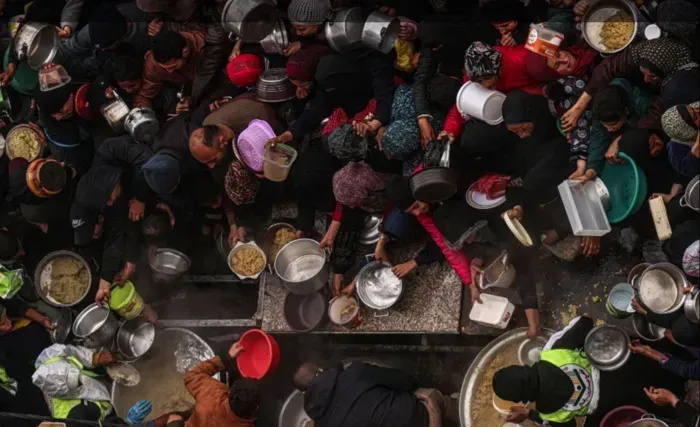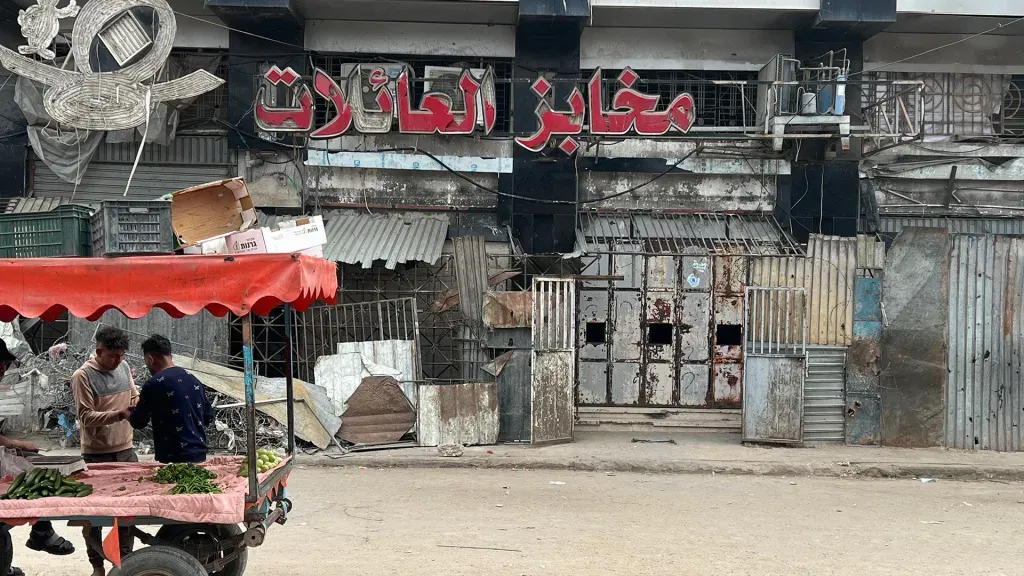

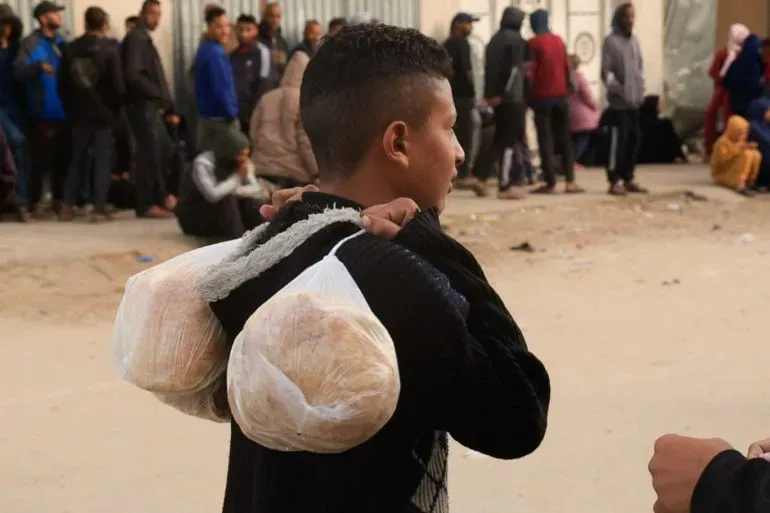
Flour and fuel shortages in recent weeks, driven by Israeli restrictions on aid deliveries into Gaza and the World Food Programme's decision to "drastically reduce lifesaving assistance" to the war-torn enclave, have led to growing bread queues, with bakeries on the brink of shutting down within the next 48 hours.
According to the union of bakery owners in Gaza on Thursday, seven bakeries across the Gaza Strip could shut down within 48 hours due to dwindling supplies of flour and other essential materials. The union chief Abdel Nasser al-Ajrami warned that dwindling flour supplies have forced bakeries to suspend operations.
The World Food Programme (WFP), one of the main suppliers of food aid to the Gaza Strip, said this week it is being forced to "drastically reduce lifesaving assistance" to the war-torn enclave due to funding shortages. Overall, the number of people helped by the UN agency will drop by about a third, from 1.6 million to 1.1 million.
The cuts will hit as winter approaches and at a time when many families in Gaza are still struggling to feed themselves. One effect is that the number of hot meals currently being provided by community kitchens will be cut from 250,000 to 150,000 each day.
Nearly all of Gaza's 2.1 million population remains displaced and two-thirds rely on food aid to survive.
Mervat al-Satari, a displaced Palestinian mother of five at a camp in the al-Mawasi area of Khan Younis, said after being told of the WFP's news: "It's a disaster! What will we do with these reduced rations? How will we provide for the little ones? Sometimes we wait for these meals to eat."
Sawsan Bahloul, also from al-Mawasi and a mother of three, said: "This will affect us a lot. The daily aid was somehow ticking the box but now it will be every two days." She added that the portions given by the community kitchen, usually pasta or lentils with occasional potatoes and aubergines, were already too small to feed her family.
The number of Gazans given bags of flour and ration boxes by the WFP will now fall from 1.1 million to 600,000 each month.
The WFP received less than half as much funding for its Palestinian operations in 2026 as in previous years. The agency says it urgently needs $450m to maintain "critical" operations over the next six months.
In July, the Integrated Phase Classification (IPC), the world's foremost experts on food security, reported that two-thirds of the population, 1.4 million people, were "expected to face crisis or worse levels of acute food insecurity in July-December 2026".
According to the union of bakery owners in Gaza, there were 140 bakeries operating in Gaza before the war, many of which had been bombed and destroyed.
Sources confirmed to QNN that the bag of bread people had bought in Gaza before the war cost about 20 shekels, about $10. Now, it would have cost people from 100 to 160 shekels, about $55.
More than one-third of Gaza's population relies on subsidised bread from WFP-supplied bakeries, where a bundle containing about eight or nine pitas is sold at a capped price of about $1. About 20 percent of bread from WFP-supported bakeries is also handed out for free at meal kitchens.
Ismail al-Thawabta, the head of Gaza's Government Media Office, said that the territory needs about 450 tonnes of flour per day.
Mariam Tlouli told QNN: "We used to receive bread through the WFP distribution points, but now it has become very difficult to get it. There is no home in Gaza that does not depend on bread as a basic food, especially with the shortage of other food items. The average household needs two packages per day. This creates a heavy burden, especially with low incomes and rising flour prices."
Flour shortages are not the only reason bakeries are struggling. Israeli restrictions have also limited the oil needed to lubricate electricity generators. Bakeries and other essential services in Gaza depend on these generators as the territory lacks regular electricity.
Gaza's one power station previously provided some of its electricity, but it had to shut down in the early days of the war due to a lack of fuel.
Palestinians are increasingly fearing a looming, Israeli-made famine. Having hardly recovered from the famine last year, Palestinians in Gaza now worry that the expansion of the humanitarian crisis could mean a return to the hunger, which only became less with the so-called October "ceasefire".
Abed Shaban said: "During the last famine, people were dying from hunger and for a piece of bread."