

The education director at the United Nations Relief and Works Agency for Palestine Refugees (UNRWA), Julia Dicum, has warned that the Gaza Strip may need up to seven years to recover its education sector, given the accumulated losses caused by years of crises and war and the long interruption of children's schooling.
Dicum said the effects of this interruption are now clear on an entire generation of students, noting that some children who joined the current school year were of an age at which they should be in the third grade, yet entered a school building for the first time in their lives.
She stressed that many children in the primary stages have received only one year of in-person schooling in recent years, due to the repercussions of the coronavirus pandemic and then the ongoing war, which produced wide educational gaps worsened by psychological trauma and the pressures of displacement, fear and the loss of loved ones.
The agency's estimates are based on research conducted by the University of Cambridge in cooperation with the Lebanese Studies Center and UNRWA, which showed that children may suffer a learning delay of up to five years. That estimate was prepared more than a year ago, and Dicum believes the gap has widened further as the disruption of education continues.
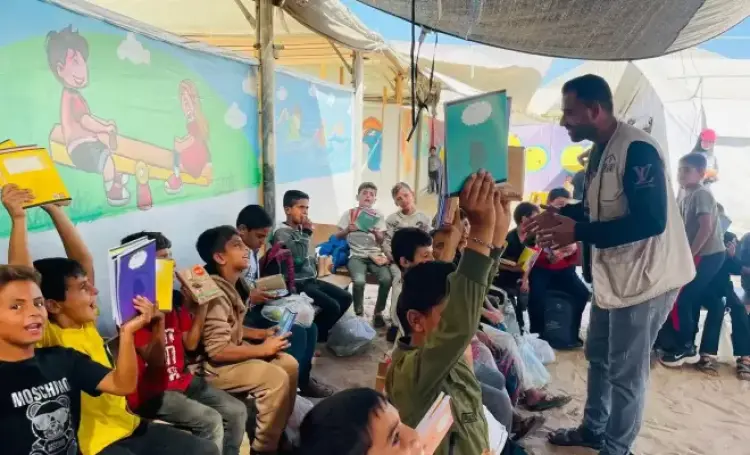
She pointed out that more than 200,000 children in Gaza remain deprived of access to organized education at the start of the 2026-2027 school year, despite humanitarian efforts that have provided hundreds of temporary learning spaces serving hundreds of thousands of students.
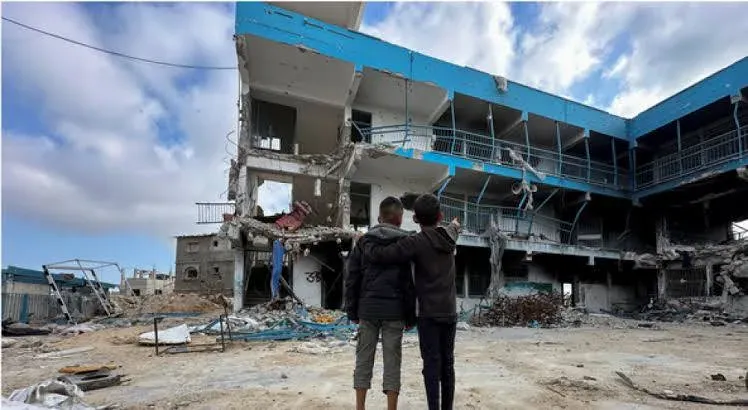
Despite the return of some children to study, the educational reality remains far from normal conditions, with students receiving limited teaching hours inside tents or damaged buildings and temporary facilities lacking basic services, amid continued displacement and a shortage of educational resources.
Dicum noted that restrictions on the entry of educational materials and construction materials obstruct the rehabilitation of schools and the removal of rubble, delaying the restoration of full and sustainable formal education.
Under these conditions, focus has been placed on teaching core subjects — Arabic, English, mathematics and science — alongside expanding psychosocial support services for children, while higher education and vocational training institutions face similar challenges that have pushed them to adopt alternative forms of education.
She also warned of the spread of unaccredited education programmes that could threaten students' ability to continue their higher education in the future, stressing that the challenge is no longer merely returning children to desks but ensuring they receive recognized, quality education that allows them to build a better future.
Since the outbreak of the war, UNRWA has provided psychological support to children in shelters, before expanding into the creation of temporary learning spaces and launching distance learning programmes that had reached hundreds of thousands of learners across the Gaza Strip by September 2026.
Dicum stressed that compensating for learning loss requires long-term plans beginning with an assessment of each child's actual level, strengthening reading, writing and arithmetic skills, and providing continuous educational support to help close the accumulated gaps.
She concluded by affirming that the success of these efforts remains tied to sustainable and regular funding that ensures the continuation of current education programmes and paves the way for a safe and comprehensive return to formal education once conditions on the ground improve.