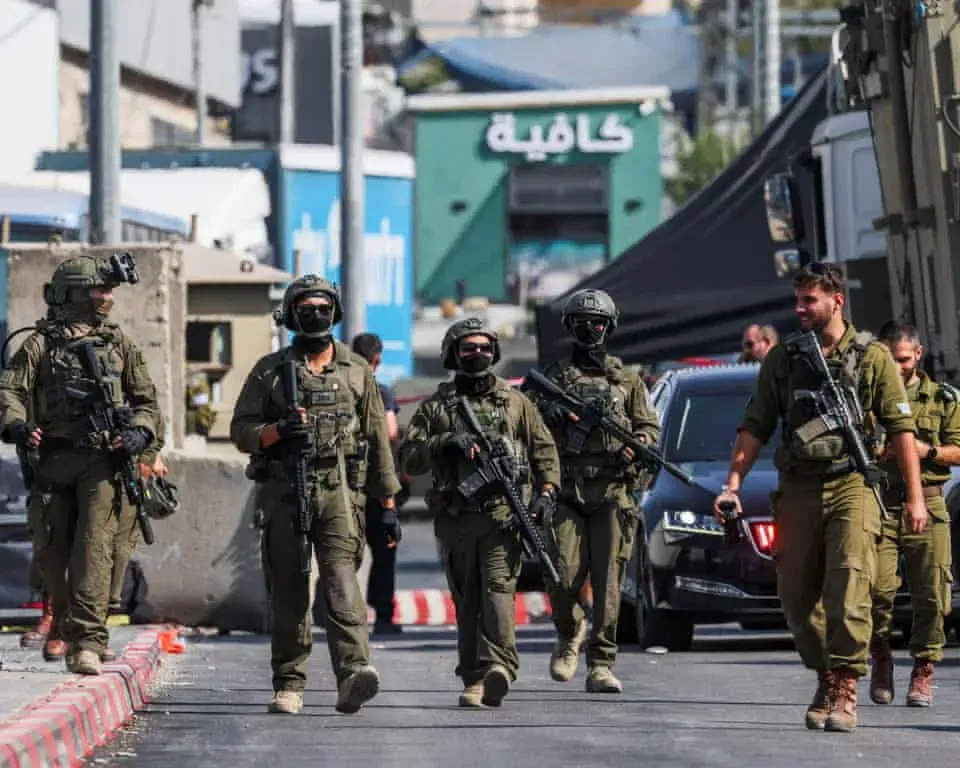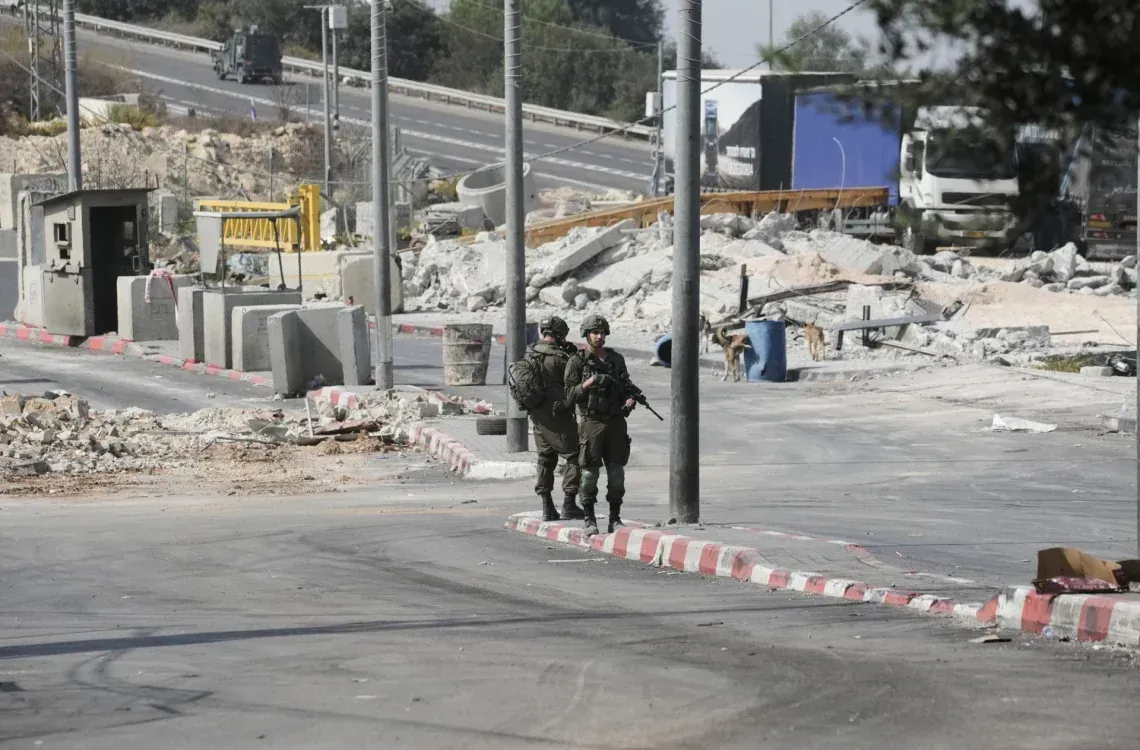

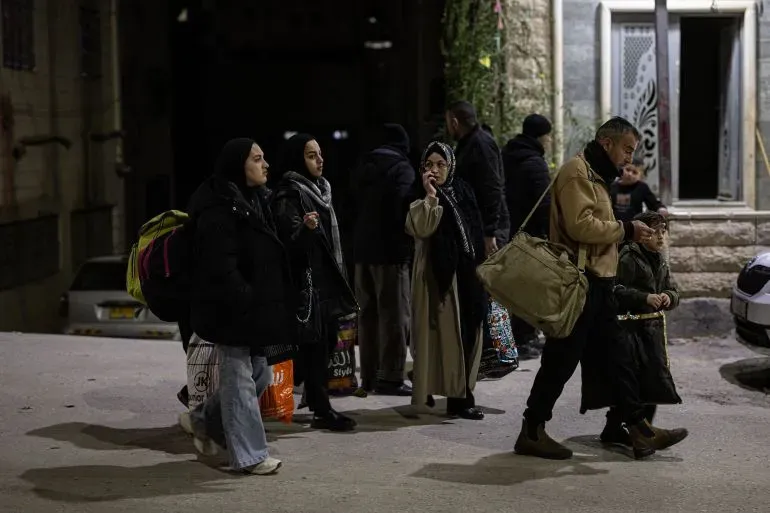
Israeli forces have forcibly displaced more than 2,670 Palestinians from their homes in the occupied West Bank city of Hebron since Friday, amid a large-scale assault and a lockdown. Rights groups have condemned the assault, which includes mass home demolitions, raids and movement restrictions, as collective punishment.
According to Deputy Mayor Khaled Fahd al-Qawasmi on Sunday morning, 373 families have been forced from their homes so far, while about 30 more families are threatened with forced removal.
The number of Palestinians displaced by Israeli forces in Hebron has reached at least 2,670, according to Palestinian Prime Minister Mohammad Mustafa's office. It said in a post on Sunday that the "majority" of the displaced are women, children, and elderly people.
ICC-wanted Israel's Prime Minister Benjamin Netanyahu said Friday he has imposed a "closure" of Hebron and is preparing "a full lockdown" and the largest assault on the occupied West Bank since 1967 after Israeli forces killed two Palestinians in Hebron city.
The Israeli army said two soldiers were killed and three injured during a shooting operation which came in response to Israeli violence against Palestinians, carried out by settlers and forces backed by the occupation government.
Netanyahu announced that Israeli forces will implement the "offensive model that we successfully carried out in the refugee camps".
The Israeli forces expelled the residents of Tulkarem, Nur Shams, and Jenin refugee camps in January and February 2025 during a large-scale assault, which resulted in the largest mass displacement of Palestinians in the West Bank since 1967. Israeli War Minister Israel Katz said the displacement would last one year. But over twenty months later, according to the United Nations, more than 33,000 Palestinian refugees remain displaced from the homes in the refugee camps they were living in.
Netanyahu said the forces "will enter the neighbourhoods from which the attackers came, evacuate the residents, go house to house" and destroy the area. "We are prepared for a large-scale operation in the West Bank," he added.
Netanyahu also said the assault in the occupied West Bank will be unlike any other since 1967, when Israel seized control of the West Bank, East Jerusalem and Gaza. "I have reviewed a very extensive operation in the West Bank that will be unprecedented since '67, and we will choose the timing of its implementation," Netanyahu said.
Israeli Minister Bezalel Smotrich has released a statement saying that a "comprehensive military operation" in the occupied West Bank is "necessary" to kill Palestinians and "dismantle the Palestinian Authority". Smotrich has also ordered the demolition of a large number of Palestinian buildings near the site of the operation in Hebron, Israel's Channel 12 reported.
Israeli human rights organisation B'Tselem warned that the planned offensive could amount to collective punishment and involve acts that may constitute war crimes.
Israel Katz promised further mass demolitions and forced displacement. He drew an explicit comparison with Gaza and said Hebron would be targeted in the same way as Jenin refugee camp. Hebron is the largest Palestinian city in the occupied West Bank, with about 250,000 residents.
Katz said: "The Jenin refugee camp model arrives in Hebron. Every clan neighbourhood in Hebron from which the terrorists emerged today will be evacuated of its residents. Just like in Gaza, just like in Lebanon."
The Association for Civil Rights in Israel called on the army to halt the forced removals and home demolitions and lift the closure imposed on the city, saying the measures constitute collective punishment in violation of international law.
As part of the assault, families were allowed to take only essential belongings with them.
Hebron Mayor Yousef al-Ja'abari said on Saturday that the forced removals were concentrated mainly in al-Jalda and Deir Bahah, among the most densely populated areas of the city.
Residents described being ordered from their homes at gunpoint, with little time to gather belongings and no clear information about when they would be allowed to return.
The forcible displacement has coincided with demolitions targeting residential buildings, commercial shops and industrial facilities in Farsh al-Hawa, west of Hebron. Local sources reported that around seven dunums of land had been levelled.
Israeli forces also imposed a broad closure on the city of Hebron and its surrounding villages, towns and refugee camps, blocking main entrances and roads. Simultaneously, they raided homes, conducted searches and carried out arrests.
Israeli forces have detained 47 Palestinians since Friday, the Palestinian Prisoner's Society said.
"The military operation has not ended, and the closure is not limited to the targeted area; it extends to the entrances and gateways of Hebron, with Israeli forces continuing to be deployed across various parts of the city," Qawasmi said.
Some houses have also been occupied by Israeli forces and turned into military outposts.
The collective punishment by Israeli forces has impacted about 900,000 Palestinians. According to Hebron municipality data, the targeted displacement area covers 350 dunams (35 hectares or 86 acres), and nearly 500 Palestinian families have been uprooted.