
According to investigations by the security services in Gaza, the operation carried out by collaborator gangs west of Gaza City on 1 September, which resulted in the kidnapping of an officer working in the Internal Security Service of Hamas, will not be the last, and the gangs are preparing for a series of similar operations.
According to informed sources, the security services and resistance security apparatuses in the Gaza Strip managed to thwart and uncover a number of sabotage plots that the collaborator militias intended to carry out in the Strip. The most dangerous of these targeted Nasser Medical Complex in Khan Younis, where a number of collaborator militia leaders planned a wide and direct attack on the health facility. A few months earlier, a similar plot to attack Al-Aqsa Martyrs Hospital in the central Strip was thwarted.
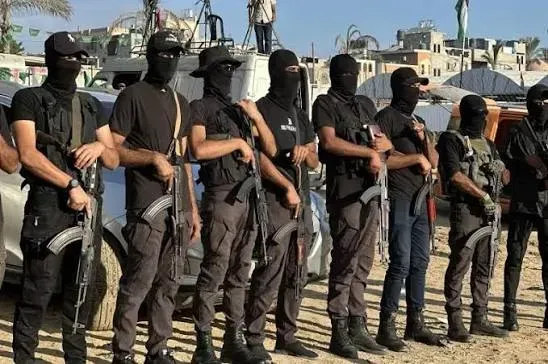
Force Radea, affiliated with the resistance, confirmed that it had recently monitored occupation officers training elements of the collaborator gangs in the skills of carrying out kidnapping and assassination operations, and estimated that the coming phase may witness security operations under direct occupation direction.
Radea confirmed that resistance security succeeded in arresting four agents who had received training at occupation army bases; three of them were arrested after the thwarting of the kidnapping of a resistance fighter, while the fourth agent was lured into a security ambush.
Radea stated that it will soon reveal what it called the list of shame, which includes the names of occupation agents who received training at occupation army bases, including agents involved in kidnapping and assassination crimes that occurred recently.
In its latest statement, Radea said: We bet on the awareness and national responsibility of our people in supporting the security apparatuses, whether by circulating the card wanted by resistance security, or by immediately reporting any information concerning wanted agents.
According to observers and analysts, the occupation plans to carry out operations through the militias inside the Strip, with the aim of producing a state of security disturbance and chaos in the heart of populated areas, by moving from military targeting to social security infiltration that undermines societal confidence in the resistance and the security system.
Despite the occupation standing by the collaborator gangs and the continuation of Israeli targeting, the resistance in Gaza has achieved growing success in limiting the spread of occupation militias, amid intensive efforts by Palestinian clans and families in partnership with the security apparatuses and resistance factions.
Security sources in the Gaza Strip revealed that the resistance directed successive strikes and carried out a series of consecutive operations targeting mercenaries of the Israeli occupation gangs, which resulted in the killing of two of them and the serious wounding of a third during the past period, as part of continuous field and security efforts to pursue the collaborator gangs.
Force Radea announced that it had killed two occupation agents and seriously wounded a third during ambushes in the eastern areas of the Strip.
The force stated that on 21 October 2026 it eliminated the agent Emad Salim Al-Louh east of Deir al-Balah, while it killed the agent Mohammed Jabr Hamada on 17 August 2026 during a resistance ambush in the Shujaiya neighborhood east of Gaza City.
The force indicated that it succeeded in paralyzing the agent Jawad Rakan Rajab Hils on 17 August 2026 during a resistance ambush on Mushtaha Street in Shujaiya.
Radea stressed the continuation of pursuing and dismantling the collaborator gangs and holding those involved accountable, whatever the circumstances; affirming that the price of betrayal will be borne by the agents.
In parallel with the resistance strikes, and in the recent period, Palestinian clans have played the role of mediator between those wishing to surrender themselves and the security apparatuses, by providing cover for those wanting to resolve their files in exchange for a pardon, especially people not involved in killing files.
Member of the National Gathering of Clans and Tribes Sheikh Hassan Abu Obeida stated that Palestinian clans play an important role in confronting this situation, by exposing these elements and pressuring them, which led to a number of them surrendering themselves, whether to families under a social guarantee or to the competent authorities, where their status was settled, especially in cases not related to blood crimes.
He stressed that the clans and families agree not to cover up anyone who deviates from the national ranks or becomes involved in collaboration with the occupation, affirming that history has proven that the fate of agents is always disappearance, as happened in previous experiences.
Political writer and security researcher Hilal Nassar affirmed that the Israeli occupation's resort to forming and supporting armed gangs and collaborator militias in the Gaza Strip falls within the tools of managing asymmetric conflict.
He explained that reliance on these militias may achieve temporary gains for the occupation in the short term by reducing military losses and creating societal divisions, but he stressed that this bet is doomed to failure in the long term.
Professor of Political Science at Al-Ummah University in Gaza Hussam Al-Dajani affirmed that the occupation's experiences in employing militias cooperating with it are not new, but extend over decades, noting that these experiences prove that the occupation does not provide real protection for these groups in the long term.
Al-Dajani pointed out that history has not recorded that the occupation embraced these groups actually, but on the contrary, it often deals with those it allowed to remain in its lands as outcast citizens deprived of the most basic rights.
He noted that many of them ended up either facing trials by resistance factions, or through legal procedures before Palestinian authorities in the West Bank and Gaza Strip, indicating that these data reinforce the need for internal approaches to address the phenomenon.