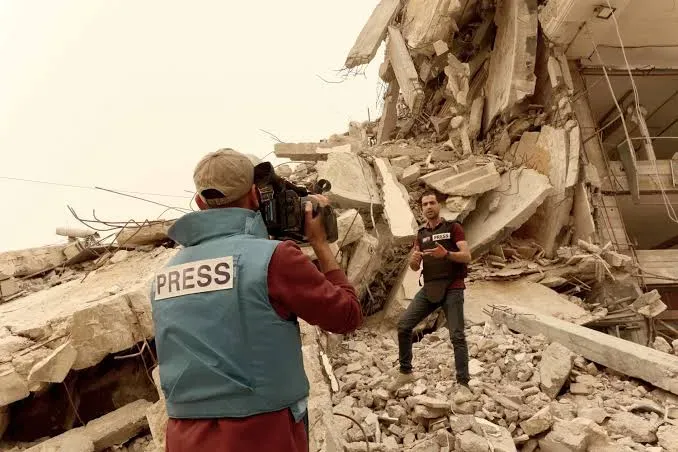
Since the start of the genocide war on the Gaza Strip, journalists, their families, and their institutions have been direct targets of occupation forces, which targeted everything related to journalistic work, killing, wounding, and detaining hundreds of journalists, destroying dozens of media institutions, and banning the entry of foreign journalists or media equipment from abroad.
The Human Rights Protection Center affirmed that the second of November each year marks the International Day to End Impunity for Crimes against Journalists. On this occasion, the center renewed international calls to protect press freedom, ensure the safety of journalists, and hold accountable those responsible for crimes and violations targeting media workers.
The center said: "This occasion comes as Palestinian journalism in general, and in the Gaza Strip in particular, faces a phase classified as the deadliest in the history of contemporary journalistic work. Since October 7, 2023, we have recorded hundreds of journalists and media workers killed, hundreds wounded, and dozens detained."
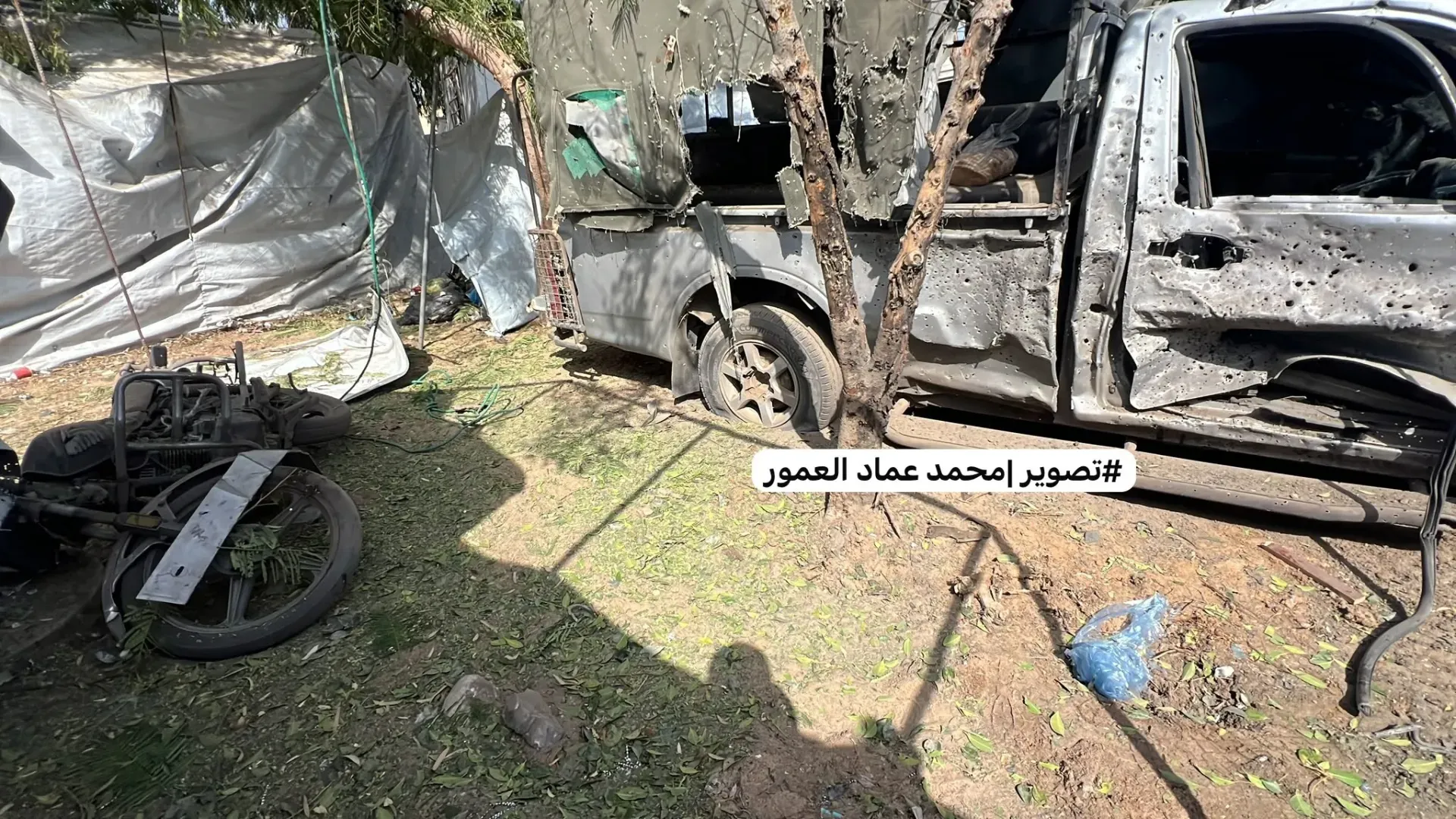
The center affirmed that the occupation launched a large-scale destruction campaign that hit media institutions, offices, and telecommunications infrastructure, causing deep damage to the ability of media outlets to perform their professional and humanitarian mission during the genocide war on the Gaza Strip.
As a result, 261 male and female journalists were martyred, along with 21 activists and influencers across various media, while 575 journalists were injured. The occupation detained 52 journalists and media workers since the start of the genocide war, more than half of whom remain in detention and some of whose fate is unknown.
Occupation forces also destroyed 21 headquarters of radio institutions, 20 headquarters of television channels, 35 headquarters of newspapers and magazines, 42 headquarters of digital media institutions, 23 printing presses, and 18 headquarters of professional and human rights institutions and unions concerned with press and media freedom.
The center strongly condemned the systematic behavior of occupation forces in the context of its war against Palestinian press and media, demanding the international community provide effective international protection for journalists and media workers, ensure respect for their civilian status, and protect them in accordance with the rules of international humanitarian law.
The center also demanded the United Nations open independent and transparent international investigations into all crimes of killing, injuring, and detaining Palestinian journalists, and ensure that those responsible are not spared accountability. It called on the international community to pressure the occupation authorities to allow journalists and international media to enter the Gaza Strip and work freely and independently, without restrictions preventing the transmission and verification of information.
Dozens of journalists demonstrated recently in the southern Gaza Strip, demanding action to safeguard and protect press freedom. They also called for facilitating the travel of the wounded and sick in general, and wounded journalists in particular, to receive treatment, especially colleague Ammar Qudeih, who faces difficult health conditions threatening his life.
The Palestinian Journalists Syndicate affirmed that the absence of international accountability for the Israeli occupation for the crimes and violations it commits against the press and journalists in Palestine, which have reached the level of media genocide, leads to continued impunity and encourages further crimes, demanding international protection for journalists in Palestine.
In a statement on the occasion of the International Day to End Impunity for Crimes against Journalists (the second of November each year), the syndicate said: "This year comes amid an extremely dangerous Palestinian reality, which has made journalists a direct target for crimes of killing, targeting, injury, detention, and abuse in the West Bank, Jerusalem, and the Gaza Strip by the Israeli occupation army and extremist settler militias."
The syndicate said: "What Palestinian journalists are subjected to constitutes a widespread targeting of the foundations of journalistic work, as the number of martyrs of Palestinian journalism since the start of the genocide war has reached 260 male and female journalists, along with hundreds of injured and detained, in a bloody toll that reflects the scale of crimes committed against the Palestinian journalistic family."
The syndicate demanded the International Criminal Court announce its actual judicial procedures regarding complaints submitted to it against perpetrators of crimes against Palestinian journalists. It also called on the Permanent Investigation Committee of the Human Rights Council to refer the file of its investigation results to the International Criminal Court, and for UNESCO to form a committee to follow up and hold accountable the killers of Palestinian journalists.
It stressed that the continued absence of international accountability for perpetrators of crimes constitutes the greatest danger amid international inability to take practical measures to stop Israeli crimes and ensure accountability for their perpetrators, affirming that impunity encourages the repetition of crimes and threatens press freedom globally.
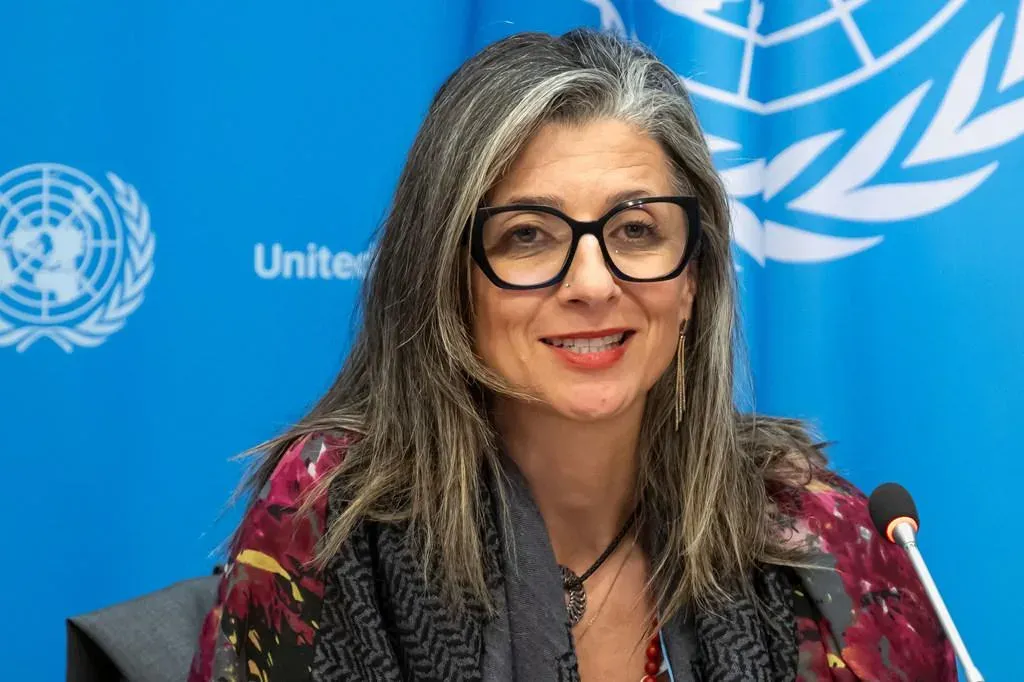
In this context, the syndicate praised the report of the UN Special Rapporteur on the situation of human rights in the occupied Palestinian territory, Francesca Albanese, titled "Truth under the rubble: media in the time of genocide," which was presented to the UN General Assembly in July 2026. The report affirmed that the media genocide committed by the Israeli occupation "is not limited to targeting journalists while performing their work, but extends to weakening the Palestinian media environment itself, through killing or detaining journalists, destroying institutions and media offices, and disrupting communications and the internet."
According to a report issued by the United Nations Educational, Scientific and Cultural Organization (UNESCO), 127 killings of journalists occurred in countries experiencing armed conflicts, compared to 62 in countries not affected by conflicts. Local journalists made up 90% of those killed in conflict zones, while 15 journalists were killed while wearing press vests or in vehicles bearing clear press markings.
The State of Palestine recorded the highest number of journalists killed in 2024 and 2025, with no less than 30 journalists in the first year and 32 in the second. The report counted 100 local journalists killed in Palestine among countries affected by armed conflicts.
The Committee to Protect Journalists attributed the killing of 82 Palestinian journalists in 2024 to Israel, among 85 journalists killed by the Israeli army in the Gaza and Lebanon wars. In 2025, the International Federation of Journalists documented the killing of 56 Palestinian journalists in Gaza by the Israeli army.