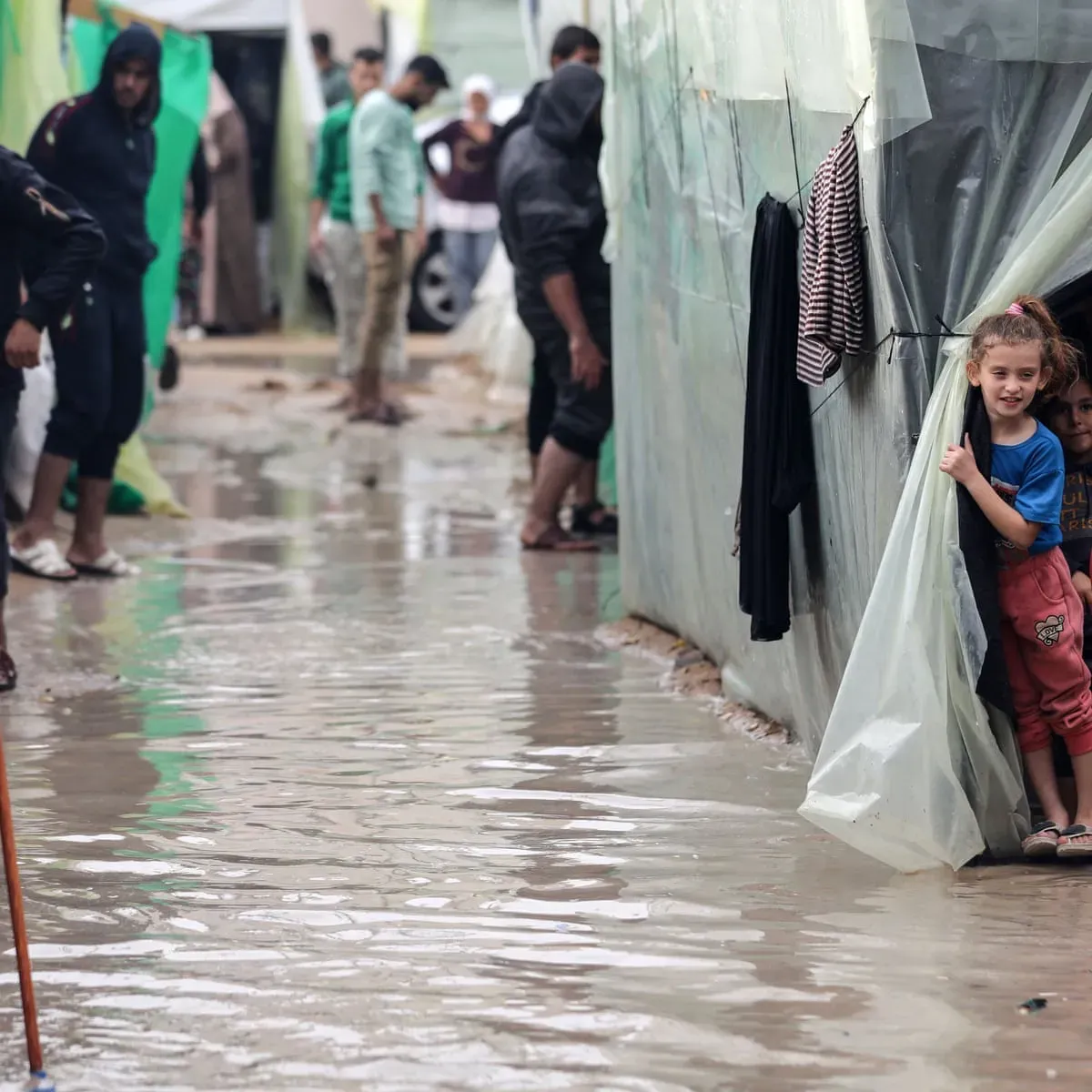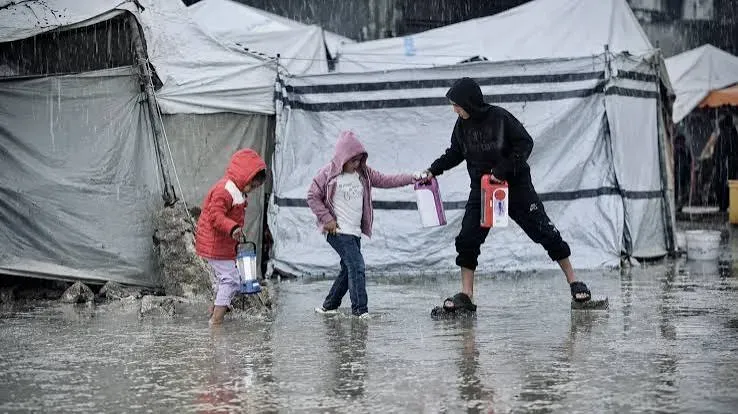

Heavy rainfall flooded displacement camps across the Gaza Strip on Saturday, as Palestinians face their fourth winter since Israel launched its war on the enclave, compounding an already catastrophic humanitarian crisis after more than three years of destruction, displacement and deprivation, despite the ceasefire.
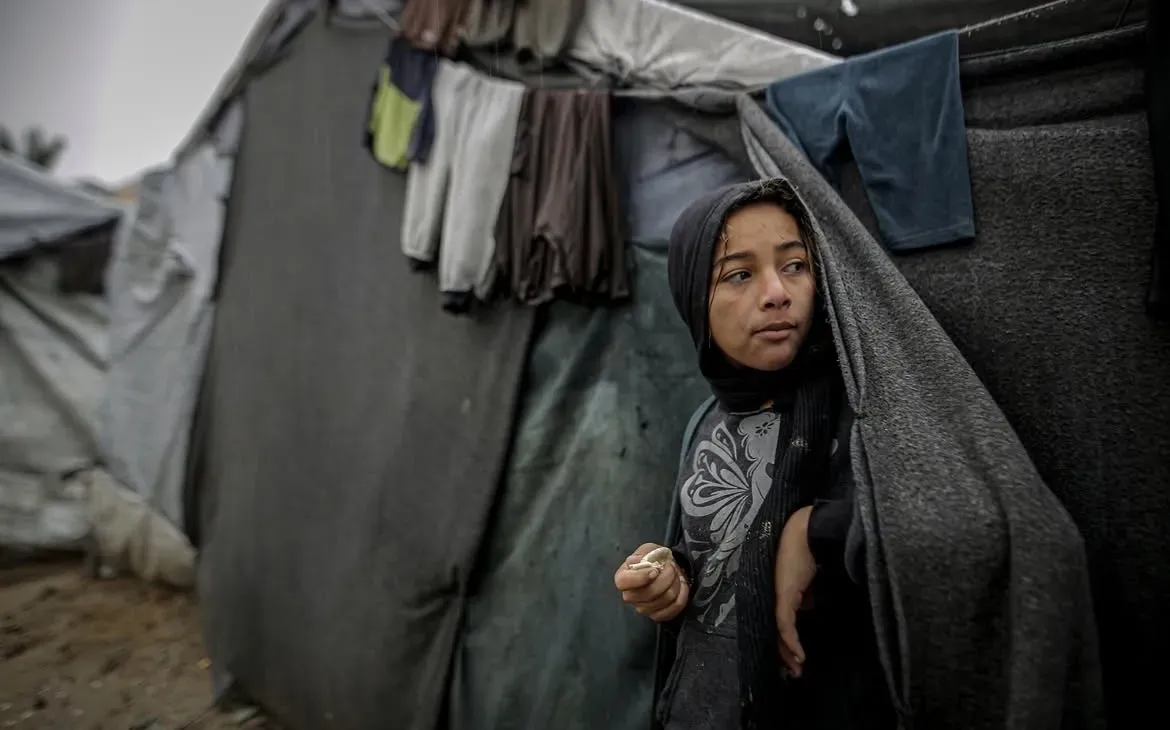
For hundreds of thousands of displaced Palestinians living in makeshift tents, the arrival of winter has brought renewed suffering. Rainwater has inundated shelters, soaked mattresses and blankets, and left families struggling to protect their children and belongings from the cold and rising water.
With much of Gaza's housing infrastructure destroyed or severely damaged, hundreds of thousands of Palestinians remain unable to return to adequate homes. Many continue to live in fragile tents that offer little protection against heavy rain, strong winds or falling temperatures.
Gaza's Civil Defense said its crews had received approximately 1,500 distress calls within just 10 hours as the storm swept across the territory on Saturday. Water levels rose by 30 to 40 centimetres in several displacement sites, leaving families struggling to salvage their belongings and find somewhere dry to sleep.
The Government Media Office in Gaza reported that at least 70,000 tents were flooded within 12 hours, affecting tens of thousands of displaced Palestinians.
Civil Defense spokesperson Mahmoud Bassal warned that the situation had become increasingly dangerous, particularly for premature babies, elderly people and patients.
“Those living in tents are at risk of death at any moment, and of illness at any moment,” Bassal said.
He added that some shelter centres had been completely inundated, forcing residents to evacuate, while emergency crews lacked the equipment and resources needed to respond to the growing number of distress calls.
“We cannot face the consequences of this storm on our own,” Gaza's Civil Defense said in an urgent appeal to the international community and humanitarian organisations, calling for immediate intervention to protect displaced families.
According to the United Nations Office for the Coordination of Humanitarian Affairs (OCHA), approximately 950,000 displaced people in Gaza are living in areas exposed to flooding. Low-lying locations and sites near the coast are particularly vulnerable, with more than 400,000 people living in areas considered at high risk.
Olfat Magdoub, a displaced Palestinian living in a tent in Gaza City, described how rainwater had once again soaked her family's bedding.
“This is the first day of rain, and of course we are already flooded. What will happen if it rains again the next day? This is only the first day and we're already overwhelmed,” she told Reuters.
She said that during previous rainfall, her family had spent four days sleeping on blankets spread across the floor after their mattresses were soaked.
Another displaced mother, Maryam Odeh, described her inability to reassure her children as water filled their shelter.
“We no longer know how to protect our children. My children ask me where we will sleep tonight, and I have no answer,” she told AFP.
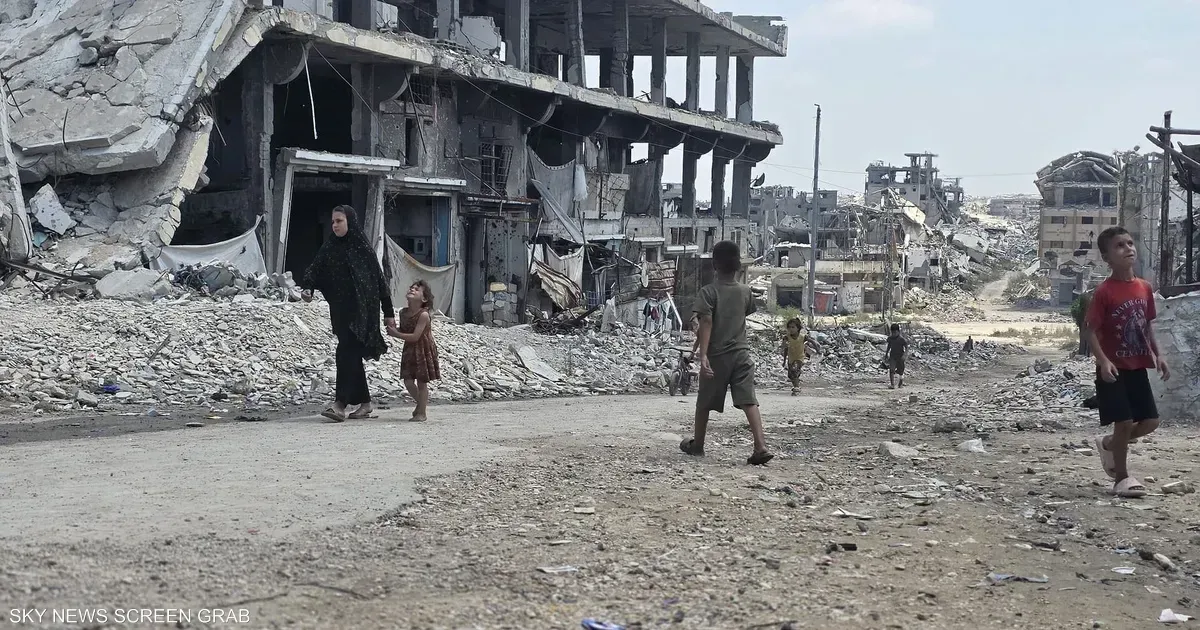
Beyond the flooded tents, heavy rainfall has exposed another danger: thousands of buildings left structurally unstable by Israeli bombardment.
In central Gaza's Nuseirat camp, Civil Defense crews evacuated residents from a partially collapsed building, while two Palestinians were injured when a damaged building wall collapsed in northern Gaza.
Approximately 44,000 Palestinians are living in structurally unsafe buildings, while more than 4,000 buildings across the territory are estimated to require full or partial demolition because of damage caused by Israeli airstrikes.
More than 2,000 buildings in Gaza City alone are at risk of collapse, according to Gaza Municipality spokesperson Hosni Muhanna.
The volume of rubble in Gaza City has also exceeded 25 million tonnes, further complicating efforts to clear damaged areas and restore essential infrastructure.
Gaza's municipal authorities are also struggling to respond to the storm amid extensive damage to the territory's drainage and sewage networks.
Approximately 15 kilometres of rainwater drainage lines and 212 kilometres of sewage networks have been damaged. Eight pumping stations and three main stormwater collection basins are out of service.
The remaining drainage system can handle no more than 20 percent of rainwater even under the best circumstances, Muhanna said.
The municipality has deployed workers to clean drainage systems, manholes and water channels, remove rubbish, repair damaged sections of drainage lines and operate water pumps in preparation for the rainy season. However, Muhanna warned that these efforts could not restore the network's capacity amid shortages of fuel, equipment and spare parts.
Meanwhile, approximately 294,250 families need shelter assistance ahead of winter, but available supplies cover only 18 percent of their needs.
The flooding has also raised serious concerns about the consequences for Gaza's already devastated healthcare system.
Dr. Mohammed Abu Salmiya, director of Al-Shifa Medical Complex, described the situation in displacement camps as a “real disaster”, saying that families had spent the night on high alert as rainwater inundated their shelters.
“No one in these threadbare tents in the Gaza Strip slept – not women, not children, not the elderly. They were all on high alert,” Abu Salmiya told Al Jazeera.
He described the flooding as a “failure of the international and local organisations working in Gaza, and of everyone working in the humanitarian field in Gaza”.
Abu Salmiya warned that falling temperatures and prolonged exposure to damp conditions could lead to further illness and deaths, particularly among children. Healthcare workers are expecting an increase in cases of gastroenteritis, respiratory infections and skin diseases, he said.
“It will also affect asthma and respiratory patients, because the tents are now very damp and unfit to live in. These patients will need large amounts of oxygen in hospitals, and we're already short of oxygen in the hospitals.”
Flooding has also disrupted access to healthcare facilities. Abu Salmiya said Al-Shifa Medical Complex's emergency department was itself inundated and remained out of service for approximately four hours before staff managed to restore some of its operations. The disruption comes as Gaza's health sector continues to face severe shortages of medicines and medical supplies.
“This is just the beginning, perhaps a major warning to the world,” Abu Salmiya said.
OCHA warned on Saturday that heavy rainfall had placed displaced families living in flood-prone areas and damaged buildings at “immediate risk”.
“We are deeply concerned for families already affected and those most exposed to the worsening conditions,” the agency said.
It stressed that humanitarian organisations had mobilised to distribute emergency supplies, but available stocks remained “insufficient”, citing months of funding shortfalls and Israeli restrictions that had severely constrained winter preparations.
The UN agency called for the immediate entry of winter supplies, heavy machinery, engine oil and spare parts needed to keep humanitarian vehicles and generators operational, alongside increased humanitarian funding.
Municipal and Civil Defense teams are also struggling with shortages of fuel, functioning vehicles, water pumps and heavy machinery, severely limiting their ability to drain flooded areas and assist displaced families.
The humanitarian crisis is further aggravated by Israeli restrictions on the entry of shelter materials and construction supplies, which have prevented displaced families from accessing adequate alternatives to their makeshift tents.