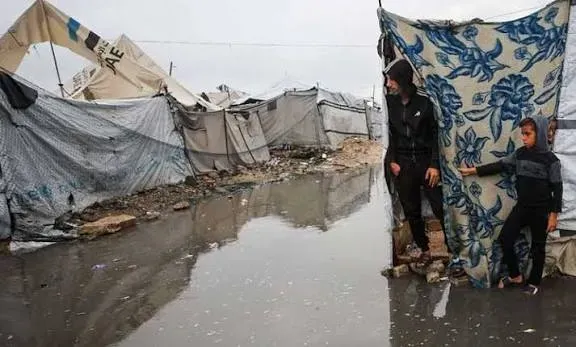

The latest catastrophe in Gaza, after the flooding of tens of thousands of tents, may be only the beginning of a larger tragedy that will continue throughout the coming winter unless the relevant authorities act and provide rain-resistant tents and shelter equipment for displaced people in the Gaza Strip.
Local and international service agencies in Gaza have sounded the alarm, warning of a harsh winter that will devastate displaced people in the Strip in the coming months. Gaza's Civil Defence confirmed that there are at least 10 days in which no weather depressions are expected, in order to act and save the Strip's residents from the disasters awaiting them.
The coalition of charitable and relief institutions in the Gaza Strip launched an urgent distress call to save displaced people from a humanitarian catastrophe as weather depressions intensify. The institutions called on the international community, the United Nations, international humanitarian and human rights organisations, and the countries sponsoring the ceasefire agreement in Gaza to intervene immediately and effectively to avert the humanitarian and environmental catastrophe, amid the continuing repercussions of the weather depressions hitting the Strip with the arrival of winter and the worsening suffering of hundreds of thousands of displaced people who lack the most basic means of protection and shelter.
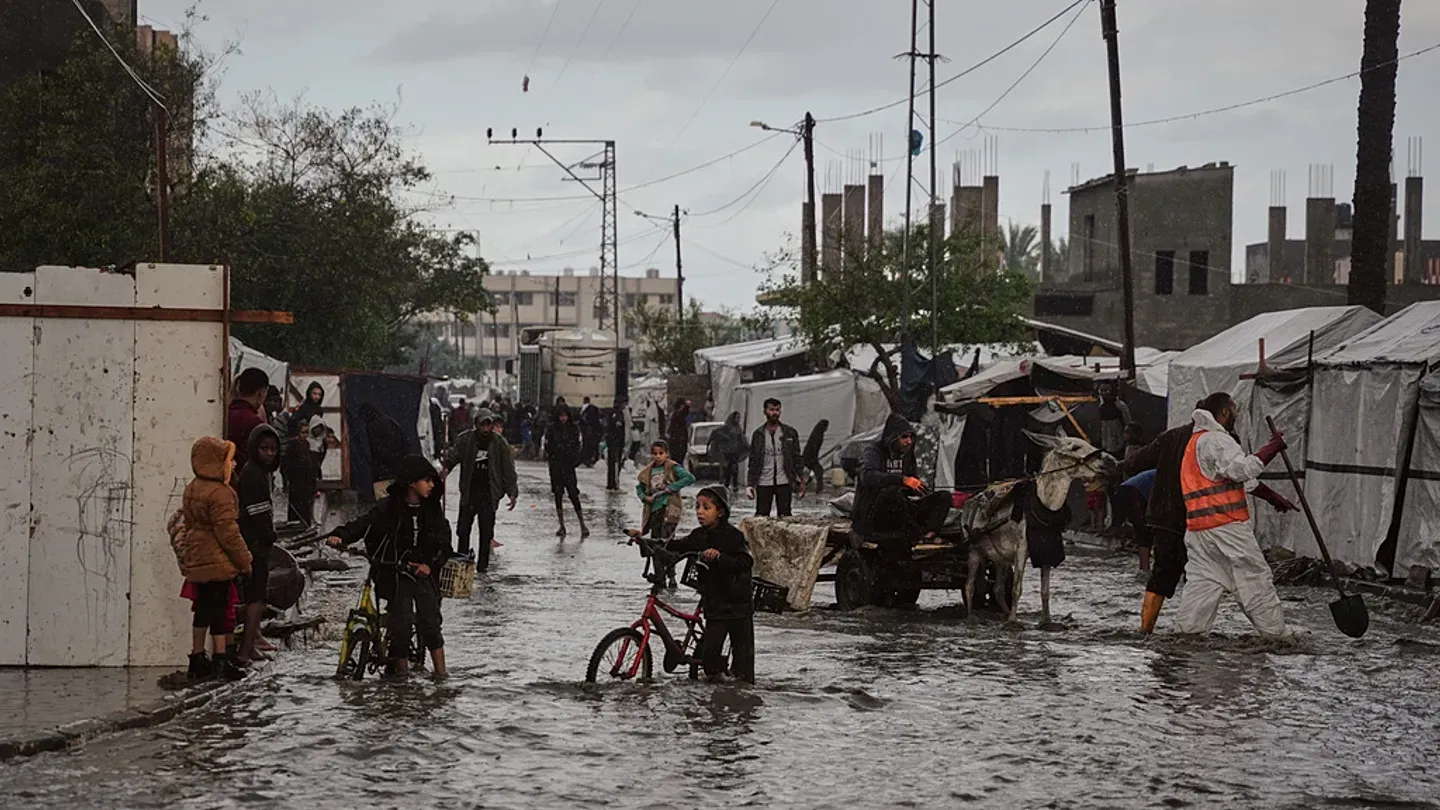
The humanitarian institutions confirmed that heavy rains and floods that struck Gaza from Friday evening until Sunday morning caused the flooding and damage of about 70,000 dilapidated tents sheltering hundreds of thousands of displaced people, as rainwater leaked into their tents and submerged their bedding, clothes and essential belongings, compounding the difficult humanitarian conditions they face in displacement camps.
The humanitarian institutions warned of serious health and environmental repercussions from rainwater mixing with untreated sewage water, amid the widespread destruction of infrastructure networks. They stressed that restrictions on the entry of shelter supplies, including caravans, prefabricated housing units, tents, sheds and reinforcement materials, obstruct humanitarian response efforts and prevent the provision of safe alternatives that protect displaced people from the harsh weather conditions.
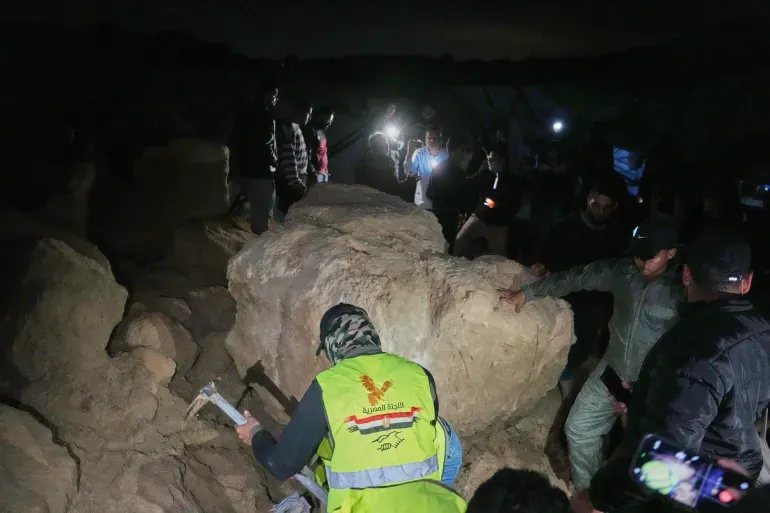
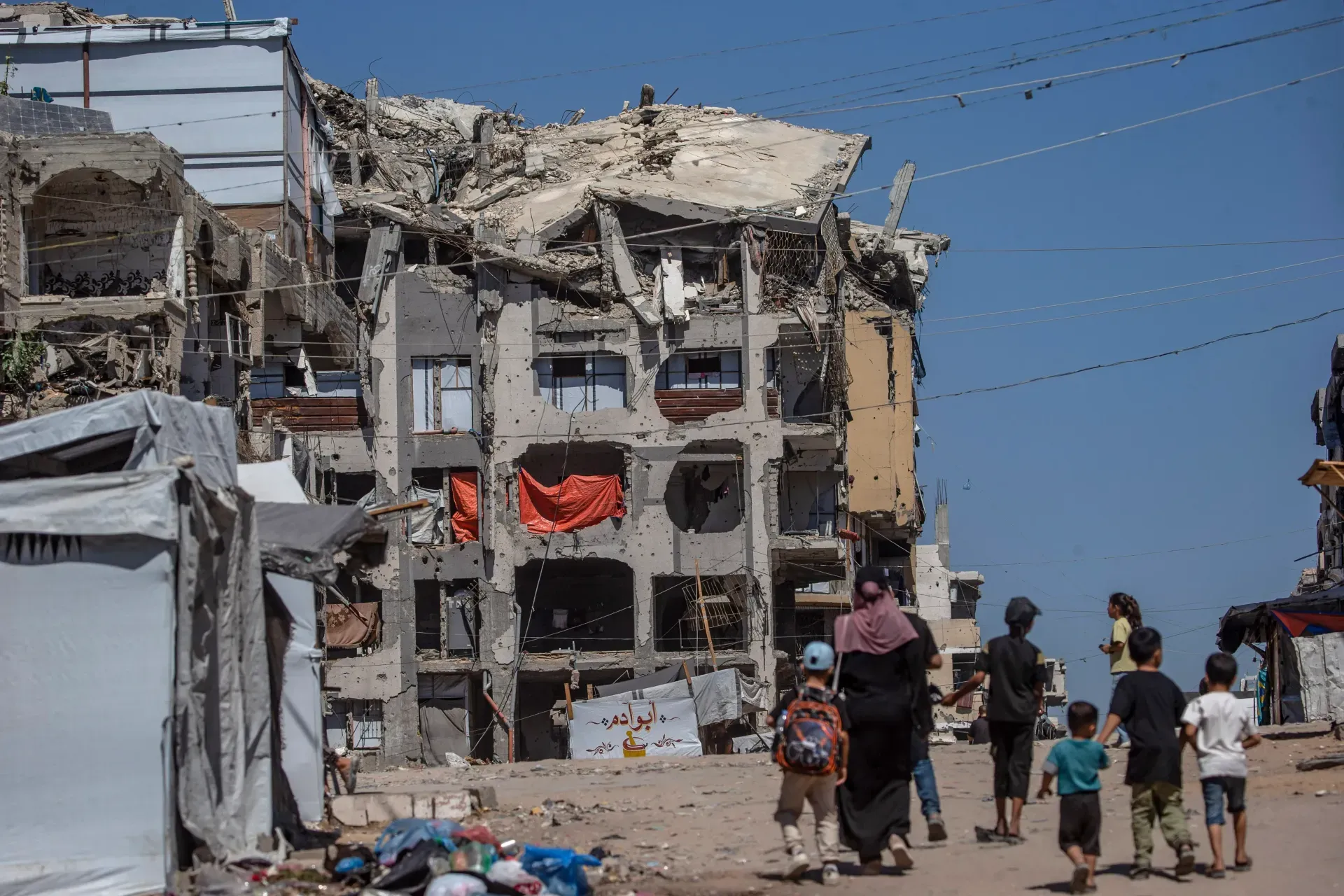
The humanitarian institutions noted the growing risks of the collapse of hundreds of buildings previously damaged by bombardment, as rains and water accumulation increased the likelihood of these buildings falling, amid recorded injuries among citizens, requiring urgent intervention to secure residential areas and remove risks threatening residents' lives.
The Human Rights Protection Centre confirmed that what Gaza is witnessing is not merely damage from exceptional weather conditions but reveals a catastrophic fragility in shelter conditions, resulting from the widespread destruction of homes and infrastructure and the continuing crisis of providing shelter and protection supplies. The centre explained that the danger increases for children, women, the elderly and the sick, who face risks of drowning and cold, as well as the threat of cracked buildings collapsing on residents.
The Government Media Office warned of the danger of the collapse of dozens of cracked buildings on the verge of falling due to bombardment during the Israeli war of extermination continuing on the Gaza Strip for three years. It held the Israeli occupation fully responsible for the catastrophic repercussions due to the continued closure of crossings and the prevention of the entry of shelter and reconstruction materials that residents urgently need. It called on the international community and UN and international organisations to intervene immediately and assume their humanitarian, legal and moral responsibilities to save the lives of displaced people and provide them with the means of resilience and protection.
The Civil Defence said it cannot alone confront the repercussions of this depression given the scale of the disaster, the lack of capabilities and the shortage of equipment to pump water from areas where rainwater accumulates. It stressed that responsibility requires the cooperation of all local and international institutions and the provision of urgent support in equipment, machinery, fuel and relief materials.
Khan Younis municipality confirmed that flooding cases were recorded in low-lying areas and areas designated for collecting rainwater, explaining that the occupation has encroached on about 70 square kilometres of the city's area and expelled residents from it, forcing families to reside in low-lying areas.
The bill for the first depression was heavy and unprecedented: about 70,000 tents sheltering displaced people were flooded by the recent weather depression within just 30 hours, and preliminary losses were estimated at about $3 million. The Government Media Office said the depression also caused the collapse of dozens of walls, resulting in injuries of varying severity, including serious injuries, across the Strip's governorates.
Gaza's Civil Defence confirmed that its emergency rooms have received 2,166 distress calls since the start of the weather depression from citizens, displacement camp administrations, shelter centres and families whose homes had been affected by Israeli bombardment. According to the Civil Defence, rescue crews, in cooperation with municipalities and relevant authorities in the Strip's governorates, were able to respond to only 218 calls out of the total distress calls, while in the rest they relied on directing instructions to families facing flooding because they could not respond to the huge volume of calls.
The Civil Defence said it recorded the flooding of entire camps in all areas and cities of the Gaza Strip. It explained that displaced citizens with their children and women are drowning now, while rains sweep away their tents, despite the numerous appeals and humanitarian calls previously launched to rescue them before these tragic scenes were seen in the camps.
It has become clear that several parties ignored previous warnings issued by many bodies to save Gaza before the catastrophe, while the so-called "Peace Council" did not move and was not heard during the catastrophe that struck Gaza.
The head of the Euro-Mediterranean Human Rights Monitor, Rami Abdo, confirmed that he had previously warned of a humanitarian catastrophe with the arrival of winter amid the urgent need for about 200,000 tents and one million sheds. Abdo said, as tens of thousands of tents flood, the world asks: where are the "Peace Council" and the National Committee for the Administration of Gaza? And why are they absent from the scene?
Abdo explained that the occupation bears the primary responsibility for destruction and displacement, but the silence of the "Peace Council" and the newly created structures makes it a partner in responsibility for what is happening. He noted that the occupation continues to refuse the entry of shelter supplies, including about 8,600 emergency shelter kits that were ready outside the Strip. He explained that the Peace Council has busied itself with security files and political arrangements in a way that serves the occupation's interest and security, while the protection of civilians is left hostage to its conditions. He said: "We demanded the termination of the Peace Council's work and the withdrawal of cover from it after it proved its failure to stop the ceasefire or improve the humanitarian conditions of civilians."