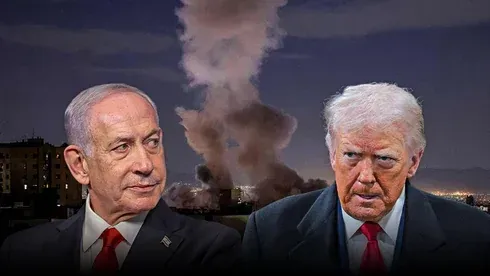

Israeli media reports have revealed differences in positions between Israeli Prime Minister Benjamin Netanyahu and US President Donald Trump over the future of the confrontation with Iran and the possibility of resuming military operations against it, following a phone call that brought the two together late last week.
The Israeli website "Walla" quoted informed sources as saying that the call was marked by severe tension, with one source describing it as "unprecedentedly sharp and difficult," amid disagreements over how to deal with Tehran and the options proposed for the next phase.
In contrast, Netanyahu's office moved quickly to deny what was reported about verbal altercations or an exchange of shouting between the two sides, stressing that this account has no basis in truth. A senior Israeli official also denied that the call had been marked by the tension reported in the media.
These developments come amid a clear divergence in the two sides' approaches; Netanyahu tends to tighten pressure on Iran and keep the military option on the table, while Trump prefers to allow more time for the diplomatic track, in the hope of reaching an understanding with Tehran that limits escalation.
Netanyahu reflected his position during a speech before the Israeli Knesset, when he considered that toppling the Iranian regime represents the only way to end what he described as the Iranian nuclear threat once and for all.
He accused Tehran of seeking to rebuild its nuclear capabilities, warning that Israel may in the future face international pressure to accept an Iran possessing a nuclear weapon, or to retreat from the military gains it achieved in the Gaza Strip, Lebanon and Syria.
Netanyahu linked confronting these challenges to the necessity of forming a national unity government, considering it the political framework most capable of dealing with the coming security and political threats.
On the American side, Trump expressed reservations about resuming military attacks on Iran, affirming, after his meeting with Qatari Prime Minister and Foreign Minister Sheikh Mohammed bin Abdulrahman Al Thani, that current circumstances do not call for launching new strikes against Tehran.
He pointed to positive indicators that strengthen the chances of reaching a political settlement that would guarantee Israel's security and avoid a new military escalation in the region.
In the same context, the Financial Times quoted diplomatic sources as saying that a number of Arab leaders are concerned about attempts to push the US administration to resume the war on Iran.
According to the sources, Netanyahu continues his contacts with Trump to urge him to adopt a tougher stance toward Tehran, at a time when officials within the US administration are seeking to avoid a return to military confrontation.
Despite this, Israeli sources indicated that Netanyahu, despite his preference for resuming military operations, is not currently leading an intensive pressure campaign on Washington to push it to take a decision in this direction.
While Trump expresses optimism about the possibility of reaching an agreement with Iran, the positions of some US officials appear more cautious, particularly Secretary of State Marco Rubio.
Rubio affirmed that the negotiations have not yet achieved a tangible breakthrough, pointing to continuing differences between Washington and Tehran over a number of files, and that some Iranian demands remain unacceptable to the United States, describing some of them as "provocative and unrealistic."
These positions reflect a divergence in the assessment of priorities between Washington and Tel Aviv, amid anticipation of the course of negotiations with Iran, and whether diplomatic efforts will succeed in containing the tension, or whether the existing differences will bring the military option back to the forefront.