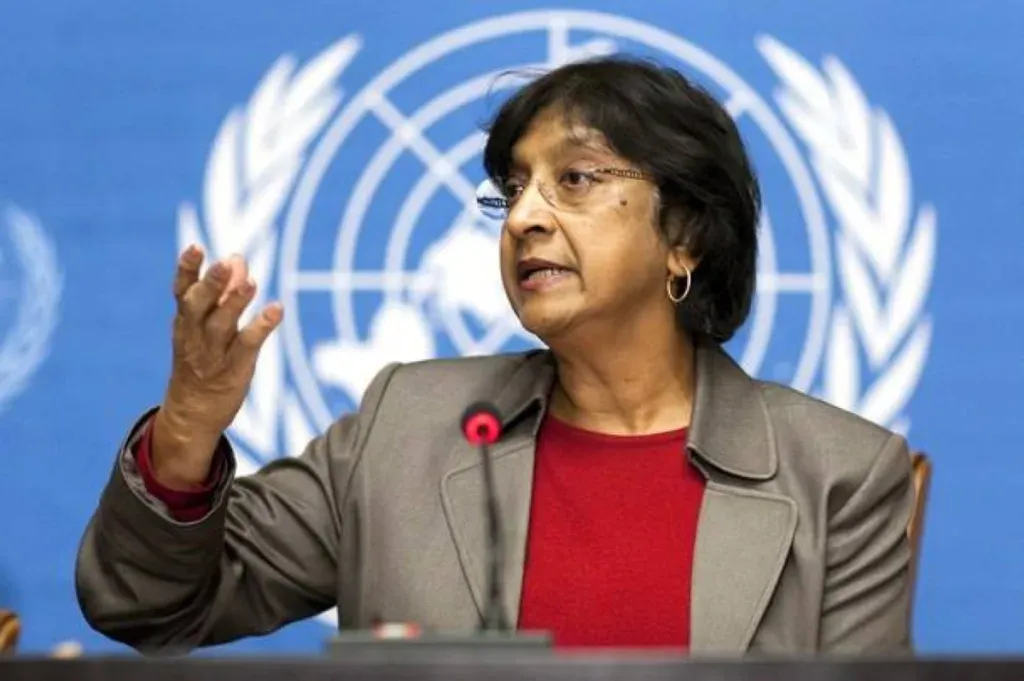

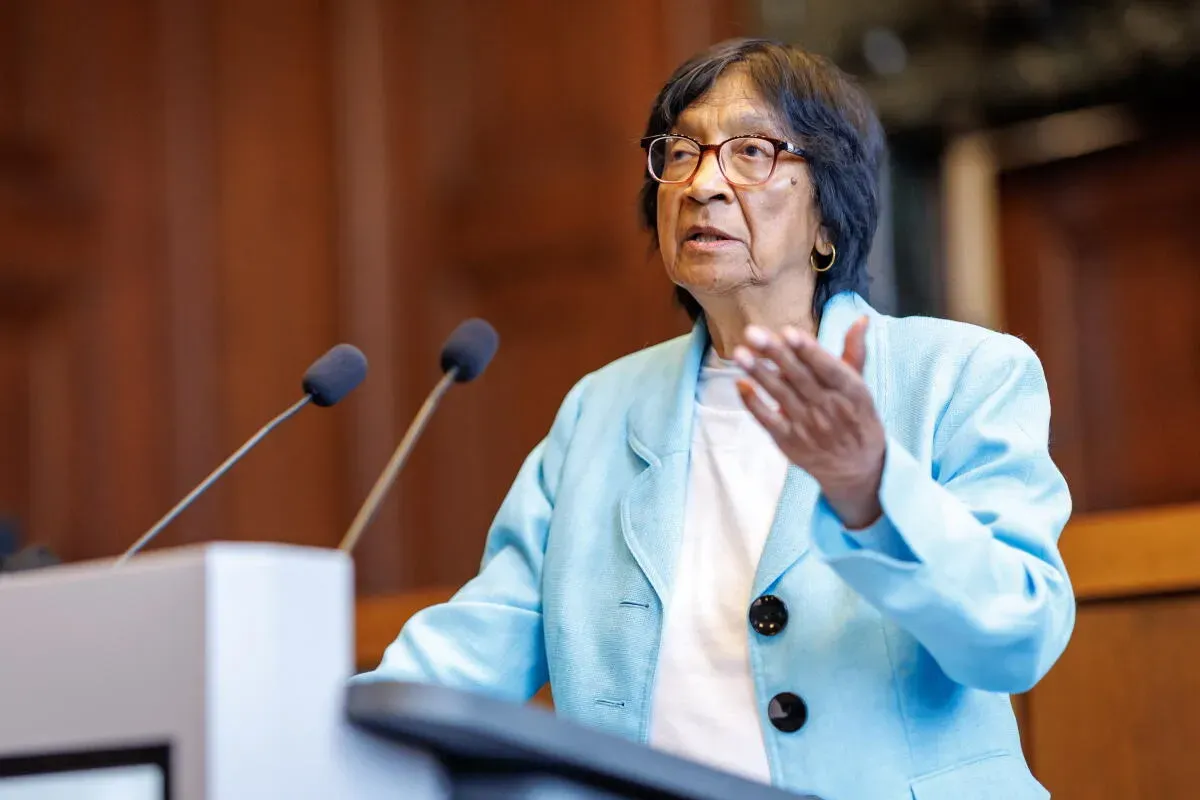
Navi Pillay, the Nobel Peace Prize laureate and one of the world's leading jurists, says she is certain that Israel committed genocide in Gaza, Haaretz reported in an interview with her at her home in Durban, South Africa.
Pillay, 85, is a former judge at the International Criminal Court, a former UN High Commissioner for Human Rights and a judge ad hoc at the International Court of Justice in The Gambia's case against Myanmar. She chaired the UN commission of inquiry whose report, published in September 2025, concluded that Israel had committed genocide in Gaza. It made her the world's most senior jurist to reach that conclusion, and she won the Nobel Peace Prize last month.
Her team based the finding on the systematic nature of Israel's actions: the killing of some 75,000 people, the demolition of almost all homes and infrastructure, and the destruction of the conditions essential to the population's survival, including hospitals, schools, farmland and fishing facilities. It also pointed to the gap between those actions and Israel's stated military objectives. That gap, the commission concluded, can be explained only by an intent to destroy Gaza's inhabitants as a group, "in whole or in part," as the Genocide Convention defines the crime.
The report cited statements by Prime Minister Benjamin Netanyahu, then-Defense Minister Yoav Gallant and President Isaac Herzog as evidence of genocidal intent, and recommended prosecuting all three for incitement to genocide. Pillay stressed that the statements alone would not have sufficed. In the report's words, "The pattern of conduct is circumstantial evidence of genocidal intent," and genocidal intent was "the only reasonable inference that could be drawn from the totality of the evidence."
"It's not a defense to genocide to say, 'Yeah, but I didn't kill all of them,'" Pillay said. "It's very skewed thinking. I don't think any court would take that seriously." She noted that the convention covers destruction "in whole or in part" of a group, and that failure to prevent genocide is a crime in itself. Large numbers of victims are not a requirement, she said, though they are relevant, and even a single killing can be a crime under the convention once genocidal intent is established.
Asked about the commission's finding that Israel intended to kill as many Palestinians as possible, she pointed to the weapons used. "When you use aerial bombing, that's indiscriminate killing. You don't care whether children are there, women are there," she said. "We describe the kinds of weapons used. They're designed to kill a large number of people." The commission's legal team said Israeli authorities knew that their means and methods of warfare would cause mass deaths of Palestinians, including children, and did not change them as the operations continued and deaths rose. It added that Gaza's civilian population had no way to escape the combat zone.
"How can you justify withholding urgent medications? How can you justify directly targeting civilians? Ambulance workers, journalists?" Pillay asked. She also cited the torture of people who had just been detained, saying she had seen video footage released by Israeli soldiers, including one showing soldiers or their supporters urinating on detainees.
The report also treated the destruction of Gaza's only fertility clinic, which held as many as 5,000 embryos and other reproductive material, as an act aimed at preventing births. Pillay said the targeted destruction of the specimens cannot be explained as defense or as an effort to find Hamas fighters, the two reasons Israel gave. The Israeli military said it had no details of the strike and does not deliberately target civilian infrastructure.
Israel has not allowed the commission into Gaza, she said. "They should let the international media in. Why would the government block international scrutiny? Why did they stop us from investigating?" She said the commission took two years to produce the report, examining each piece of evidence.
Pillay's commission also examined Israel's conduct in the rest of Palestine. It recommended in 2022 that the UN General Assembly ask the International Court of Justice for an advisory opinion on the occupation. The court's opinion, delivered a year and a half later, found that Israel was violating international law and that its control over the West Bank, Gaza and East Jerusalem is unlawful. In a 2023 report on the 2021 Gaza war, the commission sharply criticized the Israeli army and police for their use of force against Palestinian demonstrators. The September 2025 genocide report leaves open whether the determination should be extended to the West Bank.
She said that arrest warrants issued by the International Criminal Court must be acted on by states. "I admit that justice is a slow process," she said.
The International Court of Justice is expected to settle the question in South Africa's case against Israel, but a ruling is likely years away. A ruling in The Gambia's case against Myanmar over the genocide against the Rohingya is expected on November 19, and international law experts say a genocide finding there would raise the likelihood of a similar determination concerning Israel.