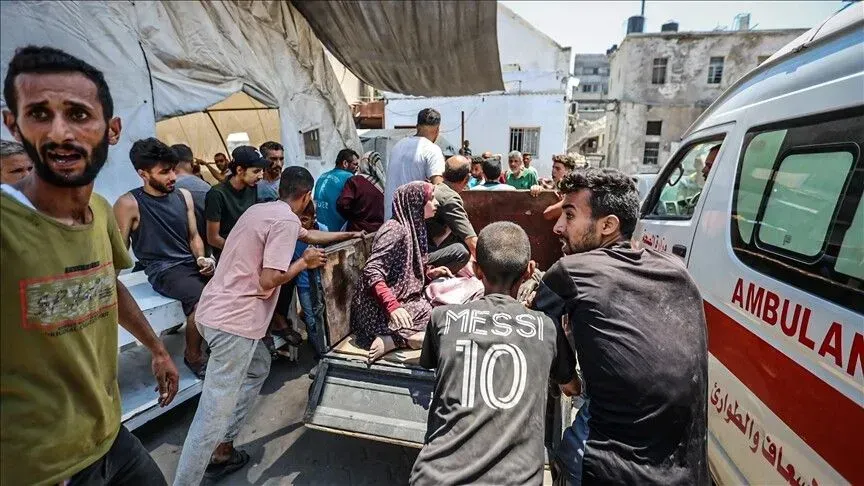

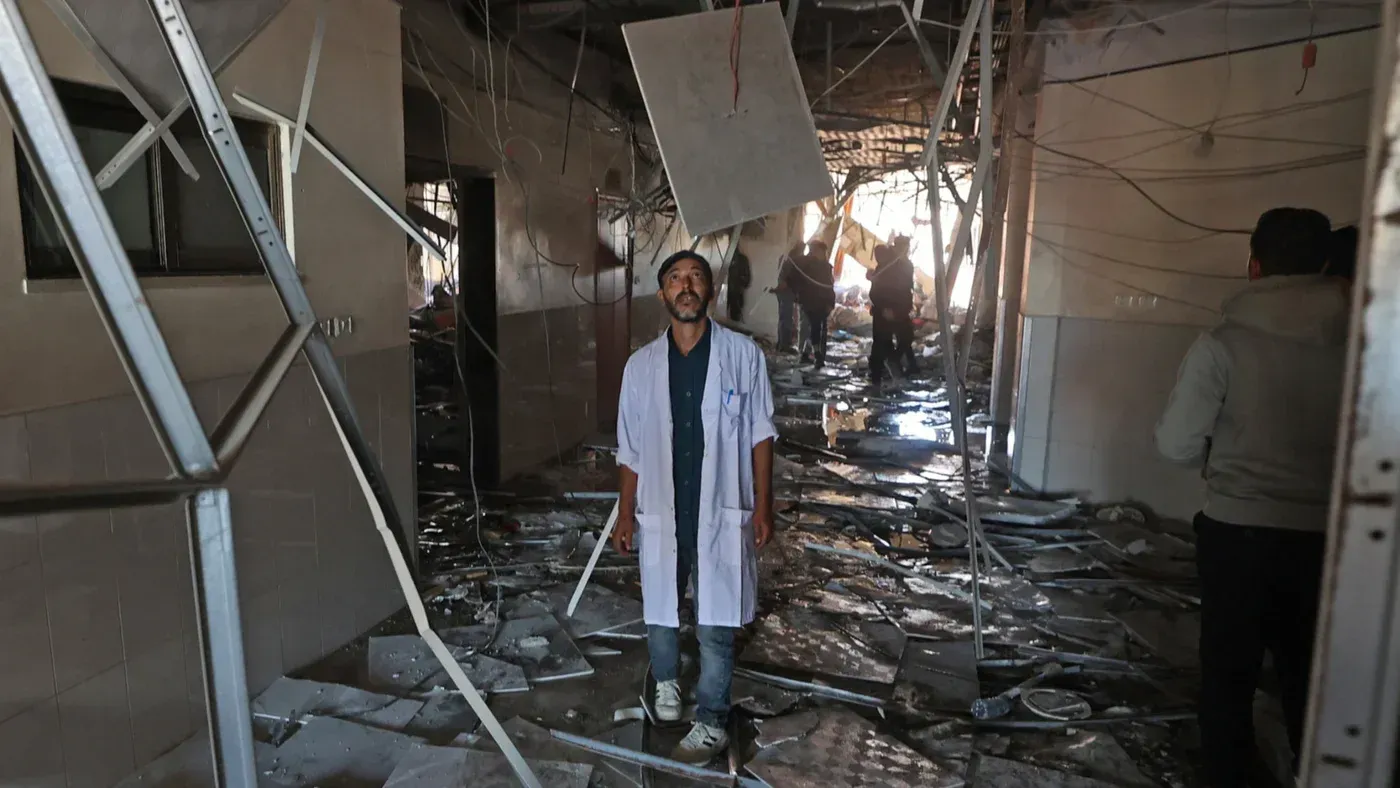
For thousands of Palestinians in the southern Gaza Strip, Nasser Hospital in Khan Younis has been more than a hospital. Throughout Israel’s war on Gaza, it has served as a refuge for displaced families, a lifeline for the wounded and one of the few remaining places where people could seek medical treatment as Israel systematically devastated the enclave’s healthcare system. But the hospital itself has repeatedly come under Israeli attacks.
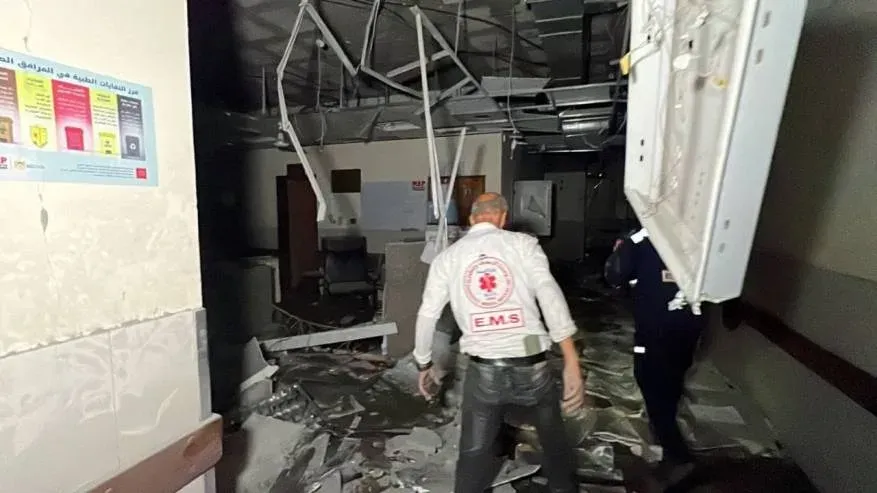
The latest Israeli airstrike, which hit the complex on November 12, 2026, marked the seventh time the facility has been struck since October 2023, according to Gaza health officials. The attack killed at least six Palestinians, including a surgeon and a 13-year-old boy and disabled patient, and wounded dozens of others. It also caused extensive damage to the hospital’s surgical department, operating rooms and patient wards.
Two missiles struck the building's roof, penetrating the third floor before exploding on the second, The New York Times reported. Médecins Sans Frontières (MSF), which operates at the hospital, said the strike hit its surgery building without warning. The emergency, radiology, laboratory and operating departments were subsequently put out of service, further reducing access to medical care for a population already facing catastrophic healthcare shortages.
The attacks on Nasser Medical Complex began in the first weeks of Israel’s assault, as the hospital increasingly became a refuge for Palestinians fleeing bombardment elsewhere in Gaza. On November 10, 2023, Israeli tracer bullets struck the hospital’s maternity ward, killing one patient and wounding others, according to MSF. The attack came as medical facilities across Gaza were coming under repeated Israeli attack and hospitals struggled to accommodate growing numbers of wounded people.
On December 17, Israeli fire again hit the maternity ward. A 13-year-old girl, identified as Dina, was killed, while several others were wounded. Dina had previously lost both legs and become an orphan following an Israeli airstrike on her family home in northern Gaza.
Eight days later, on December 25, heavy Israeli bombardment struck areas surrounding the complex after the Israeli military issued evacuation orders for nearby residential blocks. The attacks intensified fears among patients and thousands of displaced Palestinians sheltering inside the hospital.
The situation deteriorated further in January 2024, when Israeli forces expanded their assault across Khan Younis. On January 15, an Israeli airstrike hit trucks unloading food approximately 150 metres east of the hospital. The attack killed eight Palestinians, including two young boys, and wounded around 80 others, according to an MSF field report. Many of the wounded were rushed to Nasser for treatment, placing additional pressure on an already overwhelmed medical facility.
Three days later, heavy bombardment and tank shelling rocked the area around the hospital, leaving patients and medical staff terrified. By January 21, Israeli forces had surrounded Nasser Medical Complex amid intensified attacks. The hospital was increasingly cut off from the outside world, while patients, medical personnel and displaced families struggled to leave or obtain essential supplies.
On January 23, Israeli forced displacement orders covered areas containing Nasser, Al-Amal and the Jordanian hospitals. MSF reported that people could no longer enter or leave Nasser safely, ambulances were denied access, and its operating theatre was no longer functioning.
The situation reached a devastating turning point in February 2024, when Israeli forces laid siege to Nasser Medical Complex before storming it. By then, the hospital was sheltering thousands of displaced Palestinians alongside hundreds of wounded patients and medical personnel. Beginning February 8, MSF staff reported sniper fire directed towards the hospital, with several people killed or wounded. One nurse was shot in the chest, while another man was killed near the hospital entrance, according to the organisation’s records.
On February 13, the Israeli military ordered displaced Palestinians sheltering inside the complex to flee, while saying patients and medical staff could remain. However, on the night of February 14-15, an Israeli shell struck the hospital’s orthopaedic department, killing one person and wounding eight others.
Despite assurances from Israeli forces that those remaining inside would be safe, troops stormed the complex early on February 15, forcing patients, medical personnel and displaced Palestinians to leave. Dr. Musab Samman was abducted by Israeli forces from the hospital that day while treating patients, alongside a number of fellow medical workers.
MSF documented accounts of people being screened by Israeli forces as they exited, while one of its employees was detained. Israeli forces withdrew from the hospital on February 22, leaving behind extensive destruction. Medical equipment and infrastructure had been damaged, while the facility was left largely unable to function. Human Rights Watch later reported that 13 patients had died during the siege, some because of the lack of electricity and oxygen. MSF described the events as a pattern of deliberate and repeated attacks against the hospital, its patients and medical personnel.
Nasser Medical Complex came under another devastating Israeli attack on August 25, 2025, when Israeli forces carried out two successive strikes on the hospital. The first strike hit the hospital’s upper floors, including an area used by journalists to cover developments in southern Gaza. A second strike followed as rescue workers, medical personnel and journalists rushed to assist those wounded in the initial attack.
At least 22 Palestinians were killed, including five journalists, a doctor and three other medical workers, according to Gaza’s Health Ministry and the United Nations. More than 30 others were wounded. Among those killed were Palestinian journalists Mariam Abu Dagga, Mohammed Salama, Moaz Abu Taha and Ahmed Abu Aziz, alongside Reuters contractor Hussam al-Masri. Reuters contractor Hatem Khaled was also wounded.
The World Health Organization said the strikes hit the hospital’s main building, which houses its emergency department, inpatient ward and surgical unit, damaging its emergency staircase. The Israeli military acknowledged carrying out the strikes. International law experts have said the attack may have amounted to war crimes.
On November 12, 2026, Israeli forces struck Nasser Medical Complex again, hitting its surgery building in the early hours of the morning. The attack killed at least six Palestinians, including surgeon Rizq Abu Shaira and a 13-year-old boy, and wounded dozens more, according to Gaza health authorities.
The missile reportedly penetrated several floors of the building, causing extensive destruction to the surgical department, intensive care unit and patient wards. MSF said its teams had treated injured medical personnel and patients following the attack. It added that the emergency, radiology, laboratory and operating departments were no longer functioning.
The Israeli military said it had targeted a Hamas commander and other alleged fighters inside the hospital, but did not provide evidence to substantiate its claims. It also did not explain why the hospital’s surgical facilities were struck. “The Israeli occupation's claims that Nasser Medical Complex was being used for military purposes are repeated lies intended to provide cover for the systematic targeting of the healthcare sector,” Hamas said on Thursday.
The organisation said the hospital serves an estimated 1.3 million people, making it a critical referral centre for southern Gaza.
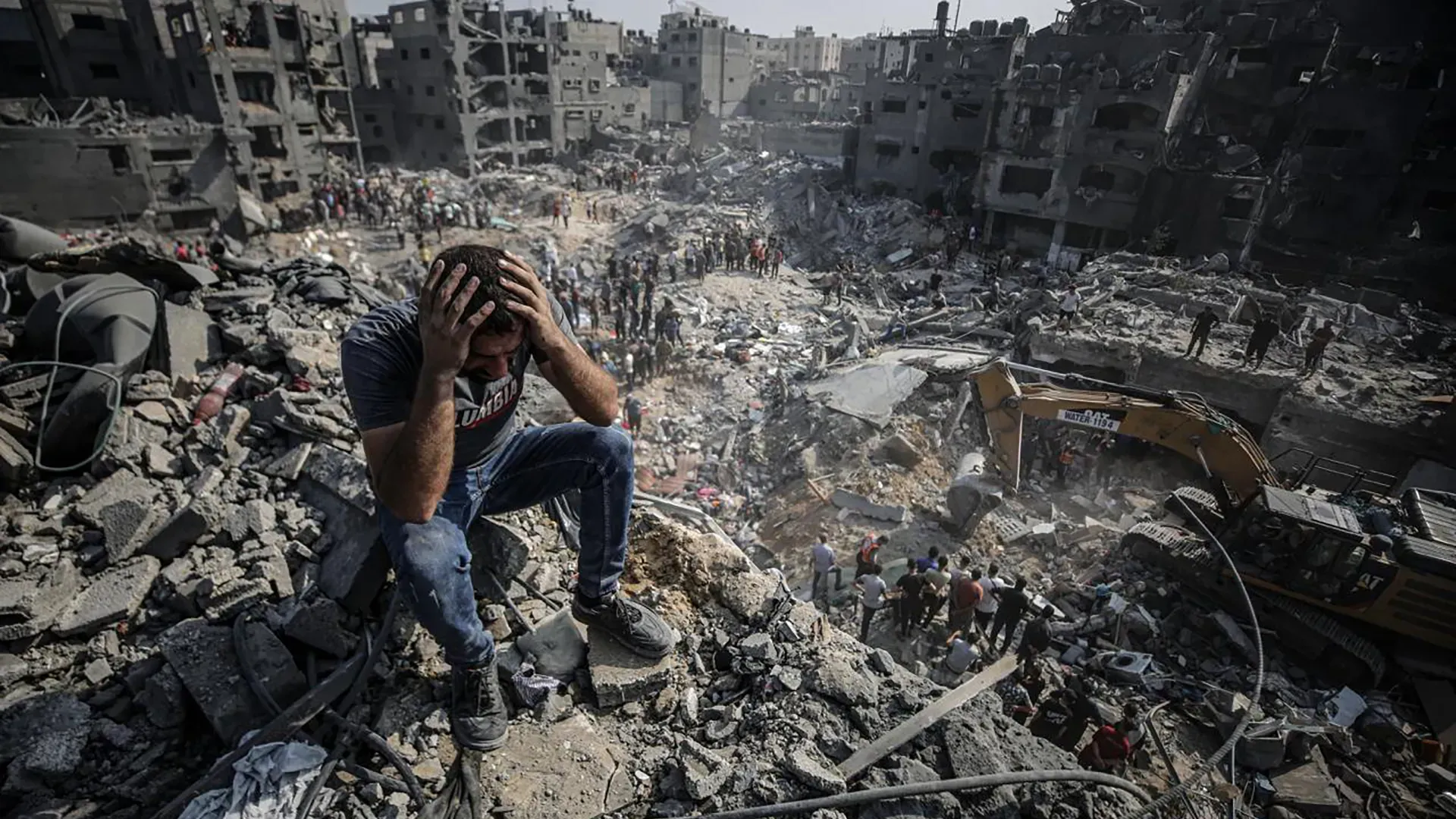
The repeated attacks on Nasser Medical Complex form part of a much wider pattern of Israeli assaults on Gaza’s healthcare infrastructure. Throughout the war, Israeli forces have struck, besieged and raided hospitals across the enclave, including Al-Shifa Medical Complex, Al-Awda Hospital, Al-Quds Hospital, Kamal Adwan Hospital, the Indonesian Hospital and Al-Aqsa Martyrs Hospital.
A December 2024 thematic report by the UN Human Rights Office documented a recurring pattern in Israeli attacks against hospitals, involving bombardment, sieges, restrictions on medical supplies, ground raids, detentions and forced evacuations, often leaving facilities severely damaged or unable to function.
The World Health Organization has documented more than 1,050 attacks on healthcare facilities in Gaza, resulting in more than 1,000 killings. The World Health Organization says 94 percent of hospitals in Gaza have been fully or partially destroyed during Israel's war on Gaza.
Israel’s attacks, alongside restrictions on the entry of medicines, medical equipment and fuel, have left Gaza’s healthcare system struggling to recover. Of the enclave’s 36 pre-war hospitals, only 20 were functioning as of November 2026, with none operating at full capacity.
For patients, doctors and families who have repeatedly sought refuge at Nasser, the latest strike is another reminder that even hospitals offering lifesaving treatment have not been spared from Israel’s war on Gaza.